

The Windrush line is part of the London Overground network and serves communities across south and southeast London. It connects important areas including Highbury & Islington, New Cross Gate, Peckham Rye, Crystal Palace, Sydenham, Norwood Junction, and West Croydon. The line is named after the HMT Empire Windrush, reflecting the important contribution of the Windrush generation and their communities to London’s history and culture.
In 2026, it is an important part of London’s transport network. This guide explains its route, stations, connections, map, zones, history, and useful travel information in simple language.
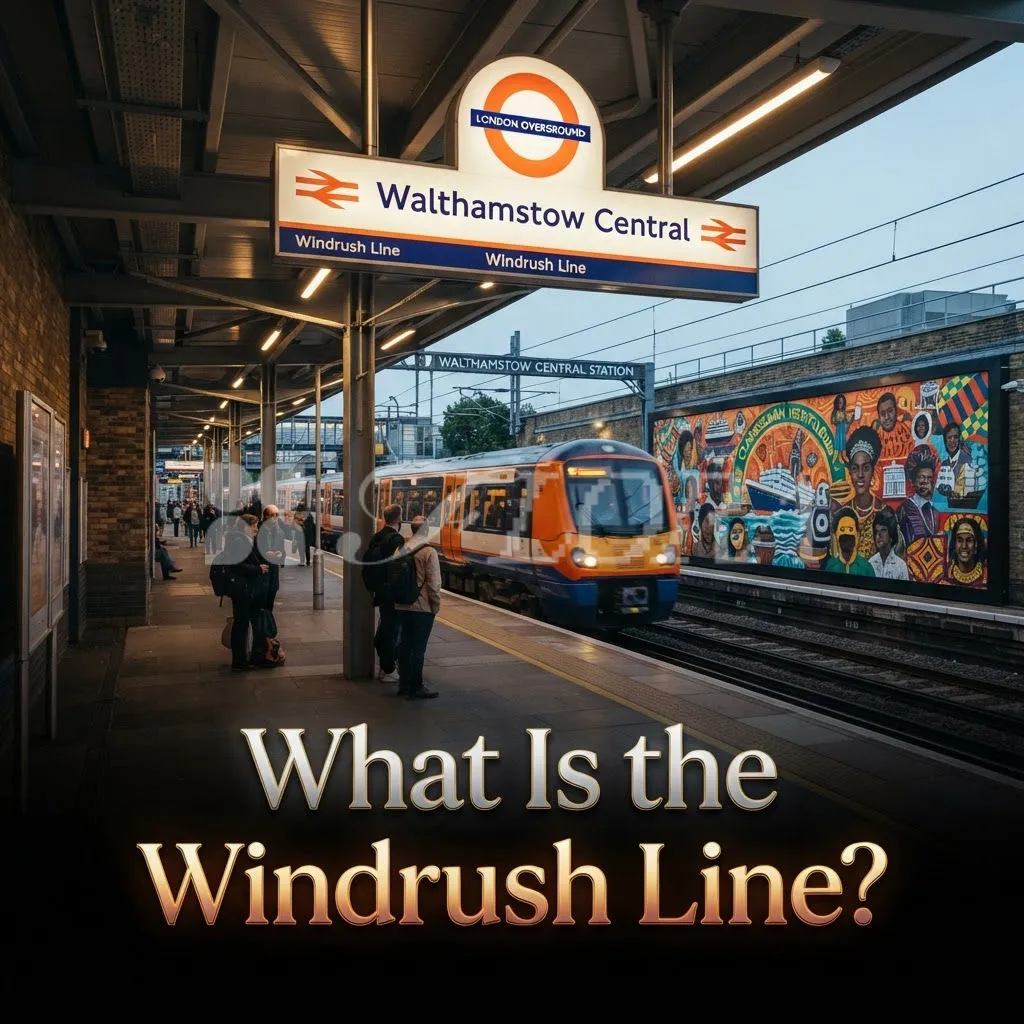
What Is the Windrush Line?
This is one of the six named London Overground lines. It became officially known as the Windrush line in November 2024 as part of Transport for London’s London Overground rebranding.
- 🚆 It is part of London Overground.
- 🗺️ It appears on London’s updated transport maps.
- 🌆 It serves south and southeast London.
- 🚉 It connects many important stations.
- 🏙️ It provides access toward central London connections.
- 🔄 It connects with other rail and Tube services.
- 🌍 Its name recognizes the Windrush generation.
- 📜 The name reflects London’s diverse history.
- 🚆 Services operate throughout the day.
- 📱 TfL provides journey information.
- 🎫 Oyster and contactless travel are available on London transport.
- 🧭 The line helps passengers travel across south London.
- 📍 It serves several busy interchange stations.
- 📅 It remains an important part of the 2026 network.
- ⭐ It is one of London’s six named Overground lines.
It is especially useful for journeys between areas such as Dalston, New Cross, Peckham, Crystal Palace, and West Croydon.
Windrush Line Route
The Windrush line has a distinctive route through north London and south London, with services traveling between Highbury & Islington and West Croydon, plus a branch toward Clapham Junction.
The route provides connections between residential areas, shopping districts, employment centers, and other transport hubs.
- 🚆 Highbury & Islington is an important northern station.
- 🌆 Canonbury is on the route.
- 🚉 Dalston Junction provides a key connection.
- 🚆 Hoxton is served.
- 🏙️ Shoreditch High Street is on the route.
- 🚉 Whitechapel provides major connections.
- 🚆 Shadwell is served.
- 🚉 Canada Water is an important interchange.
- 🌳 Surrey Quays serves southeast London.
- 🚆 New Cross Gate is on the route.
- 🎭 Peckham Rye is an important station.
- 🌳 Denmark Hill is served.
- 🚉 Sydenham is on the route.
- 🌿 Crystal Palace is served.
- 🚆 Norwood Junction is an important interchange.
- ⭐ West Croydon is one of the southern endpoints.
The exact service pattern can vary, so passengers should check the current TfL journey information before traveling.
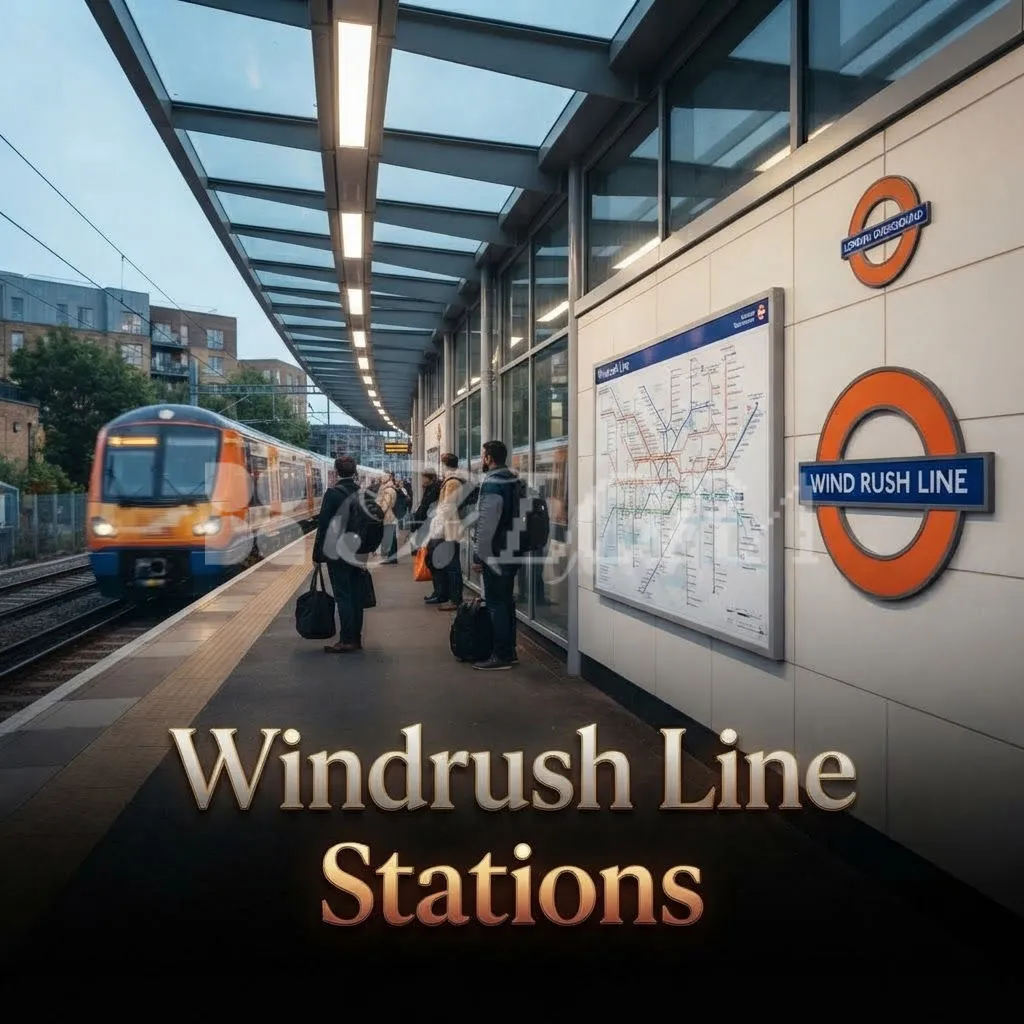
Windrush Line Stations
The Windrush line serves a long list of stations across London. Different services may use different branches, so checking the destination is important.
- 🚉 Highbury & Islington
- 🚉 Canonbury
- 🚉 Dalston Junction
- 🚉 Haggerston
- 🚉 Hoxton
- 🚉 Shoreditch High Street
- 🚉 Whitechapel
- 🚉 Shadwell
- 🚉 Wapping
- 🚉 Rotherhithe
- 🚉 Canada Water
- 🚉 Surrey Quays
- 🚉 New Cross
- 🚉 New Cross Gate
- 🚉 Brockley
- 🚉 Honor Oak Park
These stations form important parts of the wider Windrush line network. Some services continue through Peckham, Sydenham, Crystal Palace, Norwood Junction, and West Croydon, while others use the Clapham Junction branch.
Windrush Line Map
The Windrush line map helps passengers understand the route and where it connects with other London transport services.
A current TfL map is especially useful because the London Overground network has been divided into named lines.
- 🟠 It is shown separately from other Overground lines.
- 🚆 The map shows its stations.
- 🔄 Interchanges are marked.
- 🚇 Tube connections are displayed.
- 🚆 National Rail connections are shown.
- 🚈 DLR connections are included.
- 🟣 Other London Overground lines are shown separately.
- 📍 Branches are easier to identify.
- 🧭 Maps help with direction planning.
- 📱 Digital maps can provide live updates.
- 🏙️ Central London connections are easy to spot.
- 🌳 South London stations are clearly marked.
- 🚉 Major interchange stations stand out.
- 📅 Use a current map for 2026 journeys.
- ⭐ TfL is the best source for the official network map.
The current official map is preferable to older Overground maps because the named lines were introduced as part of the 2024 rebranding.
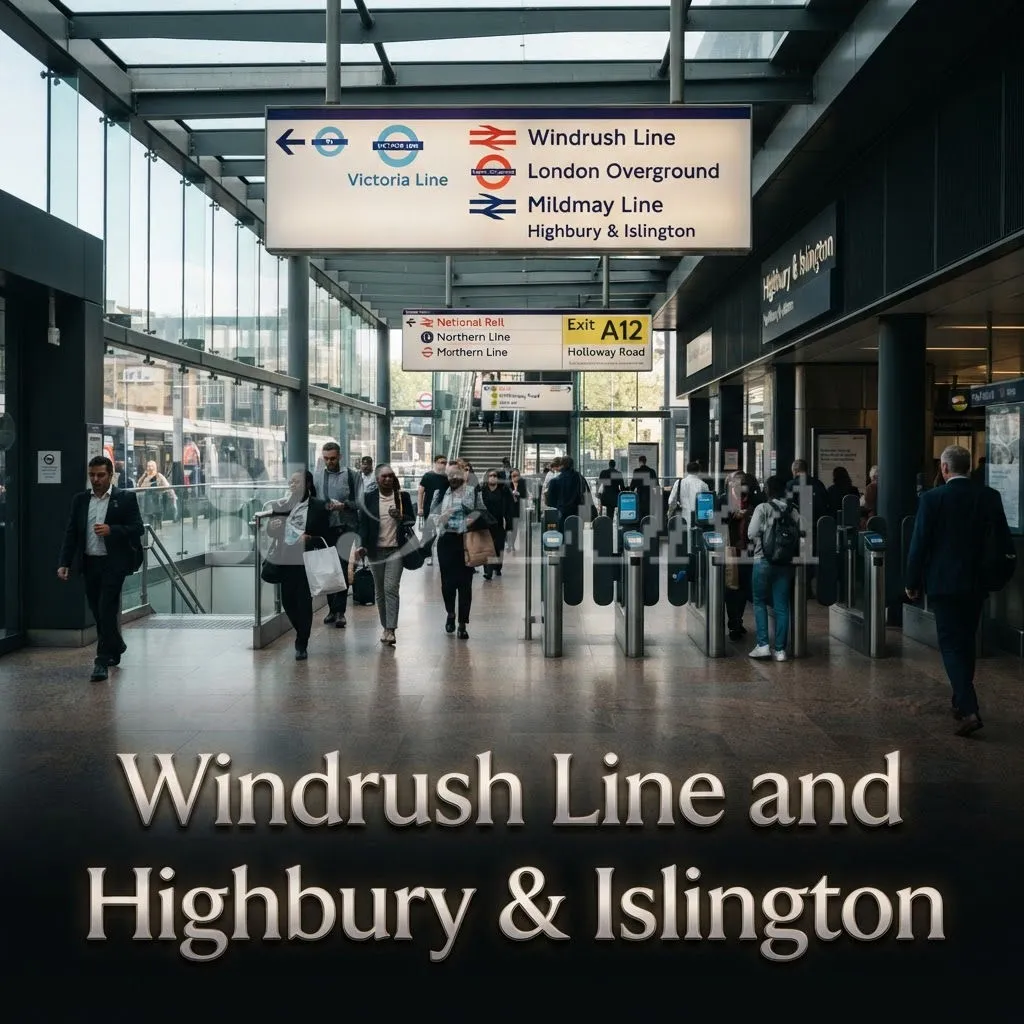
Windrush Line and Highbury & Islington
Highbury & Islington is an important northern connection for Windrush line passengers. It provides access to several other London transport services.
- 🚇 Victoria line connects here.
- 🚆 National Rail services are available.
- 🚇 The station is north of central London.
- 🔄 It provides useful interchange options.
- 🏙️ Islington is nearby.
- 🛍️ Local shops are nearby.
- 🎭 Entertainment areas are accessible.
- 📱 TfL provides live travel information.
- 🗺️ It appears on the London transport map.
- 🚉 Passengers can change services here.
- 🧭 It can be useful for north-south journeys.
- 🎫 Contactless and Oyster travel can be used.
- 🕐 Journey times depend on the destination.
- ⚠️ Engineering work can affect services.
- ⭐ It is one of the key northern stations.
Highbury & Islington is particularly useful for passengers connecting between the Windrush line and the Victoria line.
Windrush Line and Whitechapel
Whitechapel is another major interchange on the Windrush line. It provides connections between several important London transport services.
- 🚇 District line services connect here.
- 🚇 Hammersmith & City line services connect here.
- 🚆 Elizabeth line services are available.
- 🏙️ Whitechapel is in east London.
- 🏥 The Royal London Hospital is nearby.
- 🛍️ Local markets and shops are nearby.
- 🔄 Several transport routes meet here.
- 🗺️ It is clearly marked on TfL maps.
- 📱 Live travel information is available.
- 🚉 It is useful for changing trains.
- 🎫 Oyster and contactless payment can be used.
- 🕐 Travel times vary by destination.
- ⚠️ Service changes can happen.
- 🧭 Check your destination before boarding.
- ⭐ Whitechapel is one of the line’s major interchanges.
The station makes the Windrush line useful for connecting south London with east London and other parts of the transport network.
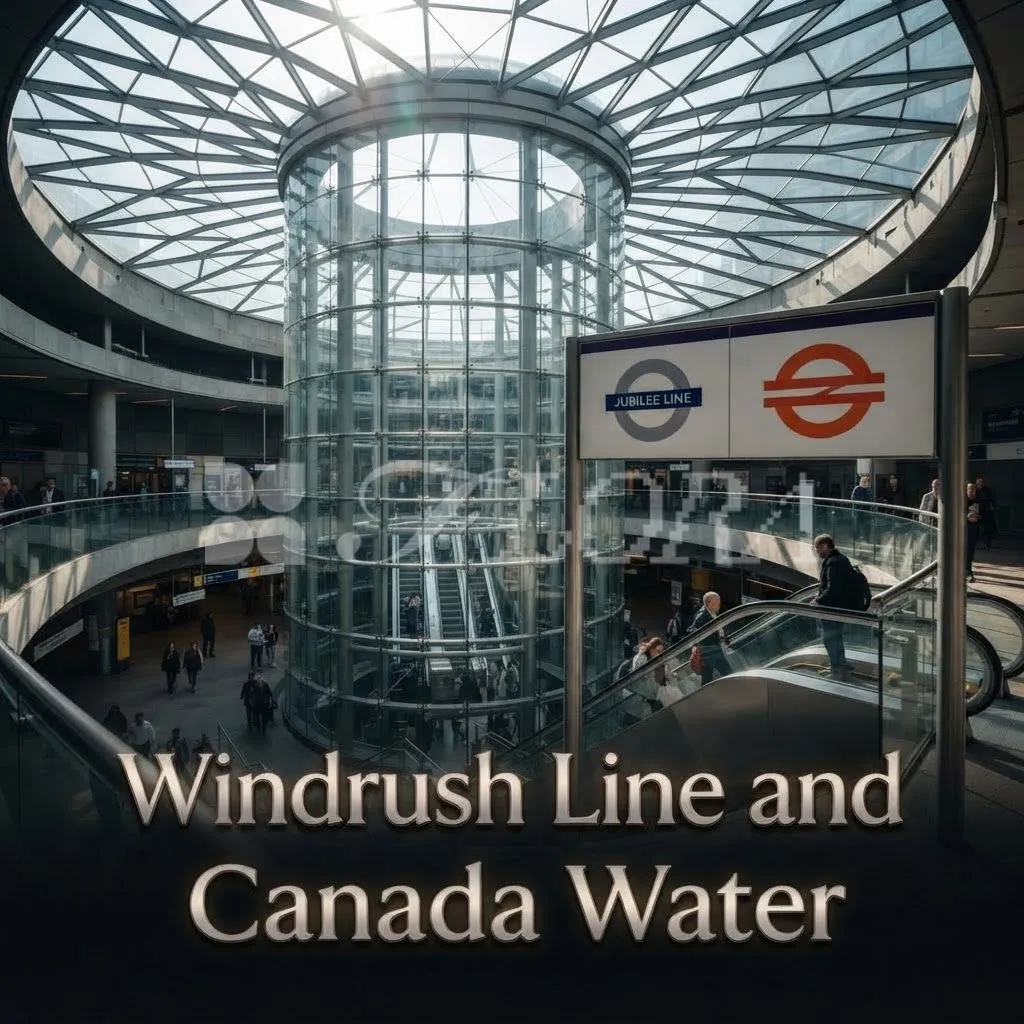
Windrush Line and Canada Water
Canada Water is one of the most important interchange stations on the it.
It provides convenient connections for passengers traveling between south London, east London, and central London.
- 🚆It services stop at Canada Water.
- 🚇 Jubilee line services connect here.
- 🏙️ Canada Water is in southeast London.
- 🌊 The area has a strong transport focus.
- 🔄 The Jubilee line provides central London connections.
- 🛍️ Canada Water has local shopping areas.
- 🌳 Nearby parks provide open space.
- 🚉 Surrey Quays is close by.
- 🧭 It is useful for cross-London journeys.
- 📱 TfL provides current service information.
- 🗺️ The station is clearly shown on transport maps.
- 🎫 Oyster and contactless travel are available.
- 🕐 Journey times vary.
- ⚠️ Engineering works may affect services.
- 🚆 Check the train destination.
- ⭐ Canada Water is a key Windrush line interchange.
The Jubilee line connection makes Canada Water particularly useful for reaching central London and other major destinations.
Windrush Line and Peckham Rye
Peckham Rye is an important south London station on the Windrush line. It serves the popular Peckham area.
- 🏙️ Peckham is a lively south London district.
- 🛍️ Local shops are nearby.
- 🍽️ Restaurants and cafes are nearby.
- 🎭 Cultural venues are accessible.
- 🌳 Peckham Rye Park is nearby.
- 🚉 The station provides rail connections.
- 🔄 Passengers can connect with other services.
- 📱 TfL provides travel information.
- 🎫 Contactless travel is available.
- 🧭 It can help with south London journeys.
- 🕐 Service frequency can vary.
- ⚠️ Check for planned works.
- 🚆 Confirm the train destination.
- ⭐ It is an important south London stop.
Peckham Rye combines useful transport access with a busy local area, making it one of the better-known stations on the it.
Windrush Line and Crystal Palace
Crystal Palace is another important destination served by the Windrush line. The area is known for its park, views, shops, and local community.
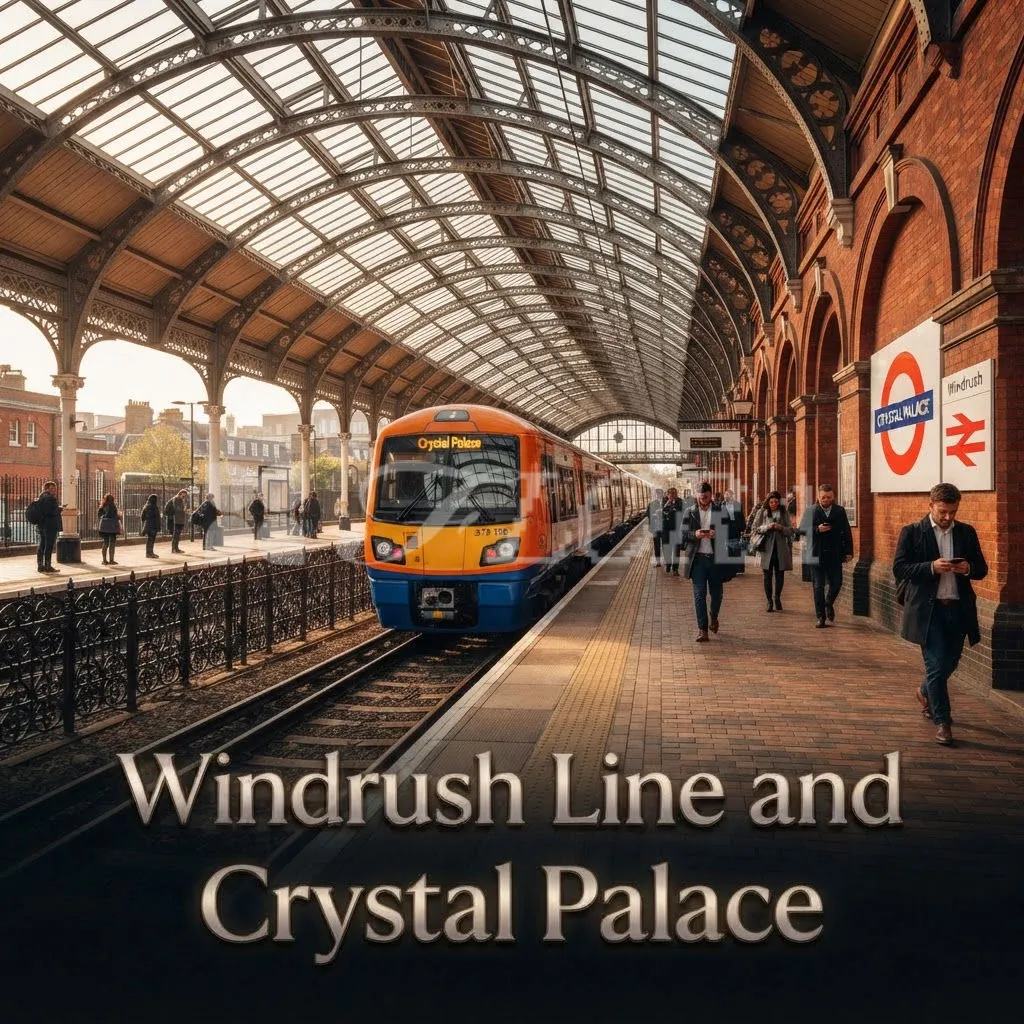
- 🚆 Windrush line trains serve Crystal Palace.
- 🌳 Crystal Palace Park is nearby.
- 🏙️ The area is in south London.
- 🛍️ Local shops are close to the station.
- 🍽️ Restaurants and cafes are available.
- 🎭 Cultural venues are nearby.
- 🔄 Other transport connections are available.
- 🗺️ The station appears on the Windrush line map.
- 📱 TfL provides live travel updates.
- 🧭 It is useful for south London travel.
- 🚉 Trains connect toward other stations.
- 🕐 Timetables vary by day.
- ⚠️ Engineering works can change services.
- 🌿 The surrounding area has green spaces.
- ⭐ Crystal Palace is a popular Windrush line destination.
Crystal Palace is especially useful for visitors heading to the park and for residents traveling across south London.
Windrush Line and Norwood Junction
Norwood Junction is an important interchange in south London. It connects the Windrush line with other rail services and provides access to areas around Norwood and Croydon.
- 🚆 Windrush line services serve Norwood Junction.
- 🚉 National Rail services connect here.
- 🏙️ It serves the Norwood area.
- 🚆 Services can connect toward Croydon.
- 🔄 It is an important interchange.
- 📱 TfL provides current information.
- 🧭 It is useful for south London journeys.
- 🚉 Trains serve several surrounding areas.
- 🕐 Service patterns can vary.
- ⚠️ Planned engineering work can affect travel.
- 📍 Check the platform information.
- 🚆 Confirm the final destination.
- 🔎 Use live travel information when needed.
- ⭐ Norwood Junction is a major south London transport point.
The station is particularly useful for passengers who need to connect between the Windrush line and other rail services.
Windrush Line and West Croydon
West Croydon is one of the key southern destinations associated with the Windrush line.
It provides connections with other London transport services and is an important gateway to Croydon.
- 🚆 Windrush line services serve West Croydon.
- 🚉 National Rail services are available.
- 🚋 Tram services are nearby.
- 🏙️ Croydon town centre is close.
- 🛍️ Shopping areas are nearby.
- 🔄 Several transport options meet here.
- 🗺️ It appears on the official transport map.
- 📱 TfL provides travel information.
- 🎫 Contactless travel is available.
- 🧭 It can be useful for south London journeys.
- 🚆 Services connect toward other areas.
- 🕐 Timetables can vary.
- ⚠️ Engineering works may change services.
- 📍 Check platform information.
- 🔎 Confirm the train destination.
- ⭐ West Croydon is an important southern transport hub.
West Croydon gives the Windrush line a strong connection with the wider Croydon transport network.
Windrush Line to Clapham Junction
The Windrush line also serves a branch toward Clapham Junction, one of London’s busiest railway stations.
- 🚆 Clapham Junction is a major railway station.
- 🚉 Windrush line services serve the station.
- 🚆 Many National Rail services connect here.
- 🏙️ Clapham is in southwest London.
- 🔄 It provides many interchange opportunities.
- 🧭 It can help passengers cross London.
- 🗺️ The branch appears on the transport map.
- 📱 Live travel information is available.
- 🎫 Contactless travel can be used.
- 🕐 Journey times depend on the destination.
- 🚆 Services may operate on different branches.
- 📍 Check the platform before boarding.
- 🔎 Use current TfL information.
- 🧳 It can be useful for longer London journeys.
- ⭐ Clapham Junction is a major rail connection.
Passengers traveling toward Clapham Junction should always check the destination displayed on the train because Windrush line services operate on different branches.
Windrush Line Connections
One of the biggest advantages of the Windrush line is the number of connections it provides with other London transport services.
- 🚇 Victoria line at Highbury & Islington
- 🚇 Jubilee line at Canada Water
- 🚇 District line at Whitechapel
- 🚇 Hammersmith & City line at Whitechapel
- 🚆 Elizabeth line at Whitechapel
- 🚈 DLR connections around Shadwell
- 🚆 National Rail at several stations
- 🚋 Tram connections around Croydon
- 🚆 Connections at Clapham Junction
- 🚉 Connections at Norwood Junction
- 🚆 Connections at New Cross Gate
- 🚇 Connections toward central London
- 🗺️ Interchange symbols appear on official maps
- 📱 Journey planners can find routes
- 🔄 Changing trains can shorten journeys
- ⭐ Check live information before traveling
These connections make the Windrush line more than a simple south London railway route.
Windrush Line Zones and Fares
The Windrush line passes through several London travel zones. The cost of a journey depends on the zones and services involved.
- 🎫 London uses travel zones.
- 🏙️ Central London is mainly Zone 1.
- 💳 Contactless payment is available.
- 🎫 Oyster cards can be used.
- 📱 Contactless fares depend on the journey.
- 🧭 Your start and end points affect the fare.
- 🚆 Different services can form part of one journey.
- 🔄 Transfers can be included in journeys.
- 💷 Fares can change over time.
- 🗺️ A zone map can help.
- 🔎 Use the official fare information.
- ⚠️ Do not rely on old fare tables.
- 🧳 Visitors should check payment options.
- ⭐ Current TfL information is the best source.
For the most accurate fare, check the current TfL journey planner using the exact stations you plan to travel between.
Windrush Line in 2026
The Windrush line is now an established part of London’s named Overground network. The new line names make it easier for passengers to understand different sections of the network.
- 📅 The Windrush name is used in 2026.
- 🚆 It is part of London Overground.
- 🟠 It has its own line identity.
- 🗺️ Updated maps show the line separately.
- 🌍 The name recognizes Windrush history.
- 📜 The name connects transport with London’s heritage.
- 🚉 It serves many south London stations.
- 🏙️ It also connects with east and north London.
- 🔄 It has important interchanges.
- 📱 Digital travel planning is widely used.
- 🚆 Live service information helps passengers.
- 🛠️ Engineering works can temporarily affect routes.
- 🎫 Contactless payment remains convenient.
- 🧭 Named lines make route planning simpler.
- 📍 Station signs use the new line identity.
- ⭐ The Windrush line is an important 2026 London transport route.
The naming system gives each London Overground route a clearer identity while also recognizing different communities and parts of London’s history.
Windrush Line History and the Windrush Generation
The Windrush line takes its name from HMT Empire Windrush, the ship associated with the arrival of Caribbean migrants in Britain in 1948. The Windrush generation and their descendants have played an important role in London’s social, cultural, economic, and political life.
- 🚢 The name comes from Empire Windrush.
- 📅 The ship arrived in Britain in 1948.
- 🌍 Many passengers came from the Caribbean.
- 🇯🇲 People from Jamaica were among those who arrived.
- 🌎 Other Caribbean communities were also represented.
- 🏙️ Many people settled in London.
- 👷 Windrush migrants contributed to British society.
- 🎵 Caribbean culture influenced London music.
- 🍲 Caribbean food became part of London’s food culture.
- 🎭 Caribbean communities influenced the arts.
- 🏘️ South London became an important home for many families.
- 📜 The Windrush story is part of modern British history.
- 🕯️ The name honors this history.
- 🚆 The transport line connects many communities.
- 🌍 The name highlights London’s diversity.
- ⭐ The Windrush line carries both transport and historical meaning.
The name is therefore more than a transport label. It recognizes a major part of London’s modern history and the contribution of the Windrush generation.
Frequently Asked Questions About the Windrush Line
- ❓ What is the Windrush line? The Windrush line is one of the named London Overground routes serving areas across north, east, south, and southeast London.
- 🚆 When was the Windrush line name introduced? The London Overground routes received individual names in 2024.
- 🗺️ Is the Windrush line on the London Tube map? It is shown on London’s wider transport maps as part of the London Overground network.
- 🚉 Where does the Windrush line go? It serves stations between areas including Highbury & Islington, New Cross, Peckham, Crystal Palace, Norwood Junction, West Croydon, and a branch toward Clapham Junction.
- 🚇 Does the Windrush line connect with the Tube? Yes. Stations such as Highbury & Islington, Canada Water, and Whitechapel provide connections with Tube services.
- 🔄 Where can I change to the Jubilee line? Canada Water provides a connection with the Jubilee line.
- 🚇 Where can I change to the Victoria line? Highbury & Islington provides a connection with the Victoria line.
- 🚆 Does the Windrush line go to Whitechapel? Yes.
- 🏙️ Does it go to Peckham Rye? Yes.
- 🌳 Does it go to Crystal Palace? Yes.
- 🚉 Does it go to Norwood Junction? Yes.
- 🏙️ Does it go to West Croydon? Yes.
- 🚆 Does it go to Clapham Junction? A Windrush line branch serves Clapham Junction.
- 🎫 Can I use contactless on the Windrush line? London Overground accepts contactless payment as part of TfL’s fare system.
- 📅 Is the Windrush line running in 2026? Yes, it is an established London Overground route in the 2026 network.
- 🌍 Why is it called the Windrush line? The name recognizes the history and contribution of the Windrush generation and the communities connected with them.
Conclusion:
The Windrush line is an important London Overground route that connects many areas across the capital. Its network includes major stations such as Highbury & Islington, Whitechapel, Canada Water, Peckham Rye, Crystal Palace, Norwood Junction, and West Croydon, with a branch serving Clapham Junction.
Beyond transport, the line has an important historical meaning. Its name recognizes the Windrush generation, whose contribution has helped shape modern London.
For travel in 2026, passengers should use the latest TfL map and live journey information because timetables, engineering works, and temporary service arrangements can change.

David Parker is a content writer focused on motivational lines, personal development messages, and powerful words that inspire action.