

A rotary washing line is a useful outdoor clothes-drying system with a central pole and several arms that hold washing lines. It gives clothes plenty of space to dry in fresh air and can be a practical choice for homes, gardens, and families. Unlike a fixed clothesline, a rotary washing line can often be folded, removed, or lowered when it is not being used.
In 2026, rotary washing lines remain popular because they provide a simple way to dry clothes while reducing the need for a tumble dryer. This complete guide explains rotary washing line types, sizes, installation, covers, ground spikes, care, and useful buying considerations.
What Is a Rotary Washing Line?
A rotary washing line is an outdoor drying frame that spins around a central pole. Several arms extend from the middle, and washing lines run between those arms. Clothes can be hung across the different sections.
The rotating design allows the frame to move with the wind, which can help clothes dry naturally.

- 👕 It is used to dry clothes outdoors.
- 🌳 It usually stands in a garden.
- 🔄 The frame can rotate.
- 🧵 Lines run between the arms.
- 🏠 It can save indoor drying space.
- ☀️ Sunlight can help dry clothes.
- 💨 Air movement helps with drying.
- 🧺 It can hold many clothes.
- 📏 Different sizes are available.
- 🔧 Some models are removable.
- 🪴 It can fit into many garden spaces.
- 🛠️ Some designs use ground sockets.
- ♻️ Outdoor drying can reduce dryer use.
- ⭐ It remains useful in 2026.
The basic idea is simple: a rotary washing line gives you a large outdoor area for hanging laundry while using very little energy.
Types of Rotary Washing Lines
Rotary washing lines come in different designs. Some are designed for large families, while smaller models are better for compact gardens or limited washing loads.
The right type depends on available space, how much laundry you wash, and whether you want a permanent or removable setup.
- 🌳 Traditional rotary lines are common.
- 🪶 Lightweight models are easier to move.
- 🧱 Heavy-duty models are designed for regular use.
- 📏 Small models suit compact gardens.
- 🏡 Large models provide more drying space.
- 🔧 Ground-socket models can be removed.
- 🪛 Fixed models can stay in one place.
- 🧺 Folding models save storage space.
- ☀️ Outdoor models use natural drying.
- 🧵 Four-arm designs are common.
- 🔄 Rotating frames improve access.
- 🏕️ Portable designs can suit temporary use.
- 🏠 Wall-mounted alternatives suit very small spaces.
- 🛡️ Covered designs can help with storage.
- ♻️ Some models use durable materials.
- ⭐ Choosing the right type depends on your garden.
Before buying a rotary washing line, measure the available area and consider how much space the arms need when fully opened.
Rotary Washing Line Size Guide
The size of a rotary washing line is usually described by its overall diameter or the amount of line available. Larger models provide more hanging space but also require more room.
A good size should fit comfortably within the garden without blocking paths, doors, or other outdoor areas.
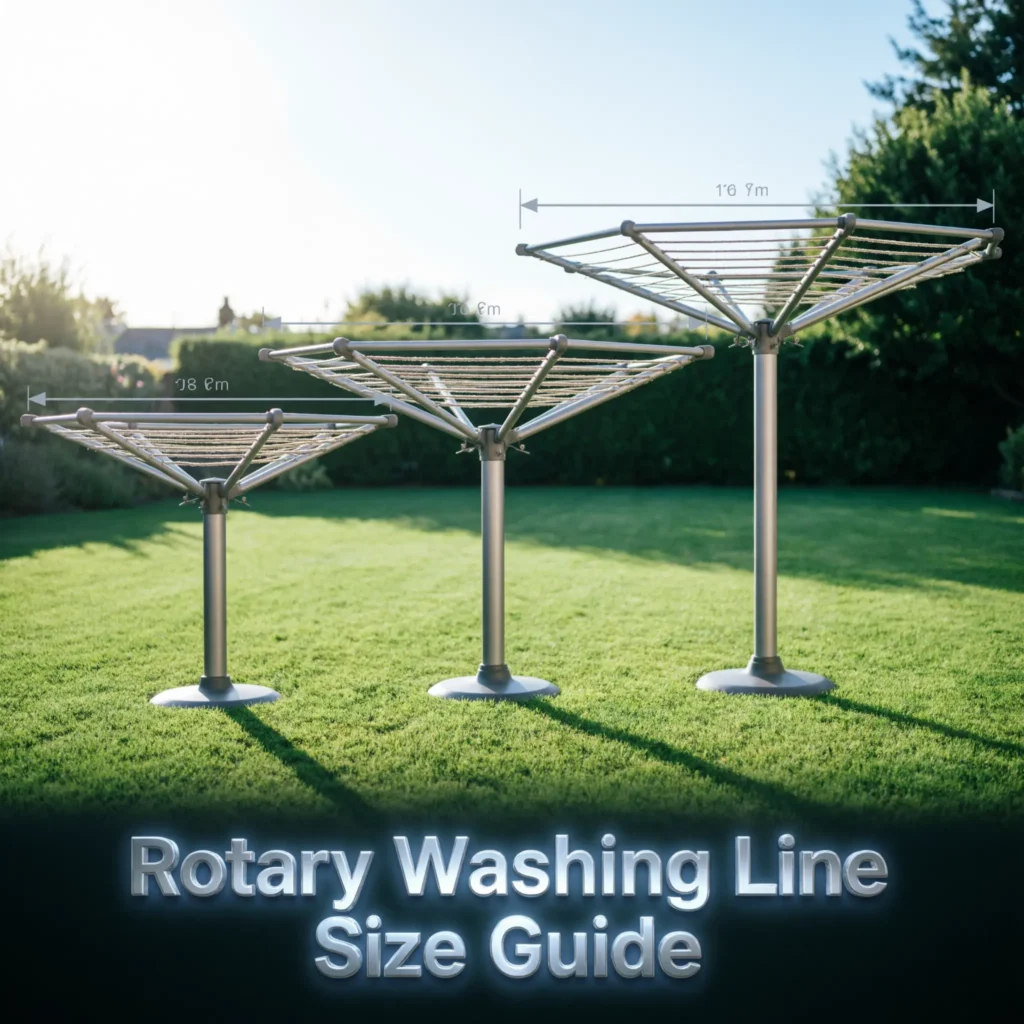
- 📏 Small rotary lines need less space.
- 🏡 Medium models suit many homes.
- 👨👩👧👦 Large models suit bigger households.
- 🧺 More line means more drying capacity.
- 🔄 Allow space for the rotating arms.
- 🚪 Keep doors and paths clear.
- 🪴 Avoid placing it too close to plants.
- 🧱 Check the surrounding ground.
- 📐 Measure the full open diameter.
- 👕 Consider your normal laundry load.
- ☀️ Think about where sunlight reaches.
- 💨 Leave room for airflow.
- 🛠️ Check the manufacturer’s dimensions.
- ⭐ Choose practical size over maximum size.
A larger rotary washing line is not always better.
How Much Washing Does a Rotary Washing Line Hold?
The amount of laundry a rotary washing line can hold depends on its size, line length, design, and manufacturer specifications.
It is useful to consider both the number of items and the total line space rather than simply counting shirts or towels.
- 👕 Shirts need hanging space.
- 👖 Trousers can take longer sections.
- 🧺 Towels need wider spacing.
- 🧦 Small items can fill shorter sections.
- 🛏️ Bedding needs extra room.
- 🧥 Heavy clothes need strong lines.
- 👶 Children’s clothing uses less space.
- 🧺 A large wash needs more capacity.
- 📏 Longer lines provide more room.
- 🌬️ Clothes should not be packed tightly.
- ☀️ Spacing helps air move around clothes.
- 💨 Wind can improve natural drying.
- 🪢 Pegs keep clothes secure.
- 🔄 Rotating sections make hanging easier.
- 🏡 Household size affects capacity.
Avoid overcrowding the lines.
Rotary Washing Line Installation
Installing a rotary washing line correctly helps keep it stable and safe. Many models use a ground spike or socket that is placed securely into the ground.
The installation method depends on the model, so always follow the manufacturer’s instructions.

- 🛠️ Choose a suitable location.
- 📏 Measure the open area.
- 🌳 Check for nearby obstacles.
- 🧱 Make sure the ground is suitable.
- 📍 Mark the installation point.
- 🪛 Use the correct ground fitting.
- 📐 Keep the pole upright.
- 🔨 Secure the ground socket properly.
- 🧰 Use suitable tools.
- 🔄 Check that the frame rotates correctly.
- 💨 Consider normal wind conditions.
- 🚪 Keep the line away from busy paths.
- 🏠 Avoid blocking access.
- 🔎 Check the fittings regularly.
- ⭐ Follow the manufacturer’s installation guide.
A stable base is one of the most important parts of a rotary washing line. A poorly secured pole can move or become unstable in strong wind.
Rotary Washing Line Ground Spike
A rotary washing line ground spike helps hold the central pole in the ground. It is especially useful for models that are designed to be removed when the washing line is not needed.
The spike needs to be firmly installed so the pole remains stable during normal use.
- 🛠️ It supports the central pole.
- 📍 It sits in the ground.
- 🔄 The pole fits into the socket.
- 🌳 It can be used in garden soil.
- 🧱 Some ground conditions need special care.
- 📏 Installation depth depends on the product.
- 🔨 Correct installation improves stability.
- 💨 Wind makes stability important.
- 👕 Wet clothes can add weight.
- 🧺 Heavy laundry increases the load.
- 🔧 Some sockets allow easy removal.
- 🏡 Removable systems can save garden space.
- 🪛 Check the fitting regularly.
- 🧹 Keep dirt away from the socket.
- 🔎 Look for movement or damage.
- ⭐ Use the fitting supplied or recommended for the model.
Do not assume every ground spike works with every rotary washing line. Compatibility and installation requirements vary between designs.
Rotary Washing Line Cover
A rotary washing line cover can help protect a folded washing line from dirt, rain, dust, and general outdoor exposure when it is not being used.
A cover can be particularly useful when the line stays outside for long periods.
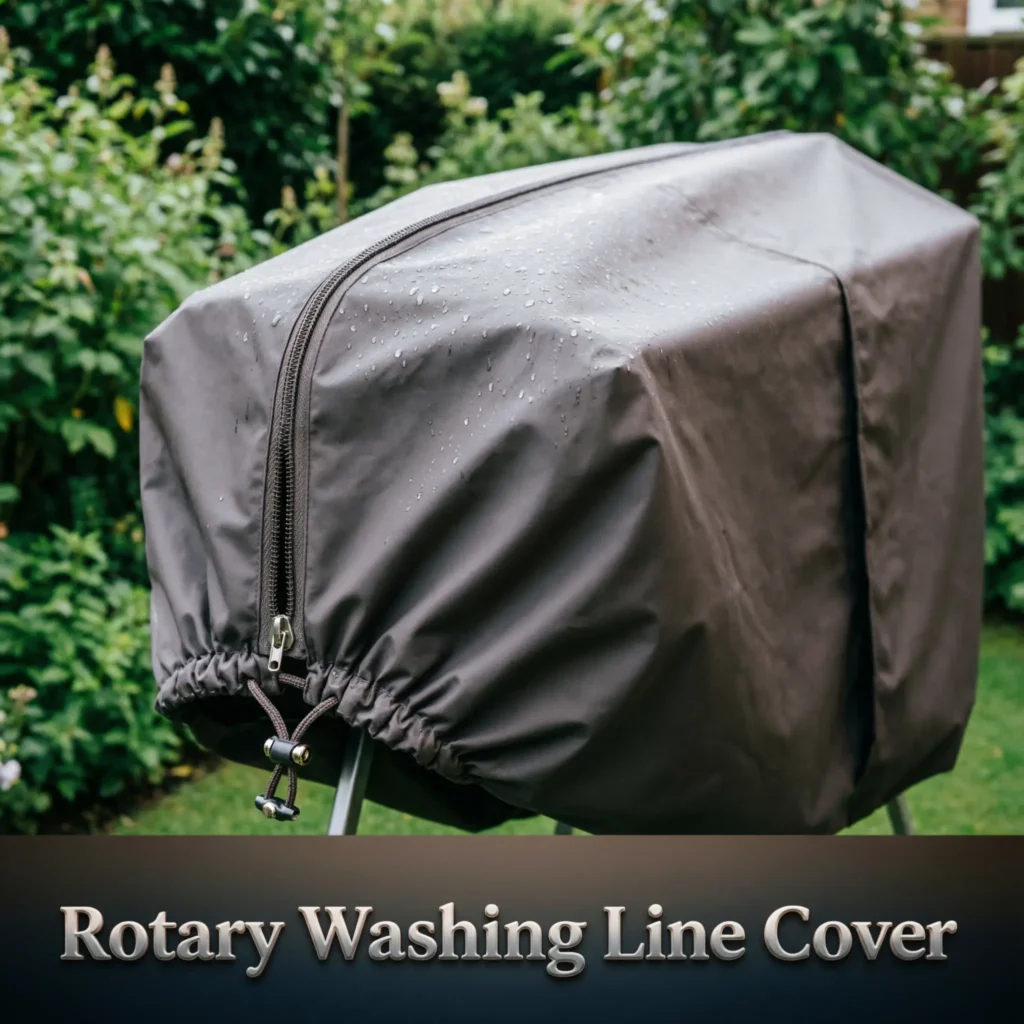
- 🛡️ It can protect the folded frame.
- 🌧️ It can help keep rain away.
- 🌬️ It can reduce exposure to dirt.
- ☀️ It can reduce direct weather exposure.
- 🧹 It can keep the frame cleaner.
- 📦 It can help with storage.
- 🧵 Different covers fit different sizes.
- 🔄 Fold the frame correctly first.
- 🔎 Check the cover for damage.
- 🧼 Clean the cover when needed.
- 🌳 Outdoor storage needs regular care.
- 🛠️ Follow the manufacturer’s instructions.
- 🏡 A cover can improve long-term care.
- ⭐ It is a useful accessory for many models.
A cover does not replace proper maintenance, but it can help keep the washing line cleaner between uses.
Rotary Washing Line for Small Gardens
A small garden does not always mean you have to give up outdoor clothes drying. Compact rotary washing lines can provide useful drying space without taking over the garden.
- 📏 Choose a compact model.
- 🏡 Measure the garden first.
- 🔄 Check the full rotating diameter.
- 🚪 Keep paths clear.
- 🪴 Protect nearby plants.
- 🧺 Consider your usual wash size.
- 👕 Use space efficiently.
- 🧦 Hang small items together.
- 🌬️ Leave room for airflow.
- 📦 Store removable models safely.
- 🛠️ Use a suitable ground fitting.
- 🏠 Avoid blocking doors.
- 📐 Check dimensions carefully.
- ⭐ Compact designs can work well in smaller gardens.
A smaller rotary washing line can be a practical compromise when garden space is limited.
Rotary Washing Line for Large Families
Large households often produce more laundry, so additional drying space can be valuable. A larger rotary washing line can provide room for clothes, towels, bedding, and other washable items.
The important thing is to choose a model with enough line space and a strong support system.
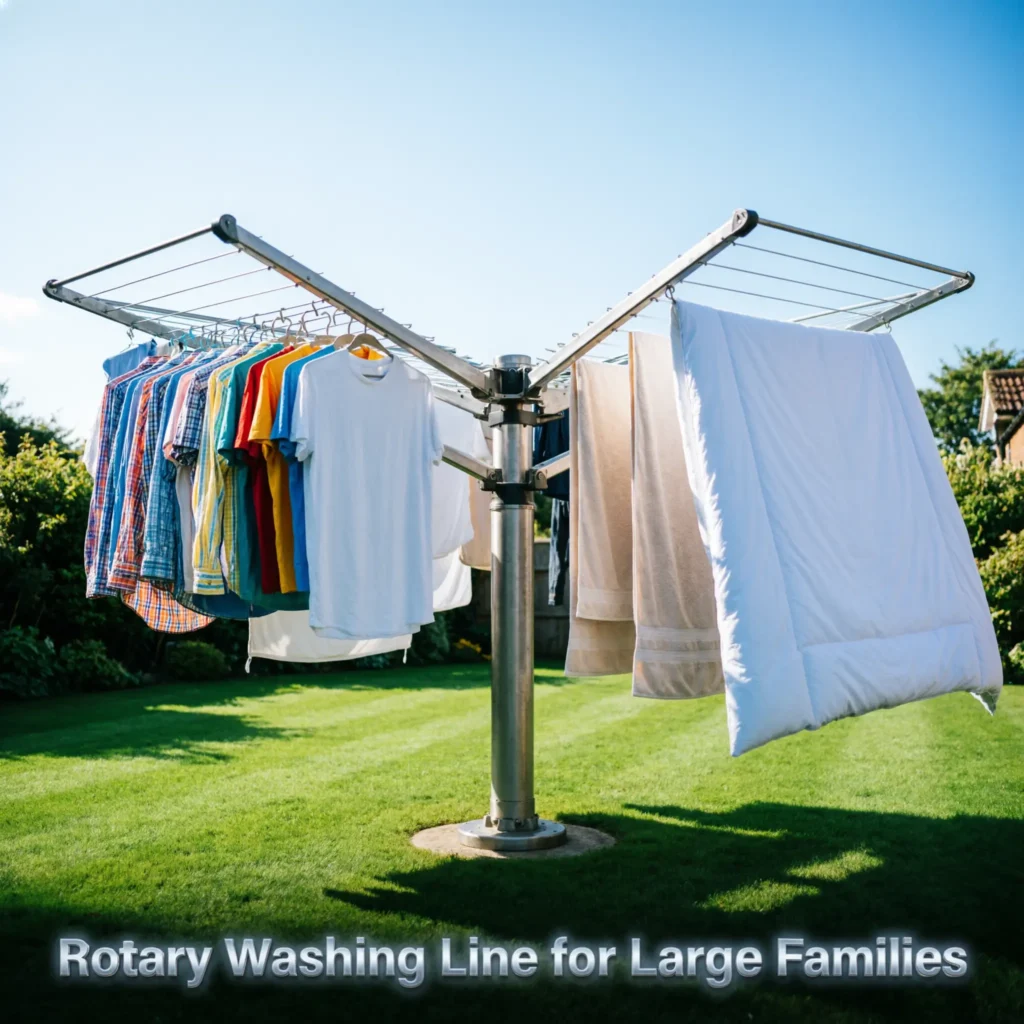
- 👨👩👧👦 Large households may need more space.
- 🧺 Bigger loads need longer lines.
- 👕 Clothes can be spread across sections.
- 🛏️ Bedding needs extra room.
- 🧦 Small items can fill unused sections.
- 🧵 Strong lines support regular use.
- 🔄 Rotation makes hanging convenient.
- ☀️ Outdoor drying can reduce dryer use.
- 💨 Airflow helps laundry dry.
- 🌳 A large garden gives more flexibility.
- 🛠️ Choose a strong installation system.
- 🔎 Check the manufacturer’s capacity.
- 🪢 Use good-quality pegs.
- ⭐ Capacity should match household laundry needs.
For a large household, buying the biggest possible model is not always necessary. Choose one that matches your actual washing routine and available garden space.
Rotary Washing Line in Winter
A rotary washing line can still be used during colder months, although drying may take longer. Cold temperatures, shorter daylight hours, rain, and higher humidity can all affect drying speed.
Good planning can make outdoor drying more practical during mild winter weather.
- ❄️ Winter drying can take longer.
- 🌧️ Rain can prevent outdoor drying.
- 🌥️ Cloudy days provide less solar warmth.
- 💨 Wind can still help clothes dry.
- 🧺 Avoid overcrowding the line.
- 🧵 Leave space between items.
- 🌬️ Good airflow is important.
- 🧥 Thick clothing needs more time.
- 🛏️ Bedding may need extra drying time.
- 🪢 Secure clothes with strong pegs.
- 🧹 Keep the line clean.
- 🛡️ Use a cover when storing it.
- ⭐ Flexible drying habits work best in winter.
Outdoor drying is not equally effective every winter day, so it helps to combine the rotary line with other safe drying options when weather conditions are poor.
Rotary Washing Line vs Tumble Dryer
A rotary washing line and a tumble dryer solve the same basic problem in different ways. A rotary line uses outdoor air, while a tumble dryer uses electricity or another energy source to dry clothes.
Choosing between them often depends on weather, available space, time, and household needs.
- 🌳 Rotary lines use outdoor air.
- ⚡ Tumble dryers use electricity or fuel.
- ☀️ Sunlight can help outdoor drying.
- 💨 Wind can improve drying.
- 🌧️ Weather affects a rotary line.
- 🕐 Outdoor drying can take longer.
- 🚀 Tumble dryers can dry clothes quickly.
- 🧺 Rotary lines can handle large loads.
- 🏡 A garden is needed for most outdoor models.
- 🏠 Tumble dryers work indoors.
- ♻️ Outdoor drying can reduce dryer use.
- 💷 Energy costs matter.
- 🧵 Some fabrics need careful drying.
- 🛠️ Rotary lines need outdoor maintenance.
- 🧹 Tumble dryers need regular filter care.
- ⭐ Many homes can benefit from using both.
How to Use a Rotary Washing Line Properly
Using the line correctly can improve drying and help protect clothes. The basic goal is to spread laundry evenly and leave enough space for air to move.
Small changes in how clothes are hung can make a noticeable difference.
- 👕 Shake clothes before hanging them.
- 🧺 Do not overload the lines.
- 🌬️ Leave space between garments.
- ☀️ Use available sunlight.
- 💨 Take advantage of natural airflow.
- 🪢 Use enough pegs.
- 👖 Hang heavier items securely.
- 🛏️ Spread bedding across longer sections.
- 🧦 Group small items efficiently.
- 🔄 Use different arms evenly.
- 📏 Avoid placing everything in one area.
- 🌧️ Check the weather.
- 🧹 Keep the line clean.
- 🔎 Check for damaged cord.
- 🛠️ Inspect the frame regularly.
- ⭐ Remove dry clothes promptly.
Even distribution can help keep the rotary washing line balanced and make it easier to rotate.
Rotary Washing Line Maintenance and Cleaning
Regular maintenance can help extend the useful life of a rotary washing line. Outdoor equipment is exposed to rain, wind, sunlight, dirt, and temperature changes.
A simple maintenance routine can prevent small problems from becoming bigger ones.
- 🧹 Wipe the frame when dirty.
- 🧵 Check the washing lines.
- 🔎 Look for fraying or damage.
- 🪛 Check screws and fittings.
- 📍 Inspect the ground socket.
- 🔄 Make sure the frame rotates properly.
- 🌧️ Remove standing water where possible.
- ☀️ Check for weather-related wear.
- 🧺 Keep the lines clean.
- 🪢 Replace damaged pegs.
- 🛠️ Follow manufacturer care instructions.
- 📦 Store removable parts correctly.
- 🚫 Do not use damaged equipment.
- ⭐ Regular checks can improve long-term reliability.
Rotary Washing Line Features to Consider in 2026
Modern rotary washing lines come with different features designed to make outdoor drying easier. The best features depend on how and where you plan to use the line.
Instead of choosing based only on appearance, compare practical features that match your everyday needs.
- 🧵 Check total line length.
- 🛠️ Look at installation options.
- 🔄 Check the rotation mechanism.
- 🪶 Consider the frame weight.
- 🧱 Check the construction materials.
- 🛡️ Look for weather-resistant components.
- 📦 Consider foldability.
- 🏡 Think about storage.
- 🪴 Check garden-space requirements.
- 🧺 Consider laundry capacity.
- 🧹 Think about cleaning needs.
- 🌧️ Consider a compatible cover.
- 📍 Check the ground fitting.
- 🔎 Read the manufacturer’s specifications.
- ⭐ Choose features based on real household needs.
In 2026, practical design remains important.
Rotary Washing Line Problems and Simple Solutions
Like other outdoor equipment, a rotary washing line can develop problems over time. Many issues are related to installation, weather exposure, overloading, or normal wear.
- 🔄 Frame will not rotate: Check for dirt, damage, or an obstruction.
- 📍 Pole feels loose: Check the ground fitting.
- 🌬️ Frame moves in wind: Check stability and installation.
- 🪢 Clothes fall off: Use suitable pegs.
- 🧺 Line feels overloaded: Reduce the amount of laundry.
- 📏 Arms feel uneven: Spread clothes more evenly.
- 🪛 Fittings loosen: Check and secure them as directed.
- ☀️ Material looks worn: Inspect for weather damage.
- 🏡 Space is too small: Consider a smaller model.
- 🚪 It blocks a path: Reconsider the installation position.
- 🛠️ Major damage appears: Stop using it and seek suitable repair or replacement advice.
- ⭐ Unsure about a fault: Follow the manufacturer’s guidance.
Frequently Asked Questions About Rotary Washing Lines
- It is an outdoor clothes-drying frame with a central pole, rotating arms, and lines for hanging laundry.
- 👕 How does a rotary washing line work? Clothes are hung from lines stretched between the rotating arms, allowing outdoor air to circulate around them.
- 🌳 Can a rotary washing line stay outside?
- 📏 What size rotary washing line should I buy? Choose a size that fits your garden and provides enough drying space for your normal laundry load.
- 🛠️ Does a rotary washing line need a ground spike?
- 🛡️ Do I need a rotary washing line cover? A cover can help protect a folded or stored line from outdoor dirt and weather.
- 🧺 Can a rotary washing line hold bedding?
- 💨 Does wind help clothes dry? Yes. Moving air can help moisture leave wet fabric more quickly.
- ☀️ Is sunlight needed?
- ❄️ Can I use a rotary washing line in winter?
- 🔄 Why does a rotary washing line rotate? The rotating frame makes it easier to access different sections and can respond to airflow.
- 🏡 Is a rotary washing line good for a small garden?
- 🧹 How do I maintain a rotary washing line? Regularly inspect the frame, lines, fittings, ground socket, and rotation mechanism, and follow the manufacturer’s care instructions.
Conclusion:
A rotary washing line is a simple and practical way to dry clothes outdoors. Its rotating arms provide useful hanging space, while natural air and sunlight can help laundry dry without relying on a powered dryer.
The best choice depends on your garden size, household laundry needs, available storage, installation method, and preferred features. Small models can suit compact gardens, while larger designs can provide more space for families.
In 2026, the rotary washing line remains a useful household product because it combines simple design, reusable outdoor space, and low-energy clothes drying. With proper installation and regular care, it can be a valuable part of an everyday laundry routine.

Natalie Carter writes emotional and uplifting lines about relationships, happiness, confidence, and everyday experiences.