

Line art is a simple style of drawing that uses lines to create pictures, shapes, objects, people, animals, and designs. It can use thin, thick, straight, curved, smooth, or broken lines. Unlike detailed paintings, line art often focuses on outlines and basic forms instead of heavy shading or many colors.
In 2026, line art remains popular in drawing, digital illustration, tattoos, logos, coloring pages, posters, worksheets, and social media designs. It is also a useful starting point for beginners because you can create clear artwork with only a few basic tools. This guide explains what line art means, its types, uses, techniques, and simple ideas for beginners.
What Is Line Art?
It is artwork made mainly from lines. The lines can show the shape, edges, movement, or details of a subject without needing full color or realistic shading.
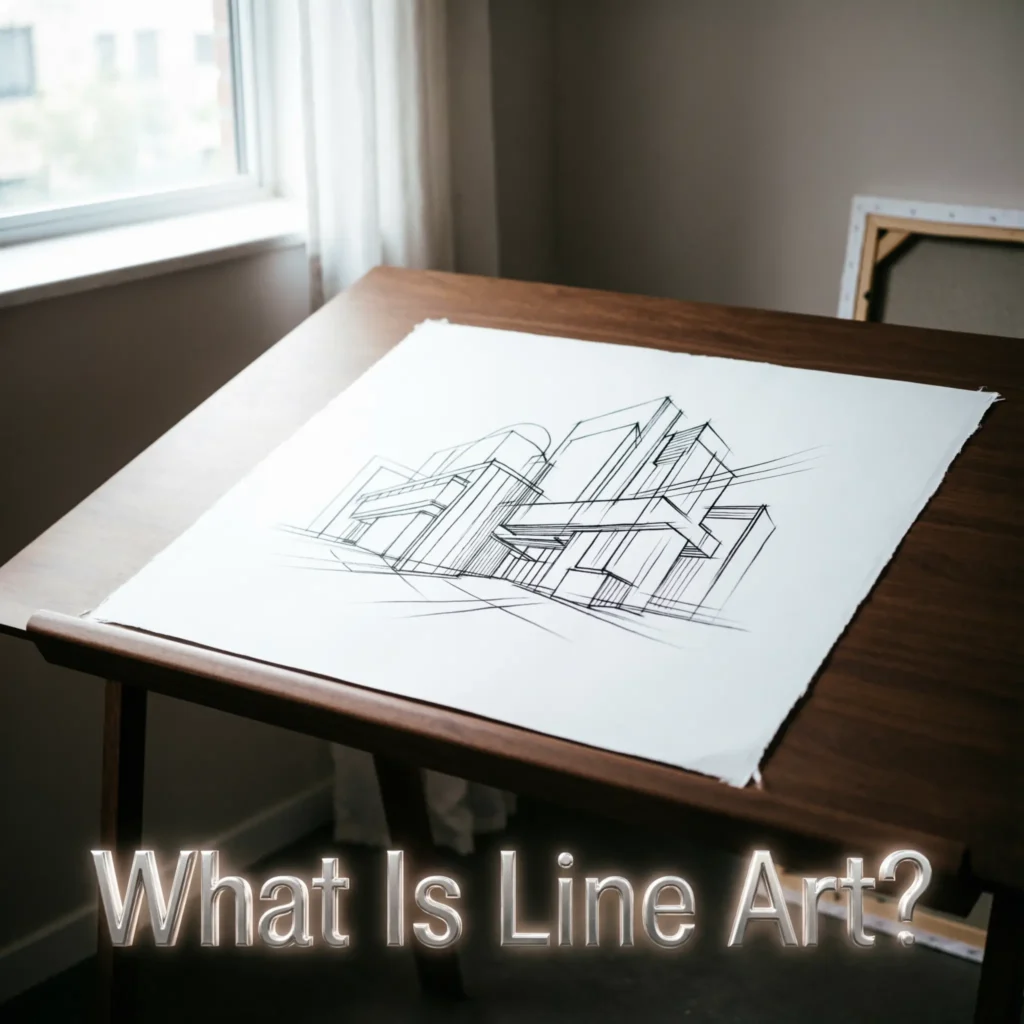
- ✏️ Line art uses lines as its main element.
- 🖊️ It can be drawn with a pen.
- 🖍️ Pencils can also create line drawings.
- 💻 Digital tools are widely used.
- 🎨 It can be black and white.
- 🌈 Some line art uses color.
- 🐱 Animals are common subjects.
- 🌸 Flowers work well for line drawings.
- 🏠 Buildings can be drawn with simple lines.
- 👤 Faces can use simple outlines.
- ✨ Decorative lines can add style.
- 🖼️ It works well for posters.
- 📚 It can be used in books.
- 🎨 Artists can combine lines with shading.
- 🧑🎨 Beginners can learn it step by step.
The main idea is simple: lines communicate the shape and details of an image. A skilled artist can create a surprisingly detailed picture with only carefully placed lines.
Types of Line Art
There are many forms of it. Some styles are very simple, while others use detailed patterns and overlapping lines to create depth.
- ➖ Straight lines create clean edges.
- 〰️ Curved lines create soft shapes.
- 🔄 Continuous lines keep the drawing connected.
- ✍️ Contour lines follow an object’s shape.
- 🧵 Cross-contour lines show form.
- 🌀 Sketch lines can create movement.
- 🖊️ Ink lines create strong outlines.
- ✏️ Pencil lines can look soft.
- 📏 Geometric lines create structured designs.
- 🌿 Organic lines create natural forms.
- 🖼️ Minimalist line art uses fewer details.
- 🎭 Gesture lines show movement.
- 🐾 Animal line drawings use simple outlines.
- 🧩 Patterned lines create decorative artwork.
Each type gives an artist a different way to communicate an idea. Beginners can start with basic contours and gradually experiment with texture, patterns, and more complex forms.
Simple Line Art for Beginners
It is a great place to begin because it does not require advanced drawing skills. Beginners can practice basic shapes and slowly turn them into recognizable objects.
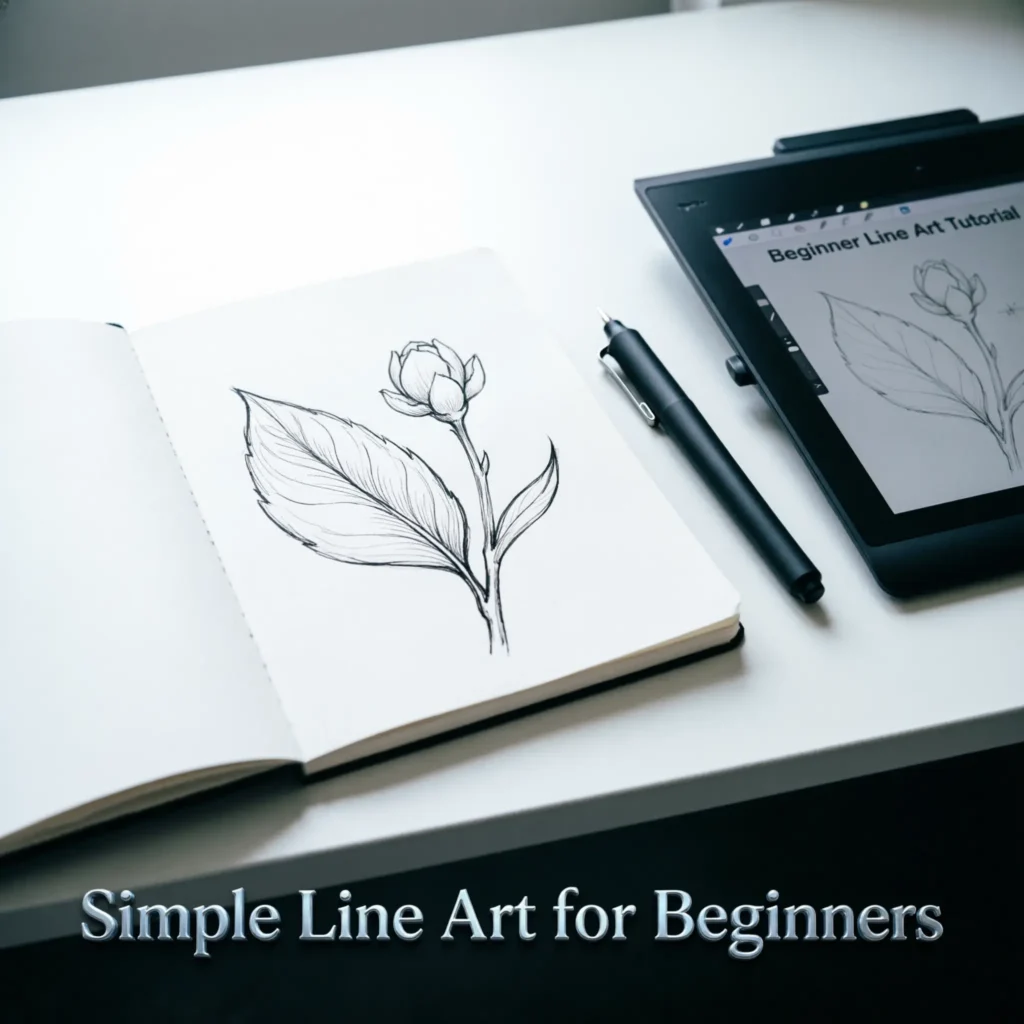
- ✏️ Start with circles.
- ◻️ Practice squares.
- 🔺 Draw triangles.
- ➖ Practice straight lines.
- 〰️ Try smooth curves.
- 🌸 Draw a simple flower.
- 🍃 Sketch a leaf.
- ☀️ Draw a sun.
- ☁️ Practice simple clouds.
- 🏠 Draw a small house.
- 🐱 Try a cat outline.
- 🐶 Draw a simple dog.
- ❤️ Practice a heart shape.
- ⭐ Draw stars.
- 🌙 Try a crescent moon.
- 🎨 Repeat each drawing several times.
The goal is not to make perfect drawings immediately. Repeating simple shapes helps your hand become more comfortable with line control and makes more detailed drawings easier later.
Line Art Drawing Techniques
It depends on control, observation, and practice. Artists use different techniques to make lines look clean, expressive, and interesting.
- 🖊️ Vary line thickness.
- ✏️ Use light lines for guides.
- 🧹 Erase unwanted construction lines.
- 🎯 Focus on accurate shapes.
- 〰️ Practice smooth curves.
- 📏 Use rulers for straight edges.
- 🔄 Try continuous-line exercises.
- 👀 Observe your subject carefully.
- 🧩 Break complex objects into shapes.
- 🖼️ Use outlines to define forms.
- 🌑 Add selective shading.
- ✨ Use small details carefully.
- 🌀 Try cross-contour lines.
- 📐 Check proportions.
- 🧘 Draw slowly when accuracy matters.
- 🔁 Practice regularly.
Line control improves with practice. Instead of trying to create a complicated illustration immediately, work on individual skills such as smooth curves, steady outlines, and consistent pressure.
Line Art Styles
It can look very different depending on the artist’s choices. Minimalist drawings may use only a few lines, while detailed illustrations can contain hundreds of carefully arranged marks.
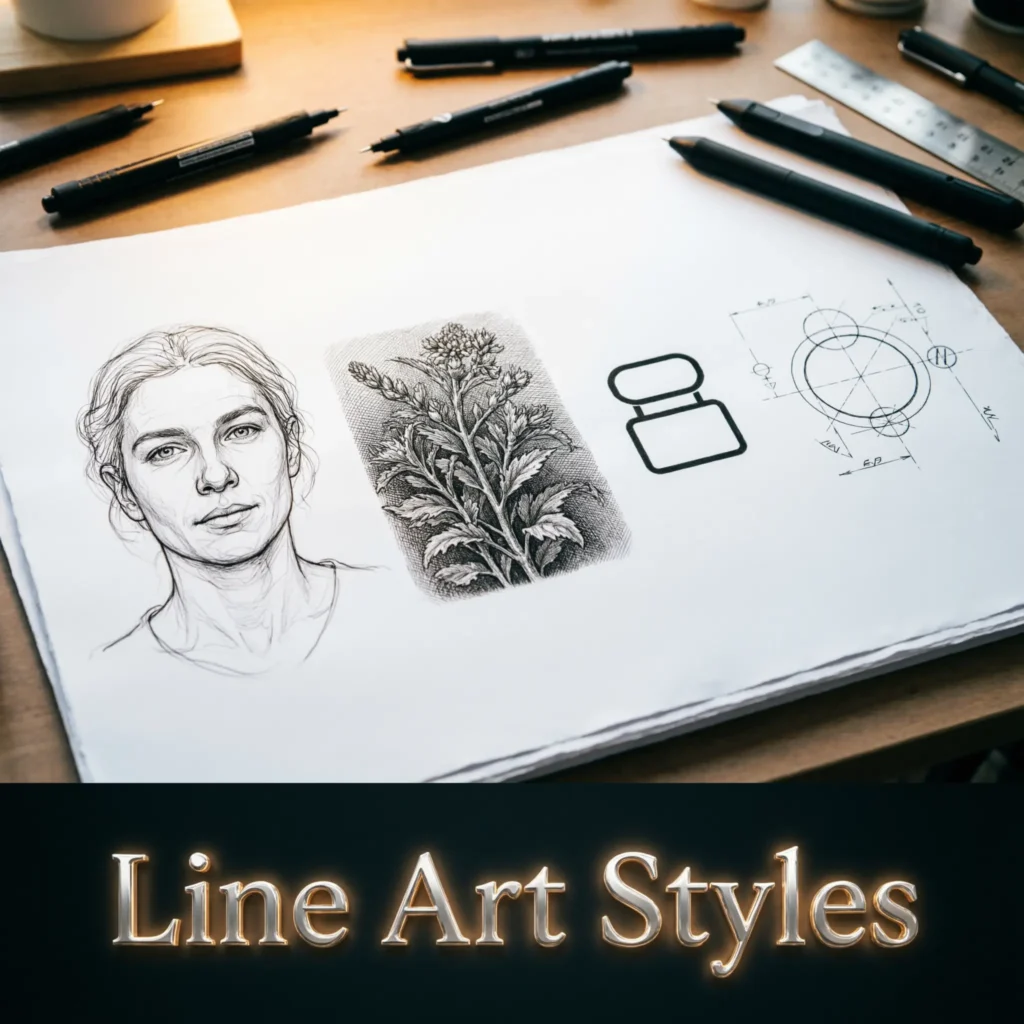
- 🖤 Minimalist line art uses simple forms.
- ✨ Fine line art looks delicate.
- 🖊️ Bold line art uses stronger outlines.
- 🌿 Botanical line art focuses on plants.
- 👤 Portrait line art represents faces.
- 🏙️ Architectural line art shows buildings.
- 📐 Geometric line art uses precise shapes.
- 🎨 Abstract line art uses creative forms.
- 🌸 Floral line art is popular for decoration.
- 🖋️ Ink line art creates sharp marks.
- 💻 Digital line art uses software tools.
- 📚 Illustration line art supports books and articles.
- 🖼️ Decorative line art can be used in designs.
There is no single correct its style. The best style depends on the subject, purpose, tools, and personal artistic choices.
Line Art With a Pencil
Pencil is one of the easiest tools for creating it. It allows artists to make light marks first and strengthen important lines later.
- ✏️ Pencils are easy to find.
- 📝 Paper is enough to begin.
- 🌫️ Light pressure creates soft lines.
- 🖊️ Strong pressure creates darker lines.
- 📐 Rulers help with precise shapes.
- 🧹 Erasers remove guide marks.
- 🎯 Pencil helps with planning.
- 🐱 Simple subjects are good for practice.
- 🌸 Flowers are beginner-friendly.
- 🏠 Buildings teach straight lines.
- 👤 Faces teach curved forms.
- 🌀 Curves can be practiced repeatedly.
- 🔍 Small details can be added later.
- 📚 Sketchbooks are useful for practice.
- 🔁 Repetition improves control.
- 🎨 Finished pencil drawings can remain monochrome.
It is especially helpful for learning because mistakes can usually be corrected. Once the basic shape is accurate, the artist can darken the final lines.
Digital Line Art
It is created using a computer, tablet, or other digital drawing device. Modern drawing applications provide tools that can make line work easier to edit and organize.
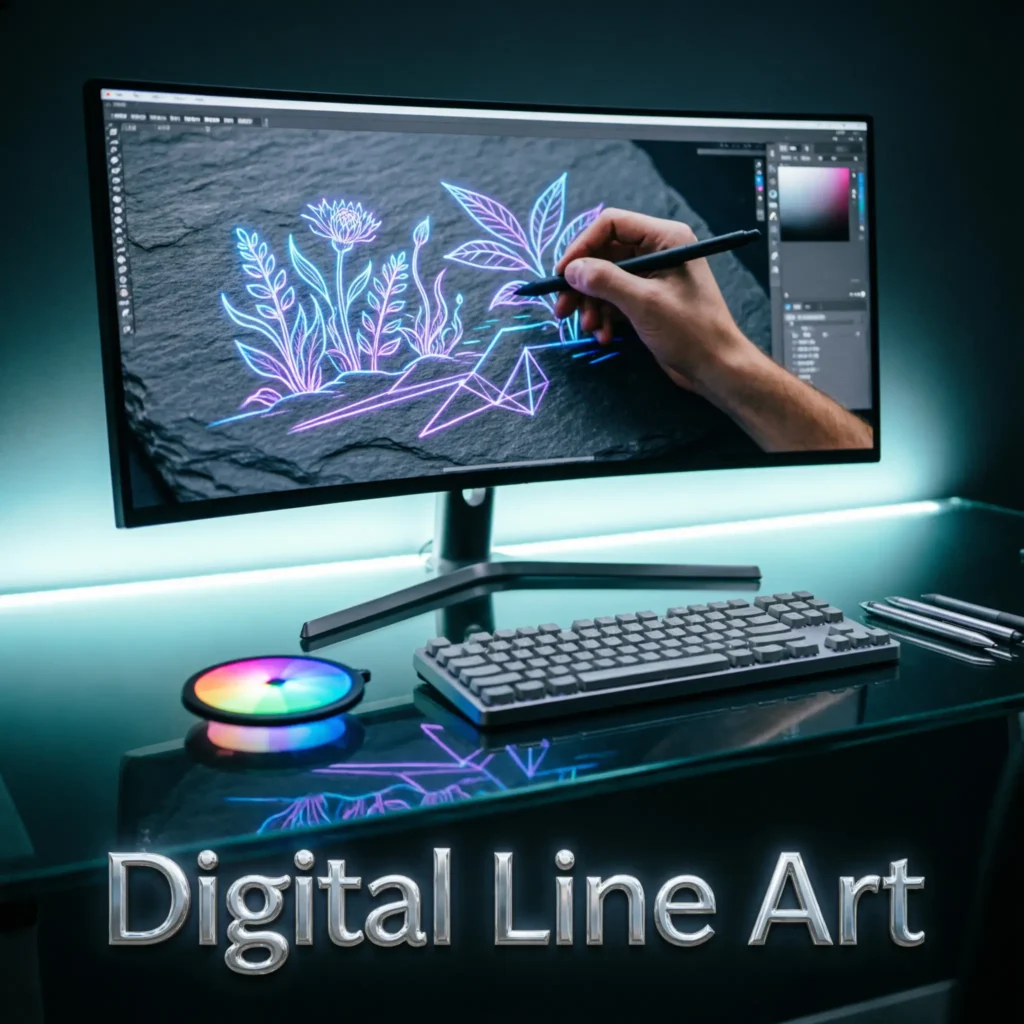
- 💻 Digital tools allow easy editing.
- 🖊️ Styluses can provide natural control.
- 📱 Some tablets support drawing directly.
- 🗂️ Layers help organize artwork.
- ↩️ Undo tools make corrections easy.
- 🔍 Zoom helps with small details.
- 📐 Digital rulers improve accuracy.
- 🧹 Erasers can remove marks quickly.
- 🖤 Black lines create classic artwork.
- 🌈 Color can be added later.
- ✨ Brushes can create different line styles.
- 📏 Stabilizers can smooth shaky lines.
- 🖼️ Artwork can be exported digitally.
- 📚 Illustrations can be used in publications.
- 🌐 Digital art can be shared online.
- 🔄 Original files can be edited later.
It is useful for artists who want flexibility. Layers, brush settings, and editing tools allow you to experiment without permanently changing the original drawing.
Continuous Line Art
Continuous it is created by keeping the drawing line connected for much or all of the image. It can produce simple, creative, and expressive artwork.
- 🖊️ The line keeps moving.
- 🔄 The drawing can feel connected.
- 👤 Faces are popular subjects.
- 🐱 Animals work well.
- 🌸 Flowers can be drawn continuously.
- ✨ Simple designs are effective.
- 🧠 It encourages careful observation.
- 🎯 Hand control becomes important.
- ➰ Curves create flowing movement.
- 🌀 Overlapping lines can add character.
- 🖼️ Minimal designs suit this style.
- 📱 Social media graphics can use it.
- 🖨️ It can work well in prints.
- 🎨 Color can be added afterward.
- ✏️ Pencil or pen can be used.
- 🔁 Practice makes the technique easier.
Continuous it can be challenging at first because the artist must think ahead. It is also a fun exercise for learning observation and hand movement.
Line Art for Tattoos
It is often used as inspiration for tattoo designs because clear outlines can create simple and recognizable images. Tattoo design should always be created and applied by a qualified professional.
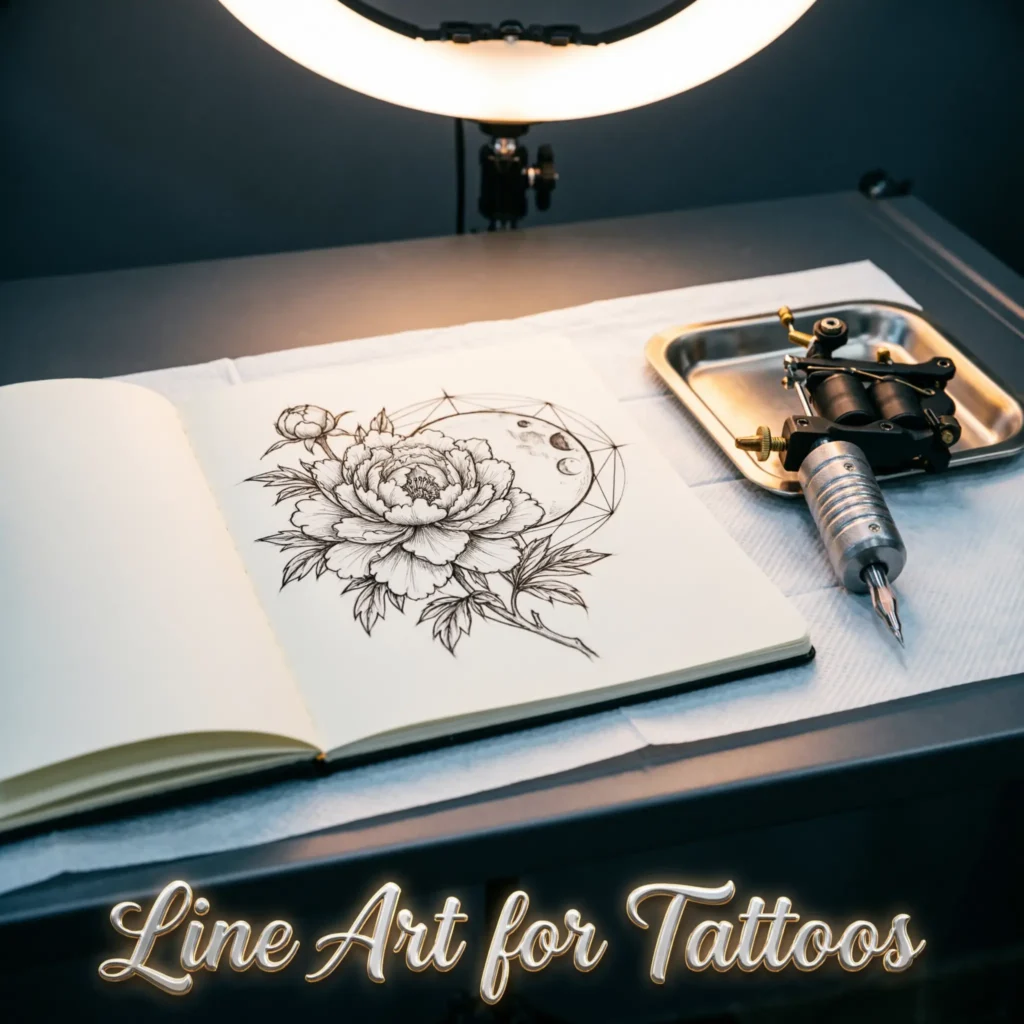
- 🌸 Flowers are common subjects.
- 🐍 Animals can use strong outlines.
- 🌙 Moon designs can be simple.
- ⭐ Stars work well with basic shapes.
- 🌿 Leaves create natural patterns.
- 🌀 Abstract lines can form unique designs.
- 📐 Geometric shapes can create structure.
- 🖤 Black line designs are classic.
- ✨ Fine details can create a delicate look.
- 🧩 Patterns can form larger designs.
- 👤 Portrait outlines require skill.
- 🏛️ Architecture can inspire designs.
- 🖊️ Clean lines are important.
- 📏 Placement affects the design.
- 🎨 Artists can create custom artwork.
- 🧑🎨 Professional guidance is important.
It is popular for tattoo inspiration because the designs can remain visually clear without relying on large areas of color or heavy shading.
Line Art in Graphic Design
Graphic designers use lines to organize layouts, separate sections, create borders, and guide the viewer’s attention.It can therefore be useful beyond traditional drawing.
- 🖼️ Lines can frame images.
- 📐 Lines can organize layouts.
- ➖ Horizontal lines can separate sections.
- 〰️ Curved lines can add movement.
- ➰ Decorative lines can add style.
- 🧩 Patterns can fill backgrounds.
- 🏷️ Logos can use clean outlines.
- 📱 Social media designs can use illustrations.
- 📚 Books can include line drawings.
- 📰 Editorial layouts can use line elements.
- 🖥️ Websites can use simple icons.
- 🎨 Lines can support brand identity.
- 🧭 Lines can guide visual attention.
- 📏 Consistent line weight creates unity.
- 🖊️ Simple graphics can be easy to recognize.
Good graphic design uses with purpose. Too many lines can make a design crowded, while carefully placed lines can make information easier to understand.
Line Art in Architecture
Architectural drawings often rely on lines to show walls, doors, windows, shapes, measurements, and building structures. Line-based drawings can communicate ideas before construction begins.
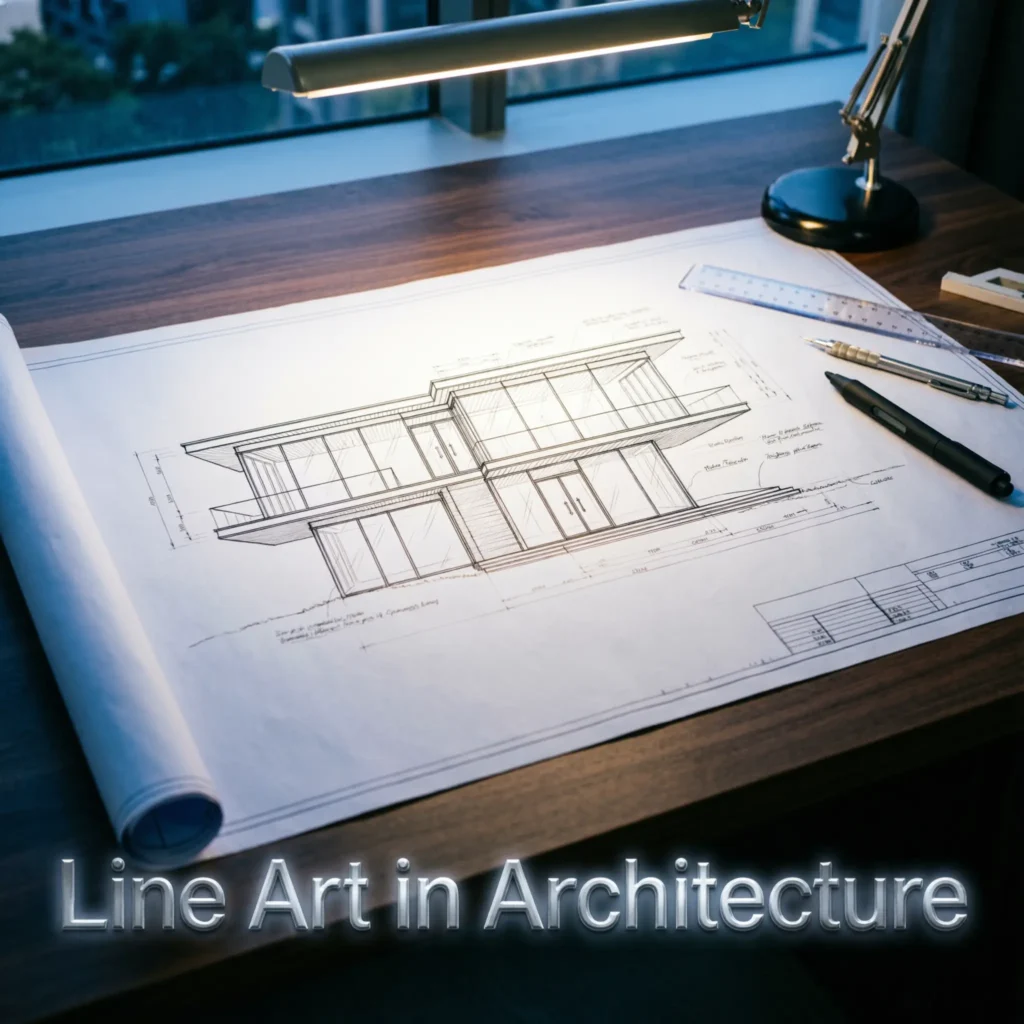
- 🏠 Floor plans use lines.
- 🏢 Building elevations use lines.
- 📐 Measurements depend on accurate marks.
- 🚪 Doors can be shown with symbols.
- 🪟 Windows can be represented with lines.
- 🧱 Walls need clear outlines.
- 🏗️ Construction drawings use technical lines.
- 📏 Scales help represent dimensions.
- 🖊️ Different line weights show importance.
- 🗺️ Site plans use structured drawings.
- 🏛️ Architectural sketches explore ideas.
- 💻 CAD software creates precise drawings.
- 🔍 Details can be enlarged.
- 🧩 Complex structures can be broken into sections.
- 📚 Drawings communicate design ideas.
- 🏗️ Accurate plans support construction work.
Architectural line drawings are more technical than decorative line art. Accuracy, scale, symbols, and clear communication are especially important in professional drawings.
Line Art for Coloring Pages
Line art is commonly used to create coloring pages because clear outlines give people areas to fill with color. Simple designs are especially useful for younger learners.
- 🖍️ Outlines create coloring areas.
- 🌸 Flowers make popular pages.
- 🐶 Animals are fun subjects.
- 🚗 Vehicles can use bold outlines.
- 🏠 Houses create simple scenes.
- 🌳 Trees provide natural shapes.
- ⭐ Stars are easy to color.
- 🦋 Butterflies offer detailed patterns.
- 🐠 Fish can create ocean themes.
- 🦕 Dinosaurs are popular with children.
- 🎃 Seasonal designs can use outlines.
- 📚 Educational pages can teach concepts.
- ✏️ Thick lines can help beginners.
- 🖼️ Detailed pages suit older learners.
- 🎨 Empty areas allow creative choices.
- 😊 Simple pictures can make activities enjoyable.
Good coloring-page usually has clear shapes and enough open space for coloring. The complexity can be adjusted for different ages and skill levels.
Line Art Ideas for 2026
In 2026, artists can use line art in many creative ways, from digital illustrations and social media graphics to printable activities and personalized artwork.
- 🌸 Create a simple flower drawing.
- 🐱 Draw a favorite animal.
- 🌙 Make a moon illustration.
- 🏠 Sketch a small house.
- 👤 Practice a simple portrait.
- 🌀 Try abstract line patterns.
- 📐 Make geometric artwork.
- 🖊️ Create continuous-line drawings.
- 📱 Design a social media graphic.
- 📚 Make printable coloring pages.
- 🎨 Turn sketches into posters.
- 🏛️ Draw a famous building.
- ✨ Create decorative borders.
- 🧩 Combine several line styles.
The best ideas are often simple enough to understand but interesting enough to invite attention. You can start with one subject and experiment with different line weights, patterns, and compositions.
Line Art vs Sketching
It and sketching can look similar, but they often have different purposes. A sketch is usually a loose drawing used to explore an idea, while finished the tends to have clearer and more deliberate lines.
- ✏️ Sketches can be rough.
- 🖊️It is often cleaner.
- 🧠 Sketching helps develop ideas.
- 🎨It can be a finished product.
- 🧹 Sketches may contain guide marks.
- ✨ Finished line art usually removes clutter.
- 📐 Sketches can explore proportions.
- 📏 It can use precise outlines.
- 🖼️ Both can be used for illustrations.
- 💻 Both can be digital.
- 📝 Both can use pencils.
- 🔍 Sketches may include construction lines.
- 🎯 It is usually has clearer edges.
- 🧑🎨 Both are useful artistic skills.
Common Questions About Line Art
People often search for line art ideas, definitions, drawing methods, and examples. These simple answers cover some of the most common questions.
- ✏️ Can beginners learn line art? Yes, basic shapes are a good starting point.
- 🎨 Does line art have to be black and white? No. It can include color.
- 🌸 What are common line art subjects? Flowers, animals, faces, buildings, and abstract shapes are popular.
- 🌀 What is continuous line art? It is a style where one connected line creates much of the drawing.
- 📐 Is line art useful for geometry? Yes, geometric line drawings can show shapes and structures clearly.
- ✏️ Is pencil good for line art? Yes, especially for beginners.
- 🖊️ Is ink better than pencil? Neither is always better; each creates a different result.
- 🎯 How can I improve line art? Practice smooth lines, shapes, proportions, and observation.
- 🧑🎨 Is line art a finished drawing? It can be either a finished artwork or part of a larger illustration.
- ✨ Why is line art popular? It is simple, flexible, clear, and works across many art styles.
- 🔁 How often should beginners practice? Regular short practice sessions can help improve control.
Line art is one of the most accessible forms of drawing because it can start with something as simple as a pencil and paper. With practice, those basic lines can become detailed and expressive artwork.
Conclusion
Line art is a flexible art style built around lines, shapes, outlines, and simple details. It can be used for beginner drawings, digital illustrations, tattoos, coloring pages, graphic design, architecture, logos, and many other creative projects.
Whether you prefer pencil sketches or digital artwork, learning line art starts with basic skills such as drawing straight lines, curves, circles, and simple shapes. In 2026, its clean and versatile style continues to make it useful for both traditional and digital creativity.

Samuel Reed is a motivational writer who creates meaningful lines about courage, determination, and achieving personal goals.