

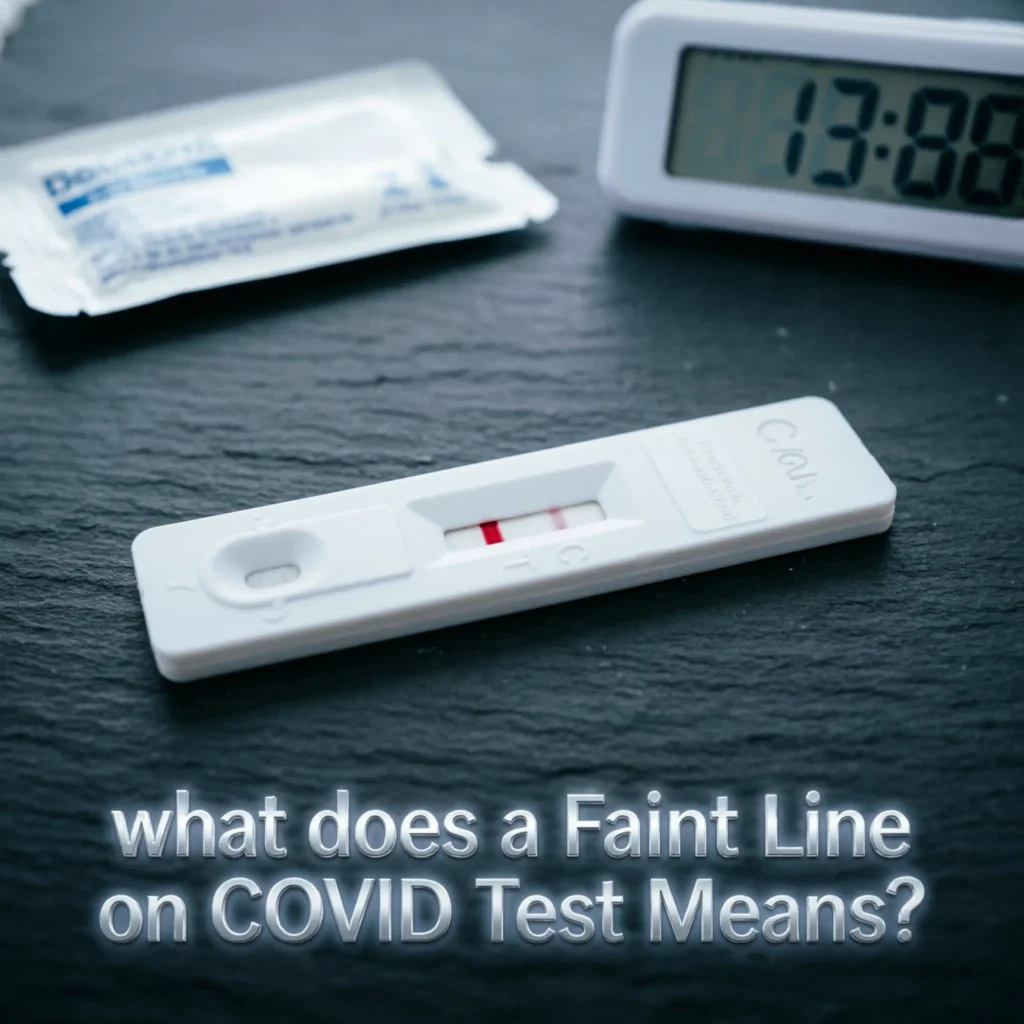
A faint line on a COVID test can be confusing, especially when the second line is very light. If you are using a home rapid antigen test, the meaning depends on which line is faint, when you read the test, and what the test instructions say.
For many rapid COVID-19 tests, a visible second line in the test area within the test’s stated reading time is treated as a positive result, even if the line is faint. However, tests differ, so the instructions for your specific test should be followed. If the result is unclear or invalid, repeating the test may help.
What Does a Faint Line on a COVID Test Mean?
A faint line can sometimes indicate that the test detected COVID-19 antigen. The line does not need to be as dark as the control line to be meaningful on many tests.
- 🧪 A rapid test has specific reading instructions.
- ➖ The control line shows that the test worked.
- ➕ A second test-area line may indicate a positive result.
- 🔎 A faint line can still matter.
- ⏱️ Read the result only during the stated time window.
- 📋 Follow the instructions included with your test.
- 🦠 Antigen tests look for viral proteins.
- 📉 Line darkness does not reliably measure illness severity.
- 🧑⚕️ A healthcare professional can help with uncertainty.
- 🔄 An unclear result may require another test.
- ⚠️ Results read too late may be misleading.
- 📦 Different brands can have different instructions.
- 🧼 Follow the test’s sample-collection directions.
- 📱 Do not rely only on a photograph of the test.
- 📝 Record the result if you need it later.
- 🏠 Stay home and follow local health guidance if you may have COVID-19.
The safest approach is to treat a clearly visible test line according to the instructions for your particular test rather than judging the result only by how dark it looks.
Faint Positive COVID Test Line
If the test area shows a faint line within the manufacturer’s stated reading period, many rapid antigen tests consider that a positive result. The control line should also normally appear.
- 🧪 Check the test instructions first.
- ➕ Look for a line in the test area.
- ⏱️ Confirm that you read it on time.
- 🔎 A faint colored line can be important.
- 🦠 It may mean viral antigen was detected.
- 📋 Follow your test’s interpretation guide.
- 🏠 Consider yourself potentially infectious.
- 😷 Take reasonable steps to avoid spreading illness.
- 👨👩👧 Protect people who may be more vulnerable.
- 📞 Ask a healthcare professional if unsure.
- 🔄 Repeat testing when recommended.
- 🧪 Use an approved test correctly.
- 🚫 Do not interpret a very late line as automatically positive.
- 📦 Check whether the test is expired.
- 📝 Keep the test result if documentation is needed.
- ⚠️ Seek medical help if you develop serious symptoms.
A faint positive line should not be dismissed simply because it is lighter than the control line. The timing of the result and the test’s instructions matter more than line darkness.
Faint Line After the Test Time
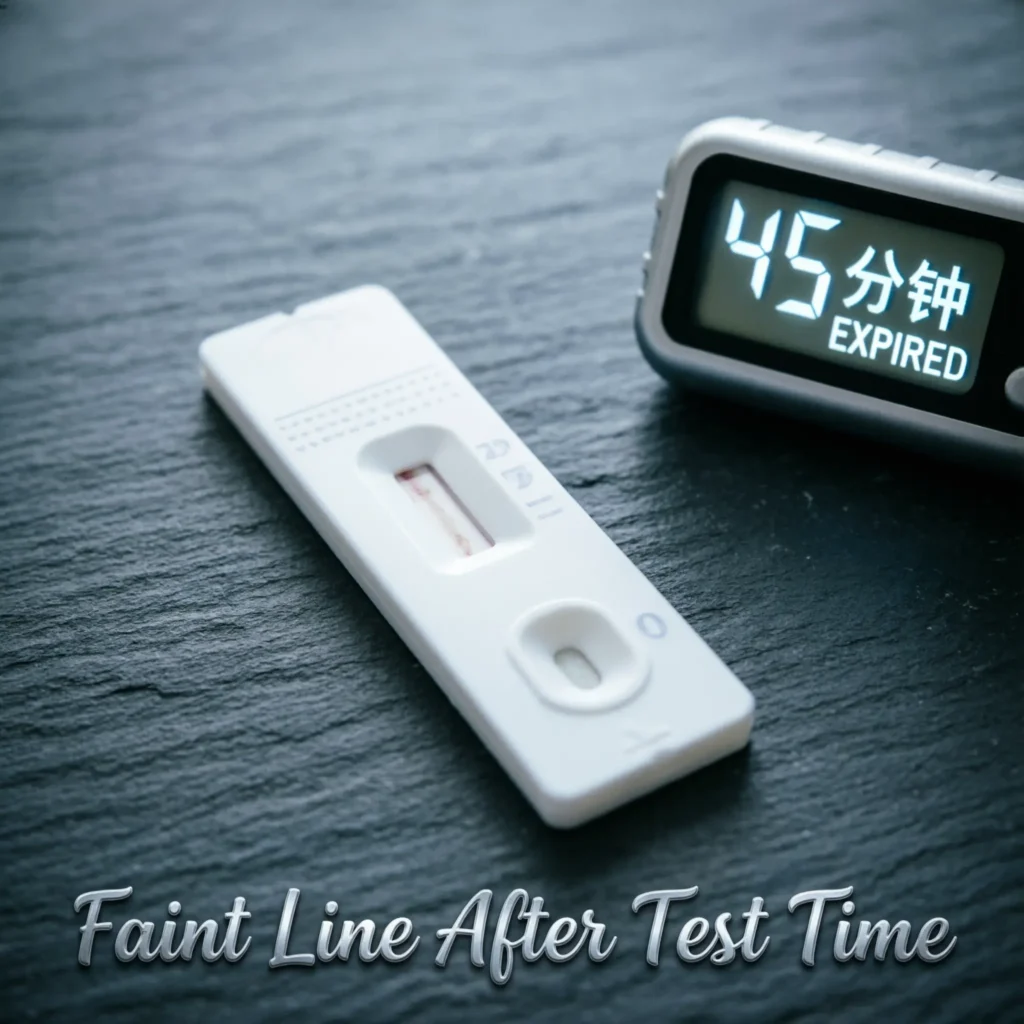
One important issue is when the line appeared. Rapid tests usually have a specific time range in which the result should be read. A mark that appears after that period may not have the same meaning.
- ⏰ Check the exact reading time.
- 📋 Read the manufacturer’s instructions.
- 🔎 Look at the result during the stated window.
- ⚠️ Do not automatically trust a late-appearing mark.
- 🧪 Different tests use different time limits.
- 📦 Check the package instructions.
- 📝 Note when you first saw the result.
- 📸 A photo taken much later may be misleading.
- 🔄 Consider repeating an unclear test.
- 🧑⚕️ Ask a professional when uncertainty remains.
- 🦠 Symptoms can provide additional context.
- 🏠 Follow current public-health advice.
- 🚫 Do not alter or reopen the test.
- 🧼 Use a fresh test when repeating.
- 📅 Check the expiration information.
- ✅ Use the result according to the official instructions.
A result should be interpreted based on the manufacturer’s specified window. This is one reason it is useful to set a timer when taking a rapid test.
Faint Line vs Strong Positive Line
People sometimes assume that a darker line means a stronger infection. That is not a reliable way to measure how sick someone is.
- 🟥 A strong line can indicate antigen detection.
- 🟨 A faint line can also indicate antigen detection.
- 📉 Line darkness is not a reliable illness score.
- 🦠 Antigen levels can change over time.
- ⏱️ Testing time can affect results.
- 🧪 Different tests can look different.
- 📦 Different brands use different materials.
- 📋 Follow the test instructions.
- 🩺 Symptoms matter separately from line intensity.
- 🧑⚕️ Medical advice may be needed for symptoms.
- 🔄 Repeat testing can sometimes clarify results.
- 🏠 Take precautions when infection is suspected.
- 😷 Follow current guidance about preventing spread.
- 🚨 Seek urgent help for severe symptoms.
- 📝 Keep track of testing if advised.
- ✅ Focus on the interpretation rules, not color strength alone.
The key point is simple: a darker line does not automatically mean a more serious illness, and a faint line does not automatically mean a mild infection.
Faint Line on COVID Test but No Symptoms
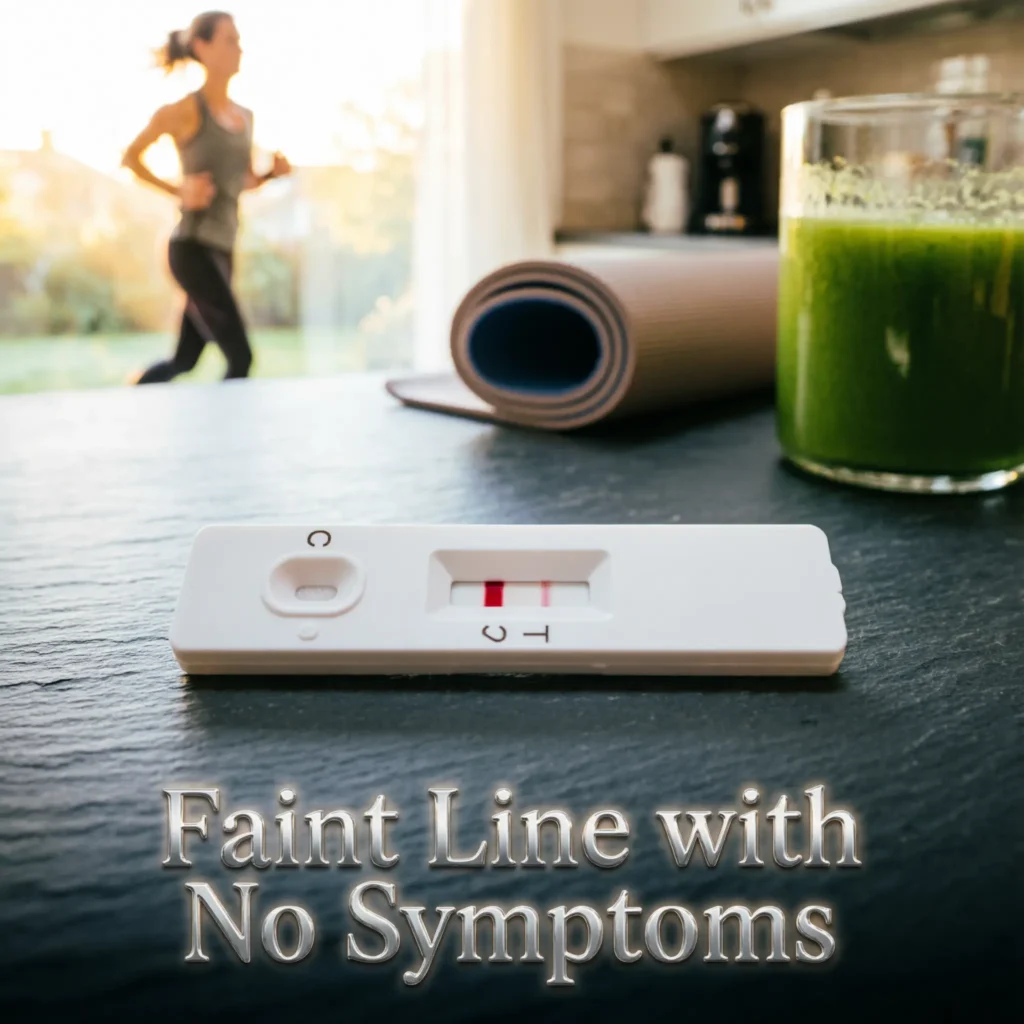
Someone can have COVID-19 without obvious symptoms. Therefore, the absence of symptoms does not automatically make a positive-looking rapid test meaningless.
- 🦠 COVID-19 can occur without obvious symptoms.
- 🧪 A positive antigen result can still matter.
- 🔎 Check whether the line appeared on time.
- 📋 Follow the manufacturer’s instructions.
- 🏠 Follow current local guidance.
- 😷 Take steps to reduce possible spread.
- 👥 Be careful around vulnerable people.
- 🔄 Repeat testing if recommended.
- 🧑⚕️ Ask a healthcare professional when unsure.
- 📅 Consider when exposure may have occurred.
- ⏱️ Testing at different times can produce different results.
- 🚫 Do not assume you are negative because you feel well.
- 📱 Avoid relying on social media interpretations.
- 📝 Keep a record if testing is required.
- ⚠️ Watch for new symptoms.
- 🚨 Seek medical care if serious symptoms develop.
Symptoms are only one part of the picture. The test result, timing, exposure history, and current health guidance can all matter.
Faint Line on COVID Test With Symptoms
If you have symptoms and see a faint test line during the correct reading period, the result deserves attention. Follow the test instructions and consider appropriate steps to reduce the chance of spreading infection.
- 🤒 Symptoms can include cough or fever.
- 🦠 A faint positive line may indicate infection.
- 🧪 Check the test correctly.
- ⏱️ Confirm the reading time.
- 📋 Follow the manufacturer’s guidance.
- 🏠 Stay home when appropriate.
- 😷 Reduce close contact with others.
- 🧼 Wash your hands regularly.
- 🪟 Improve ventilation when possible.
- 👥 Take extra care around vulnerable people.
- 🔄 Repeat testing if recommended.
- 🧑⚕️ Contact a healthcare professional if needed.
- 💧 Rest and maintain normal hydration.
- 📝 Monitor how you feel.
- ⚠️ Pay attention if symptoms worsen.
- 🚨 Get urgent medical help for severe symptoms.
If you are feeling very unwell, do not rely on the darkness of a test line to decide how serious your illness is. Your symptoms and overall condition are more important.
Why Is the COVID Test Line Faint?
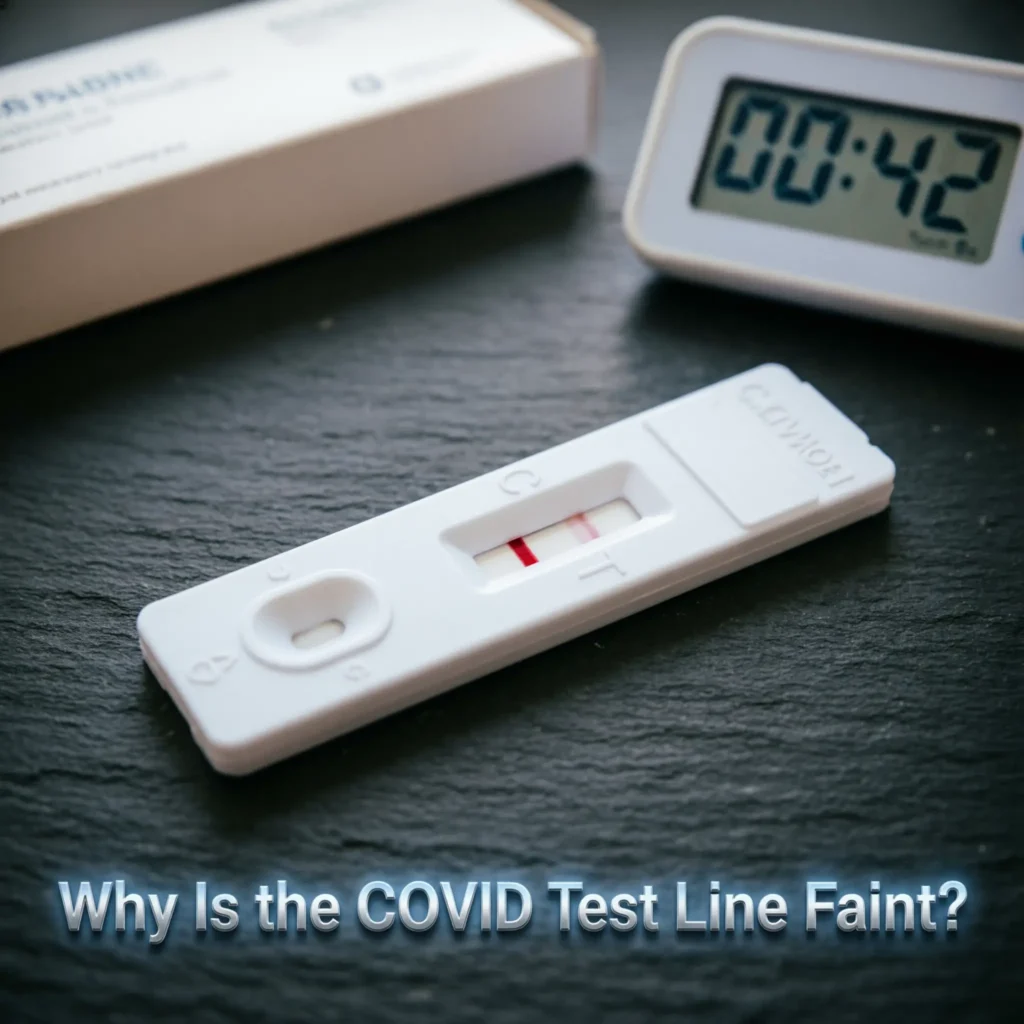
A faint test line can occur for several reasons. A rapid antigen test detects a certain amount of viral material, and the amount present can change over time.
- 🦠 Antigen levels can vary.
- ⏱️ Testing time can affect detection.
- 🧪 Test sensitivity differs by product.
- 📦 Different brands have different designs.
- 💧 Sample collection can affect the result.
- 👃 Sampling technique matters for some tests.
- 📋 Instructions should be followed carefully.
- 📅 The stage of infection can matter.
- 🔄 Results can change between tests.
- 🧫 The test detects antigen rather than measuring illness severity.
- 🧼 Incorrect handling can affect testing.
- 🌡️ Storage conditions can matter.
- 📦 Expiration information should be checked.
- 🔎 A faint line should be interpreted according to the test.
- 🧑⚕️ Professional advice can help with uncertainty.
- 🚫 Do not use line darkness as a viral-load measurement.
Because many factors can affect a rapid test, the appearance of a line should be interpreted using the test’s instructions rather than guessing what the shade means.
Faint Line on COVID Test After Infection
After an infection, testing results can change over time. A faint line may appear during a period when the amount of detectable antigen is changing.
- 🦠 Antigen levels can change over time.
- 📉 A line may become lighter.
- 📈 A line may become more noticeable.
- ⏱️ Timing matters.
- 🧪 Different tests can produce different results.
- 🔄 Repeated tests may show changing results.
- 📋 Follow the manufacturer’s instructions.
- 🏠 Follow current health guidance.
- 😷 Take precautions when appropriate.
- 🧑⚕️ Ask a healthcare professional if unsure.
- 📝 Keep track of symptoms.
- 🧪 Use tests correctly.
- 📅 Check expiration dates.
- 📦 Store tests as directed.
- ⚠️ Do not use line darkness to decide whether you are seriously ill.
- 🚨 Seek medical care for concerning symptoms.
A changing line can be difficult to interpret on its own. If you need a definite answer for medical, school, travel, or work reasons, follow the relevant testing requirements.
Faint Line on COVID Test and Repeat Testing
When a result is unclear, repeating the test may provide more information. The correct timing depends on the test instructions and the reason you are testing.
- 🔄 Repeat testing may help clarify uncertainty.
- 📋 Follow official testing guidance.
- 🧪 Use a new test.
- 📦 Check the expiration date.
- 🧼 Follow sample instructions carefully.
- ⏱️ Use the correct reading window.
- 🔎 Check both control and test areas.
- 📝 Record your results.
- 🦠 Consider recent exposure.
- 🤒 Consider any symptoms.
- 🏠 Take sensible precautions.
- 😷 Reduce possible transmission.
- 🧑⚕️ Ask for advice when needed.
- 🚫 Do not reuse a test.
- 📱 Avoid judging results from altered photographs.
- ✅ Use the manufacturer’s interpretation rules.
Repeat testing should not replace medical care when someone has significant symptoms. A healthcare professional can advise whether another type of test is appropriate.
Faint Line on COVID Test but Negative Control Line
The control line is important because it generally shows that the test has worked correctly. If the control line does not appear, the test may be invalid.
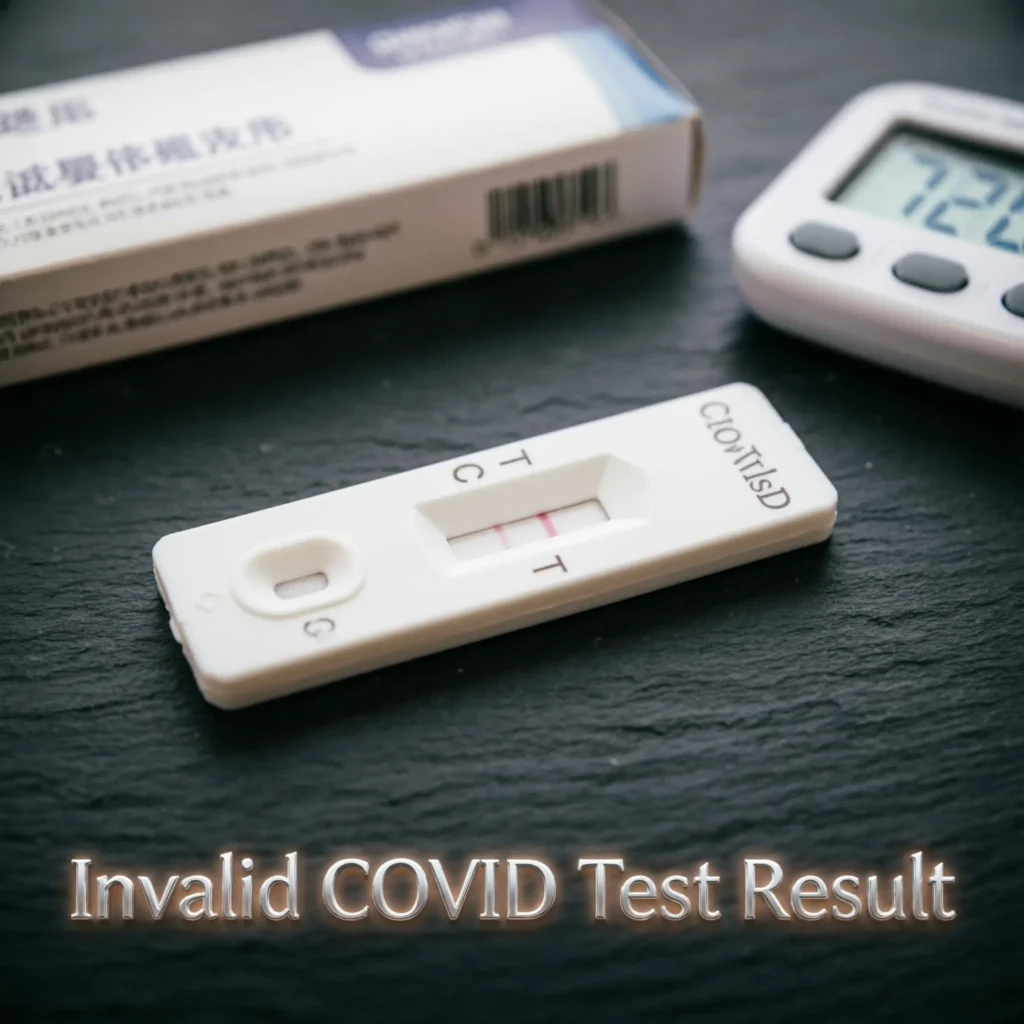
- 🧪 The control line helps confirm test validity.
- 🚫 No control line can mean an invalid test.
- 🔎 Check the manufacturer’s instructions.
- 📋 Do not interpret an invalid test as negative.
- 🔄 Use a new test if instructed.
- 📦 Check the test package.
- ⏱️ Follow the correct timing.
- 🧼 Follow sample instructions.
- 🧪 Use the correct test components.
- 📝 Record unclear results.
- 🧑⚕️ Ask a professional if confusion remains.
- 🚫 Do not reuse the test.
- 📅 Check expiration information.
- 🏠 Follow relevant health guidance.
- 😷 Take precautions if infection is suspected.
- ✅ Repeat the test correctly when appropriate.
A missing control line is different from a faint test line. If the control line is absent, the result generally cannot be interpreted as a valid negative or positive result.
Faint Line on COVID Test vs Evaporation Line
People sometimes use the term evaporation line for a mark that appears after the recommended reading time. This is why reading the test at the correct time is so important.
- ⏱️ Timing is important.
- 🧪 Rapid tests have specific instructions.
- 🔎 Check the result during the stated window.
- ⚠️ A late mark may be difficult to interpret.
- 📋 Do not rely on appearance alone.
- 📦 Follow the manufacturer’s guidance.
- 📸 Photos taken late can be confusing.
- 🧼 Use the test correctly.
- 🔄 Repeat an unclear test when appropriate.
- 🧑⚕️ Ask for professional advice if unsure.
- 🚫 Do not assume every late mark is positive.
- 📝 Record when the test was read.
- 🦠 Consider symptoms and exposure separately.
- 📅 Check expiration details.
- 🧪 Use a new test for repeat testing.
- ✅ Interpret the result according to official instructions.
If you see a faint mark only after the test’s stated reading window, do not automatically interpret it the same way as a line that appeared within the correct window.
How to Read a COVID Rapid Test
Reading a rapid test correctly is just as important as collecting the sample correctly. Always use the instructions that came with your specific test because procedures and interpretation can vary.
- 📋 Read the instructions before testing.
- 🧪 Check that the package is intact.
- 📅 Check the expiration information.
- 🧼 Clean your hands as directed.
- 👃 Collect the sample as instructed.
- 💧 Use the correct amount of sample.
- 🧪 Add the sample correctly.
- ⏱️ Set the required timer.
- 🔎 Check the control line.
- ➕ Look for a test-area line.
- 📖 Compare the result with the instructions.
- 🚫 Do not read the test outside the stated window.
- 📝 Record the result if needed.
- 🔄 Repeat when official guidance recommends it.
- 🧑⚕️ Ask for help if the result is unclear.
- 🚨 Seek urgent care for severe symptoms.
Correct testing technique reduces avoidable errors. If the instructions for your particular test differ from general advice, the manufacturer’s instructions should take priority.
When to Seek Medical Help
A COVID test result does not tell you how serious your symptoms are. If someone develops concerning symptoms, medical advice should be based on their condition rather than on whether a line is faint or dark.
- 🚨 Seek urgent help for severe breathing difficulty.
- 🫁 Serious breathing problems need prompt attention.
- 🧠 New severe confusion needs medical attention.
- 💤 Extreme difficulty staying awake can be concerning.
- 💙 Bluish or gray-looking skin can be an emergency sign.
- 📞 Contact local emergency services for emergencies.
- 🧑⚕️ Ask a healthcare professional about concerning symptoms.
- 🤒 Monitor symptoms over time.
- 🏠 Follow medical advice.
- 🦠 Do not judge severity from line darkness.
- 🧪 Testing and treatment decisions can be separate.
- 📋 Follow local health recommendations.
- 👥 Tell a trusted adult if you are feeling seriously unwell.
- 🚑 Do not delay emergency care to repeat a test.
- 📱 Keep important medical information available.
- ❤️ Your symptoms and safety matter more than the test line.
If you are a young person and you feel seriously unwell, tell a parent, guardian, teacher, or another trusted adult right away so they can help you get appropriate medical care.
Common Questions About a Faint Line on a COVID Test
Questions about faint COVID test lines are common because rapid tests can be difficult to interpret when a mark is very light.
- ❓ Does a faint line mean positive? On many rapid antigen tests, a visible test-area line during the correct reading period is interpreted as positive.
- 🧪 Does the line need to be dark? No. Follow your test’s instructions rather than judging line strength.
- ⏱️ What if the line appears late? A mark appearing outside the stated reading window may not be interpreted the same way.
- ➕ What if the control line is present? A control line generally indicates that the test worked correctly.
- 🚫 What if there is no control line? The test may be invalid.
- 🦠 Does a faint line mean a mild infection? No. Line darkness does not reliably show how serious an illness is.
- 🤒 Can I have COVID without symptoms? Yes, infection can occur without obvious symptoms.
- 🔄 Should I repeat the test? Follow current guidance and the instructions for your test.
- 📋 Can different brands look different? Yes.
- 📦 Does expiration matter? Yes. Check the product information.
- 🧼 Does sample collection matter? Correct collection and handling are important.
- 📱 Can a photo confirm my result? A photograph cannot replace the test’s official interpretation instructions.
- 🧑⚕️ What if I am still unsure? Ask a healthcare professional or pharmacist for guidance.
- 🏠 What should I do if I may have COVID? Follow current local guidance to reduce possible spread.
- 🚨 What if I feel very sick? Seek medical help based on your symptoms rather than waiting for another test.
- 📚 Why are instructions important? Different tests can have different procedures and reading windows.
Conclusion:
A faint line on a COVID test can have meaning, particularly when a visible test-area line appears within the manufacturer’s recommended reading time. However, the correct interpretation depends on the specific test, control line, timing, and instructions.
Do not use the darkness of a line to judge how severe an illness is. If the result is unclear, follow the test instructions and seek advice from a healthcare professional when needed. For serious symptoms, seek medical care regardless of how faint or strong the test line appears.

Natalie Carter writes emotional and uplifting lines about relationships, happiness, confidence, and everyday experiences.