

The Jubilee line map is one of the most useful ways to understand how this London Underground route connects north-west London with central London and east London. The Jubilee line runs between Stanmore and Stratford, serving important areas such as Wembley, West Hampstead, Baker Street, Westminster, Waterloo, London Bridge, Canary Wharf, North Greenwich, and Canning Town.
In 2026, the Jubilee line remains an important part of the London transport network. TfL provides official Tube maps, live travel information, route planning, and service updates through its website and TfL Go. (Transport for London)
What Is the Jubilee Line?
The Jubilee line is a London Underground route that links Stanmore in north-west London with Stratford in east London. On the Tube map, it is shown using a silver/grey colour.
It passes through several major transport and business areas, making it useful for commuters, tourists, students, and visitors.

- 🚇 The Jubilee line is part of London Underground.
- 🗺️ It has a distinctive silver colour on Tube maps.
- 📍 The northern end is Stanmore.
- 📍 The eastern end is Stratford.
- 🚉 It serves 27 stations.
- 🏙️ It passes through central London.
- 🏢 Canary Wharf is on the line.
- 🎡 North Greenwich serves The O2 area.
- 🏛️ Westminster is an important central station.
- 🚂 London Bridge provides major connections.
- 🚆 Stratford connects with several other services.
- 🏠 It serves north-west London communities.
- 🌆 It crosses important parts of east London.
- ♿ Many Jubilee line stations offer step-free access.
- 📱 TfL Go provides live journey information.
- ⭐ It is one of London’s major Underground routes.
The Jubilee line is particularly useful because it connects residential areas with major business, entertainment, tourist, and transport destinations.
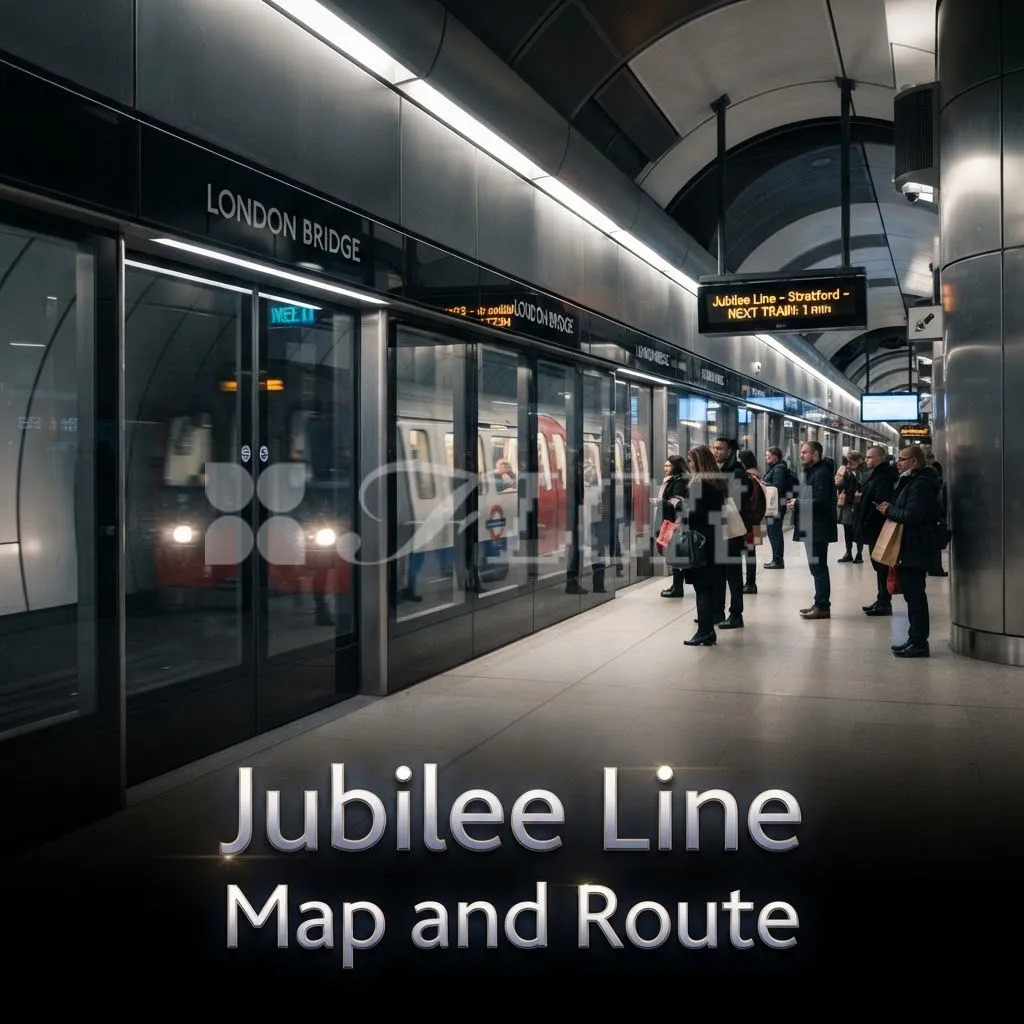
Jubilee Line Map and Route
The Jubilee line route travels generally from north-west London toward central London before continuing east to Stratford.
The route shown on the Tube map makes it easy to identify connections and plan journeys.
- 🗺️ The route begins at Stanmore.
- 🚇 Trains travel through north-west London.
- 🚉 Wembley Park is an important stop.
- 🌳 Neasden is on the route.
- 🏘️ Kilburn is served.
- 🚉 West Hampstead is served.
- 🚇 Finchley Road is an interchange station.
- 🏛️ Baker Street provides major connections.
- 🛍️ Bond Street serves the West End.
- 🌳 Green Park is in central London.
- 🏛️ Westminster is on the Thames.
- 🚂 Waterloo is a major transport hub.
- 🌉 London Bridge is another major interchange.
- 🏢 Canary Wharf is a key business district.
- 🏟️ North Greenwich serves The O2.
- 🚆 Stratford is the eastern terminus.
The route is especially useful for travelling between north-west London, central London, and major destinations east of the city centre.
Jubilee Line Stations
The Jubilee line stations are spread across a long route through London. Each stop offers connections or access to different neighbourhoods and attractions.
The complete sequence from Stanmore to Stratford is useful when planning a journey.
- 🚉 Stanmore
- 🚉 Canons Park
- 🚉 Queensbury
- 🚉 Kingsbury
- 🚉 Wembley Park
- 🚉 Neasden
- 🚉 Dollis Hill
- 🚉 Willesden Green
- 🚉 Kilburn
- 🚉 West Hampstead
- 🚉 Finchley Road
- 🚉 Swiss Cottage
- 🚉 St John’s Wood
- 🚉 Baker Street
- 🚉 Bond Street
- 🚉 Green Park
- 🚉 Westminster
- 🚉 Waterloo
- 🚉 Southwark
- 🚉 London Bridge
- 🚉 Bermondsey
- 🚉 Canada Water
- 🚉 Canary Wharf
- 🚉 North Greenwich
- 🚉 Canning Town
- 🚉 West Ham
- 🚉 Stratford
These 27 stations make up the Jubilee line’s main route. TfL provides station information and live travel details for the Underground network. (Transport for London)
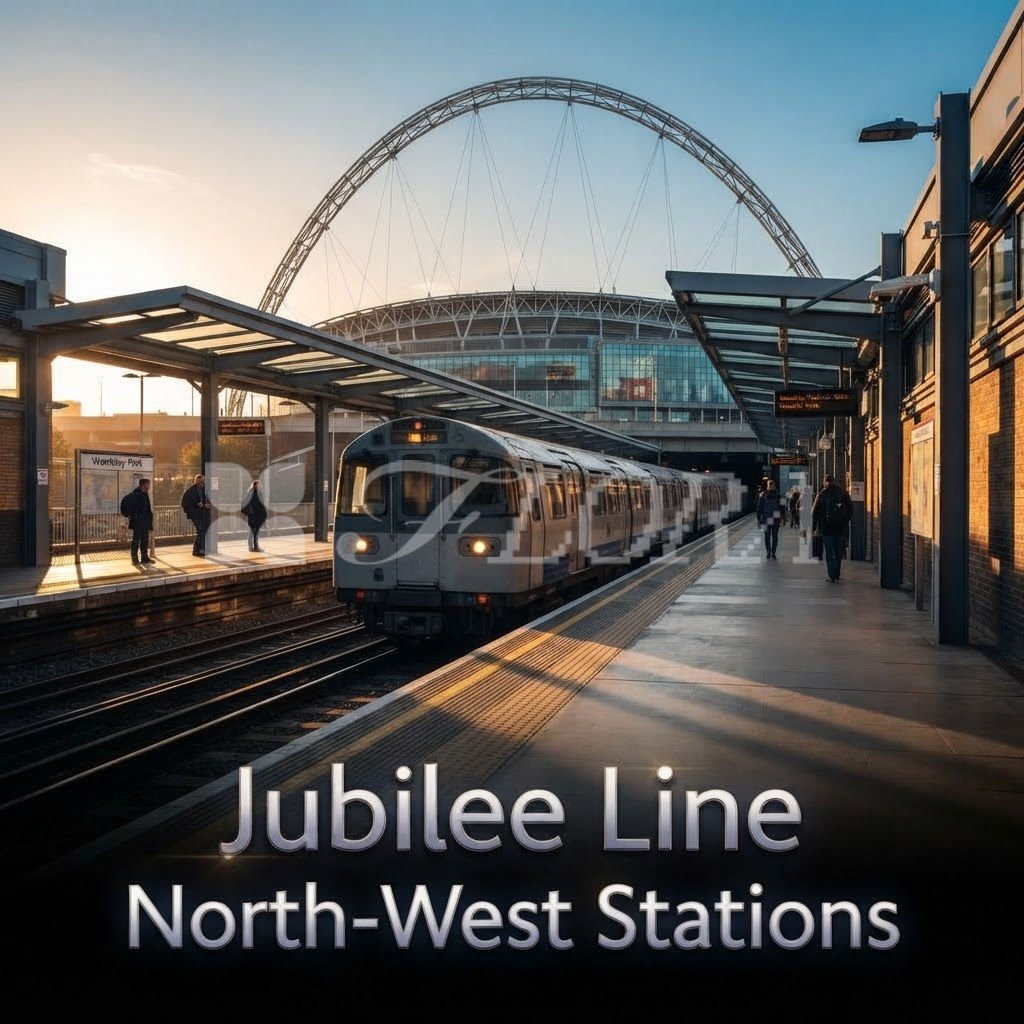
Jubilee Line North-West Stations
The northern section of the Jubilee line serves several residential areas before reaching Wembley Park and continuing toward central London.
This part of the route is useful for local residents and visitors travelling toward central London.
- 🚉 Stanmore is the northern terminus.
- 🚉 Canons Park follows Stanmore.
- 🚉 Queensbury is next.
- 🚉 Kingsbury serves north-west London.
- 🚉 Wembley Park is a major destination.
- 🏟️ Wembley Stadium is close to Wembley Park.
- 🚉 Neasden follows Wembley Park.
- 🚉 Dollis Hill is on the route.
- 🚉 Willesden Green provides local access.
- 🚉 Kilburn serves a busy London area.
- 🚉 West Hampstead provides transport connections.
- 🚉 Finchley Road connects with other Underground services.
- 🚉 Swiss Cottage is close to Hampstead areas.
- 🚉 St John’s Wood is another important stop.
- 🚇 Baker Street begins the central section.
- ⭐ This section connects many north-west neighbourhoods with central London.
The northern part of the line is particularly useful for people travelling toward Wembley and central London.
Jubilee Line Central London Stations
The central part of the Jubilee line connects some of London’s most important destinations. It passes through areas used by commuters, tourists, shoppers, and visitors.
- 🚉 Baker Street is a major interchange.
- 🕵️ Baker Street is famous for Sherlock Holmes associations.
- 🚉 Bond Street serves Oxford Street and Mayfair.
- 🛍️ Bond Street is useful for shopping.
- 🌳 Green Park connects with central attractions.
- 🏛️ Westminster is beside major government buildings.
- 🌉 Westminster offers views of the River Thames.
- 🚉 Waterloo is a major railway station.
- 🚂 Waterloo connects with National Rail services.
- 🚉 Southwark serves the south bank area.
- 🌉 London Bridge is a major interchange.
- 🏙️ The City is accessible from London Bridge.
- 🚇 These stations provide many connections.
- 🚶 Several attractions are within walking distance.
- 📸 The area is popular with tourists.
- ⭐ Central Jubilee line stations are among the busiest parts of the route.
The central section makes the Jubilee line particularly useful for sightseeing and cross-London travel.
Jubilee Line Stanmore to Stratford
Travelling from Stanmore to Stratford takes passengers across a large part of London. The journey passes through residential areas, central districts, business centres, and major attractions.
The route is therefore useful for both local and longer journeys.
- 🚇 Stanmore is the starting point.
- 🚉 Canons Park follows.
- 🚉 Queensbury comes next.
- 🚉 Kingsbury is on the route.
- 🏟️ Wembley Park provides stadium access.
- 🚉 Neasden follows.
- 🌳 Dollis Hill is next.
- 🚉 Willesden Green follows.
- 🚉 Kilburn is served.
- 🚉 West Hampstead follows.
- 🚉 Finchley Road connects with other lines.
- 🚉 Swiss Cottage follows.
- 🚉 St John’s Wood is next.
- 🏛️ Baker Street begins the central section.
- 🏢 Canary Wharf is further east.
- 🚆 Stratford is the final stop.
The full route shows why the Jubilee line is valuable for journeys across several different parts of London.
Jubilee Line Connections
One of the biggest advantages of the Jubilee line is its connections with other Underground, railway, and transport services.
Interchange stations can make it easier to reach destinations that are not directly on the Jubilee line.
- 🚇 Finchley Road connects with the Metropolitan line.
- 🚇 Baker Street connects with several Underground lines.
- 🚇 Bond Street connects with the Central line.
- 🚇 Bond Street also connects with the Elizabeth line.
- 🚇 Green Park connects with the Piccadilly line.
- 🚇 Green Park connects with the Victoria line.
- 🚇 Westminster connects with the District line.
- 🚇 Westminster connects with the Circle line.
- 🚂 Waterloo connects with National Rail.
- 🚇 London Bridge connects with National Rail.
- 🚇 Canada Water connects with London Overground.
- 🚇 Canary Wharf connects with the Elizabeth line.
- 🚆 Canary Wharf also connects with the DLR.
- 🚇 Canning Town connects with the DLR.
- 🚆 West Ham provides several transport connections.
- 🚆 Stratford connects with Underground, Elizabeth line, DLR, Overground and National Rail services. (Transport for London)
Checking the latest TfL map before travelling is useful because transport connections and service arrangements can change.
Jubilee Line Wembley Park
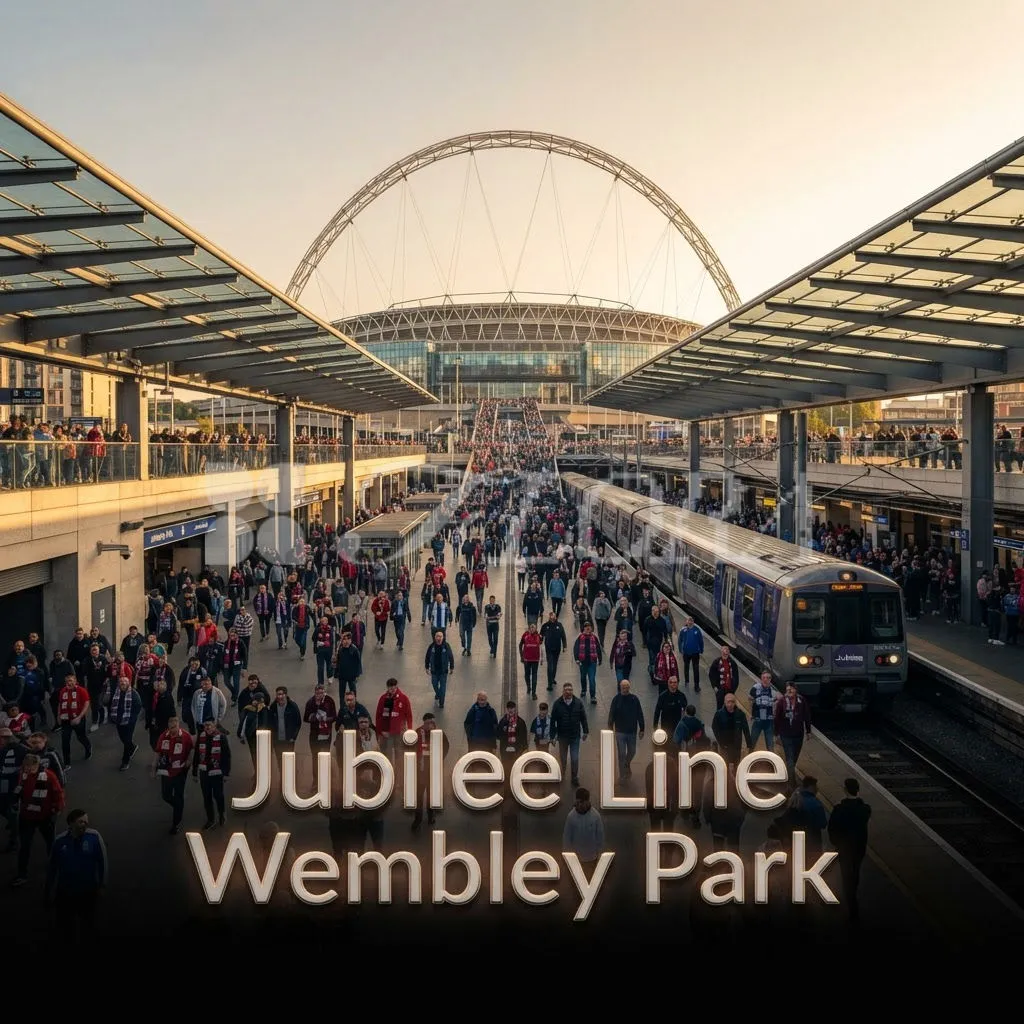
Wembley Park is one of the best-known Jubilee line stations. It provides access to Wembley Stadium and the surrounding Wembley area.
The station becomes particularly busy during major sporting events, concerts, and other large gatherings.
- 🏟️ Wembley Stadium is nearby.
- 🎤 Major concerts take place at Wembley.
- ⚽ Football matches attract large crowds.
- 🚇 Jubilee line trains serve Wembley Park.
- 🚇 Metropolitan line trains also serve the station.
- 🗺️ It is easy to locate on the Jubilee line map.
- 📸 Visitors often use the station for events.
- 🚶 The stadium is accessible on foot.
- 🏙️ Wembley has many visitor facilities.
- 🍽️ Restaurants are available nearby.
- 🛍️ Shops are available in the surrounding area.
- 🚉 The station can become very busy.
- 📅 Event days require extra planning.
- 🚦 Follow staff directions during large events.
- 📱 Check live service information before travelling.
- ⭐ Wembley Park is one of the line’s most important destinations.
If you are travelling to a major Wembley event, allow extra time because large crowds can make the station and surrounding streets busy.
Jubilee Line Westminster
Westminster is one of the most important central London stations on the Jubilee line. It provides access to Westminster Abbey, the Houses of Parliament, and the River Thames.
The station also connects with the Circle and District lines.
- 🏛️ Westminster is a major London destination.
- 🚇 The Jubilee line serves the station.
- 🚇 Circle line services connect here.
- 🚇 District line services connect here.
- 🏛️ The Houses of Parliament are nearby.
- 🕰️ Big Ben is nearby.
- ⛪ Westminster Abbey is nearby.
- 🌉 Westminster Bridge is close.
- 🌊 The River Thames runs beside the area.
- 📸 It is popular with tourists.
- 🚶 Many attractions are walkable.
- 🗺️ The station is easy to identify on the Tube map.
- 🚇 It provides useful central connections.
- 📱 Check live information before travelling.
- 🧳 Tourists often use this station.
- ⭐ Westminster is one of the Jubilee line’s most important stops.
The station is especially useful for visitors exploring London’s historic and political centre.
Jubilee Line Waterloo and London Bridge
Waterloo and London Bridge are two major transport stations on the Jubilee line. Both are useful for railway connections and access to central London attractions.
They are also important stops for commuters and tourists.
- 🚉 Waterloo is on the south bank.
- 🚂 Waterloo connects with National Rail.
- 🚇 Jubilee line trains serve Waterloo.
- 🌉 London Bridge is further east.
- 🚂 London Bridge connects with National Rail.
- 🏙️ The City is close to London Bridge.
- 🌉 Tower Bridge is nearby.
- 🏛️ Borough Market is close to London Bridge.
- 🚶 The South Bank is accessible from Waterloo.
- 🎭 Cultural attractions are nearby.
- 📸 Both areas are popular with visitors.
- 🚇 Both stations connect journeys across London.
- 🗺️ They are easy to find on the Jubilee line map.
- 🧳 They are useful for tourists arriving by train.
- 📱 Check service information before travelling.
- ⭐ They are two major Jubilee line interchanges.
For longer journeys, these stations can be useful interchange points between Underground and National Rail services.
Jubilee Line Canary Wharf
Canary Wharf is one of the most important business districts served by the Jubilee line. The station provides connections with the Elizabeth line and DLR, making the area highly accessible.
- 🏢 Canary Wharf is a major business district.
- 🚇 The Jubilee line serves the station.
- 🚆 The Elizabeth line connects here.
- 🚆 DLR services connect here.
- 🏙️ Modern skyscrapers surround the area.
- 🛍️ Shopping centres are nearby.
- 🍽️ Restaurants are widely available.
- 🌊 The area has dockside surroundings.
- 📸 Modern architecture attracts photographers.
- 🚶 Pedestrian areas surround the station.
- 💼 Many commuters travel here.
- 🗺️ Canary Wharf is easy to find on the Tube map.
- 🚇 It provides several transport options.
- 📱 Live travel information can help with journeys.
- 🏙️ It is an important east London destination.
- ⭐ Canary Wharf is one of the key Jubilee line stations.
The combination of Jubilee, Elizabeth line, and DLR services makes Canary Wharf one of London’s most connected business areas. (Transport for London)
Jubilee Line North Greenwich
North Greenwich is an important Jubilee line station serving the Greenwich Peninsula. It is particularly well known for access to The O2.
The station can become busy when major events are taking place.
- 🚇 North Greenwich is on the Jubilee line.
- 🎤 The O2 is nearby.
- 🏟️ Major entertainment events take place at The O2.
- 🎶 Concerts attract visitors.
- 🛍️ Entertainment facilities are nearby.
- 🍽️ Restaurants are available around The O2.
- 🚶 The peninsula can be explored on foot.
- 🌊 The River Thames is nearby.
- 📸 Modern architecture creates photo opportunities.
- 🗺️ North Greenwich is easy to locate on the Tube map.
- 📅 Event days can be especially busy.
- 🚦 Follow staff directions during large events.
- 📱 Check live transport information.
- 🚇 Jubilee trains provide direct access.
- 🧳 Tourists regularly use the station.
- ⭐ North Greenwich is one of the line’s major destinations.
If you are attending an event at The O2, check journey information before leaving and allow extra time for crowds.
Jubilee Line Stratford
Stratford is the eastern terminus of the Jubilee line and one of London’s largest transport hubs. It provides connections with several other rail and Underground services.
The area is also known for the Queen Elizabeth Olympic Park and Westfield Stratford City.
- 🚉 Stratford is the Jubilee line terminus.
- 🚇 The Central line connects here.
- 🚆 Elizabeth line services connect here.
- 🚆 DLR services connect here.
- 🚂 National Rail services connect here.
- 🚇 London Overground services are available.
- 🏟️ The Olympic Park is nearby.
- 🛍️ Westfield Stratford City is nearby.
- 🏊 Aquatics facilities are nearby.
- 🌳 Queen Elizabeth Olympic Park offers open space.
- 🚶 Visitors can explore the area on foot.
- 📸 Modern architecture is popular with photographers.
- 🗺️ Stratford is a major point on the Tube map.
- 📱 TfL Go can help plan journeys.
- 🚉 It is one of London’s major transport interchanges.
- ⭐ Stratford is an important eastern destination.
TfL identifies Stratford as a connection point for the Central and Jubilee lines, DLR, National Rail, and other services. (Transport for London)
Jubilee Line Map for Tourists
The Jubilee line is useful for tourists because it passes close to several famous London attractions. A Tube map can help visitors understand which station is closest to their destination.
- 🏛️ Westminster is close to Parliament.
- 🕰️ Big Ben is near Westminster.
- ⛪ Westminster Abbey is nearby.
- 🛍️ Bond Street serves major shopping areas.
- 🏛️ Baker Street is linked with Sherlock Holmes.
- 🌳 Green Park provides access to central attractions.
- 🚂 Waterloo serves the South Bank.
- 🌉 London Bridge serves Tower Bridge and Borough Market.
- 🏢 Canary Wharf offers modern architecture.
- 🎤 North Greenwich serves The O2.
- 🏟️ Wembley Park serves Wembley Stadium.
- 🌳 Stratford serves the Olympic Park.
- 📸 Many stations provide photography opportunities.
- 🚶 Some attractions are walkable from stations.
- 🗺️ The Jubilee line map helps with planning.
- 📱 TfL Go provides live route planning. (Transport for London)
A good tourist journey often combines the Jubilee line with other Tube or rail services.
Jubilee Line Map Accessibility
Accessibility is an important part of modern London travel. TfL provides accessibility information and step-free journey planning through its maps and TfL Go service.
The exact accessibility arrangement can differ by station, so passengers should check their journey before travelling.
- ♿ Step-free information is available from TfL.
- 🗺️ Accessible maps can help passengers plan.
- 📱 TfL Go offers step-free journey planning.
- 🚇 Accessible routes can be selected.
- 🛗 Some stations have lifts.
- 🚉 Platform access varies by station.
- 🚪 Train access can vary.
- 🔎 Check the station before travelling.
- 📱 Live information can show service changes.
- 🧭 Alternative accessible routes may be available.
- 🚆 Connections can affect accessibility.
- 🏙️ Busy stations may require extra planning.
- 👥 Staff can provide assistance.
- 📋 TfL publishes accessibility guides.
- ⭐ Planning ahead can make journeys easier.
- 📱 TfL’s official information should be checked for current conditions. (Transport for London)
TfL’s accessibility information includes maps and guides designed to help passengers plan journeys. (Transport for London)
Jubilee Line Map 2026 FAQs
- ❓ What does the Jubilee line map show? It shows the Jubilee line route, its stations, interchange points, and connections with other London transport services.
- 🚇 Where does the Jubilee line start? The northern terminus is Stanmore.
- 🚉 Where does the Jubilee line end? The eastern terminus is Stratford.
- 🗺️ How many Jubilee line stations are there? The route has 27 stations.
- 🏟️ Which Jubilee line station is for Wembley Stadium? Wembley Park is the main Jubilee line station for Wembley Stadium.
- 🏛️ Which Jubilee line station is closest to Parliament? Westminster is the main Jubilee line station for the Houses of Parliament.
- 🎤 Which Jubilee line station serves The O2? North Greenwich serves The O2.
- 🏢 Which Jubilee line station serves Canary Wharf? Canary Wharf.
- 🛍️ Does the Jubilee line go to Bond Street? Yes, Bond Street is a Jubilee line station.
- 🚂 Does the Jubilee line go to London Bridge? Yes, London Bridge is on the Jubilee line.
- 🚆 Does the Jubilee line go to Stratford? Yes. Stratford is the eastern terminus.
- 🚇 Does the Jubilee line connect with the Elizabeth line? Yes. Connections include Bond Street, Canary Wharf, and Stratford. (Transport for London)
- 🚆 Does the Jubilee line connect with DLR? Yes. Canary Wharf, Canning Town, and Stratford provide connections with DLR services.
- 📱 Where can I find a current London Tube map? TfL provides official Tube and rail maps and its TfL Go app for live journey planning. (Transport for London)
- ♿ Can I plan a step-free Jubilee line journey? Yes. TfL Go includes a step-free journey-planning option. (Transport for London)
- ⭐ Is the Jubilee line useful for tourists? Yes. It connects many major attractions, transport hubs, shopping areas, business districts, and entertainment destinations.
Conclusion:
The Jubilee line map makes it easy to understand one of London’s most useful Underground routes. Running from Stanmore to Stratford, the line passes through major destinations including Wembley Park, Baker Street, Bond Street, Westminster, Waterloo, London Bridge, Canary Wharf, North Greenwich, and Stratford.
For 2026 travel, use the latest TfL map and live journey information because service conditions, closures, and travel arrangements can change. TfL’s official maps page provides Tube and rail maps, while TfL Go offers live maps, arrivals, disruptions, and route planning. (Transport for London)
Whether you are travelling to Wembley Stadium, Westminster, London Bridge, Canary Wharf, The O2, or Stratford, the Jubilee line is a useful route to understand when planning a journey across London.

Natalie Carter writes emotional and uplifting lines about relationships, happiness, confidence, and everyday experiences.