

Smile lines are natural lines that can appear around the mouth and cheeks when a person smiles, laughs, or makes other facial expressions.
They are a normal part of having a face that moves and shows emotion.
People may also call them laugh lines or nasolabial folds, depending on the exact area being described.
This guide explains what smile lines are, why they appear, the different types, common causes, and simple ways to care for healthy skin.
The goal is to provide clear, useful information without treating normal facial features as something that needs to be “fixed.” Understanding your skin can help you make informed and healthy choices in 2026.
What Are Smile Lines?
Smile lines are facial lines that become noticeable around the mouth and cheeks, especially when a person smiles or laughs. The term can describe different kinds of facial creases, so it is useful to understand the area being discussed. Some lines are temporary and appear mainly during facial movement, while others may remain visible when the face is relaxed. These lines are a normal part of facial movement and expression.
- 😊 Smile lines can appear when you smile.
- 😄 Laughing can make facial lines more noticeable.
- 👄 Some lines are found around the mouth.
- 🙂 Facial movement can create temporary creases.
- 🧑🦱 Skin naturally moves when you make expressions.
- 🪞 Different people have different facial lines.
- 🌿 Natural skin texture varies from person to person.
- 💧 Healthy skin still has natural lines and folds.
- 🧬 Genetics can influence facial features.
- ☀️ Sun exposure can affect skin over time.
- 💦 Moisture helps support the skin barrier.
- 🧴 Gentle skin care can support healthy skin.
- 🧠 Smile lines are not automatically a sign of a problem.
- ❤️ Facial expressions are a normal part of communication.
- 📚 The term can describe more than one type of line.
- 🌟 Smile lines are a normal facial feature.
The important point is that smile lines are part of normal facial anatomy and movement. A person does not need to have perfectly smooth skin to have healthy skin. Facial lines can also help show emotion and expression, making them a natural part of everyday life.
Smile Lines Around the Mouth
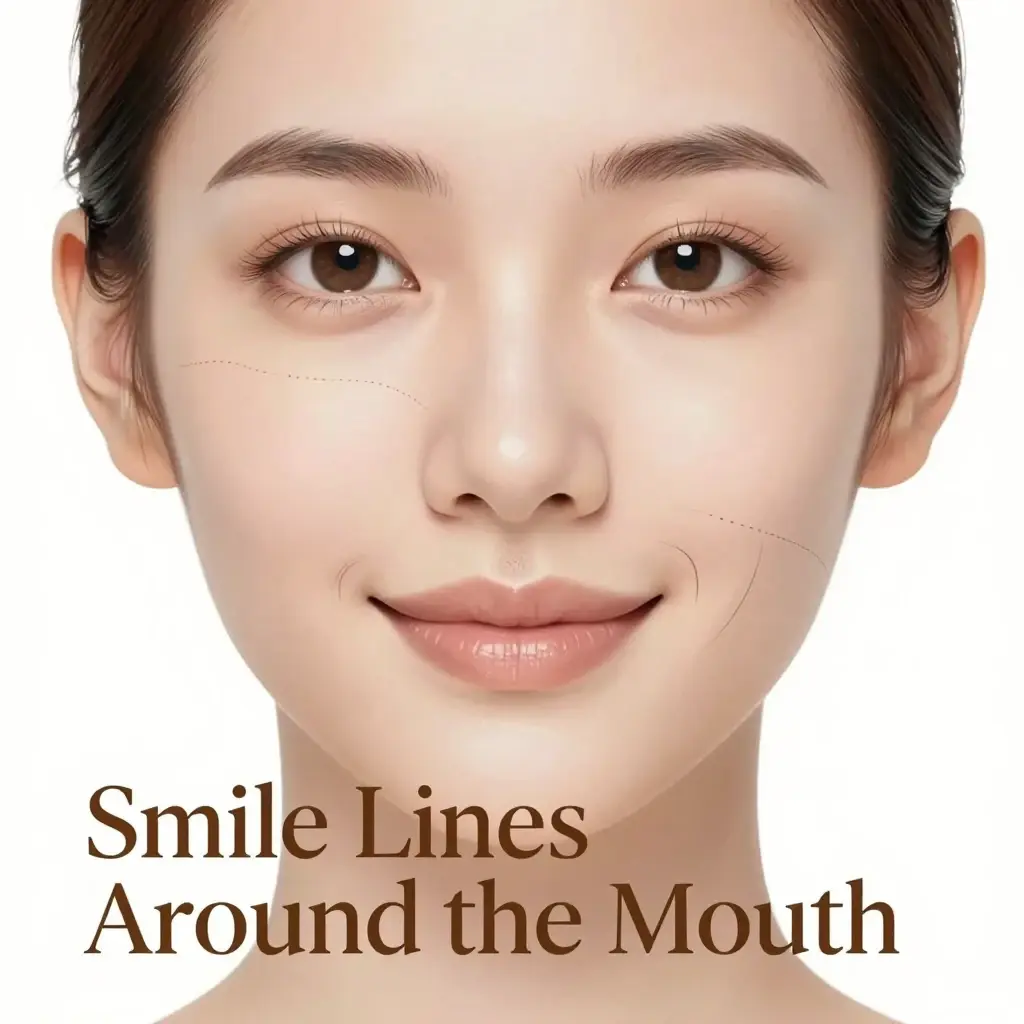
Lines around the mouth can become visible when the lips move during smiling, talking, laughing, or other expressions. The skin around the mouth is constantly moving throughout the day. Because of this, temporary creases can appear even when someone is young. The exact appearance of these lines varies naturally from person to person.
- 👄 The mouth moves during speaking.
- 😊 Smiling moves the skin around the lips.
- 😂 Laughing creates repeated facial movement.
- 🗣️ Talking involves many small facial movements.
- 😮 Different expressions move the mouth area differently.
- 🧬 Genetics can affect facial structure.
- 🌿 Skin texture naturally varies.
- 💧 Hydrated skin has a healthy skin barrier.
- ☀️ Sun exposure can influence skin changes over time.
- 🧴 Gentle products can support skin comfort.
- 🪞 Mirrors can make small lines easier to notice.
- 📸 Camera lighting can change how lines appear.
- 💡 Bright light may highlight natural texture.
- 🧠 A visible line does not automatically mean unhealthy skin.
- ❤️ Facial movement is completely normal.
- 🌟 The mouth area naturally develops creases with movement.
It is helpful to remember that lines around the mouth are not all the same. Some may be expression lines that appear during movement, while others may be more noticeable when the face is relaxed. A person’s facial structure and natural skin characteristics also play a role.
Nasolabial Folds and Smile Lines
The term nasolabial folds is often used for the lines that run from the sides of the nose toward the corners of the mouth. They can become more noticeable during smiling. These folds are part of normal facial structure and are influenced by the shape and movement of the cheeks, nose, and mouth.
- 👃 Nasolabial folds begin near the nose area.
- 👄 They extend toward the mouth.
- 😊 Smiling can make them more visible.
- 😄 Laughing can deepen their appearance temporarily.
- 🧬 Facial structure affects their shape.
- 🦴 Underlying facial anatomy plays a role.
- 🧑🦱 Everyone has different facial features.
- 🌿 Natural variation is expected.
- 📸 Photos may make folds look stronger.
- 💡 Lighting can change their visibility.
- 🪞 Mirror angles can affect appearance.
- 💧 Skin moisture supports normal skin function.
- ☀️ Long-term sun exposure can affect skin aging.
- 🧴 Sun protection helps protect exposed skin.
- 🧠 Nasolabial folds are normal anatomical features.
- 🌟 They are not automatically a skin problem.
Nasolabial folds are sometimes described as “smile lines,” but the two terms are not always identical. In everyday language, people may use them interchangeably. In skin and facial anatomy discussions, however, it can be useful to distinguish the specific location and type of fold being discussed.
Why Do Smile Lines Appear?
Smile lines appear for several reasons. Facial movement is one important factor because the skin around the mouth and cheeks moves whenever we smile, laugh, speak, or make expressions. Genetics, facial structure, skin characteristics, and environmental exposure can also influence how visible facial lines are. These factors work together rather than having one single cause.
- 😊 Smiling moves facial skin.
- 😂 Laughing creates repeated expressions.
- 🗣️ Speaking involves facial movement.
- 🧬 Genetics influence skin and facial structure.
- 🦴 Facial anatomy affects how skin folds.
- 🌿 Natural skin texture differs between people.
- ☀️ UV exposure can affect skin over time.
- 💧 Skin hydration supports the skin barrier.
- 🧴 Skin care can support healthy skin.
- 🌬️ Weather can affect skin comfort.
- 💤 Sleep supports overall health.
- 🥗 Balanced nutrition supports normal body function.
- 🚰 Drinking enough fluids supports general hydration.
- 🧠 Stress does not have one simple effect on facial lines.
- 📸 Images can exaggerate small details.
- 🌟 Many factors can influence how lines look.
There is no single explanation that applies to everyone. Two people can have similar ages but very different facial features. This is normal. Facial lines should therefore be understood as part of individual anatomy rather than as a simple measurement of health, beauty, or age.
Types of Smile Lines
People use the phrase “smile lines” to describe several kinds of facial creases. Some are visible only when the face moves, while others may remain visible when the face is relaxed. Understanding the terms can make it easier to discuss facial anatomy and skin care accurately. It also helps avoid confusing different areas of the face.
- 😊 Expression lines appear during facial movement.
- 👄 Mouth lines occur around the lips.
- 👃 Nasolabial folds run from the nose toward the mouth.
- 😄 Laugh lines is a common informal term.
- 🪞 Some lines are easier to see in mirrors.
- 📸 Photos may highlight temporary creases.
- 💡 Lighting can change their appearance.
- 🧬 Facial structure affects line patterns.
- 🌿 Natural skin texture varies.
- 💧 Skin moisture affects how skin feels.
- ☀️ UV exposure can influence long-term skin changes.
- 🧴 Gentle care supports the skin barrier.
- 🧠 Different terms can describe different locations.
- 📚 Medical and cosmetic terms may differ from everyday language.
- ❤️ Facial expressions naturally create folds.
- 🌟 No single type looks the same on everyone.
The most useful approach is to focus on location and behavior. Does the line appear only when smiling? Does it remain when the face is relaxed? Where exactly does it begin and end? These questions can help distinguish different facial lines without making assumptions about a person’s health or appearance.
Smile Lines When Smiling and Laughing
Facial skin moves every time you smile or laugh. This movement naturally creates temporary folds and creases. A wide smile may make some lines much more visible than a relaxed expression. Once the facial muscles relax, many temporary lines become less noticeable. This is a normal result of how facial muscles and skin work together.
- 😊 Smiling moves the cheeks.
- 😄 Laughing moves several facial muscles.
- 👄 The mouth changes shape during expressions.
- 👃 The area around the nose can move too.
- 🧑🦱 Facial skin follows muscle movement.
- 🔄 Expressions create temporary folds.
- 🪞 Relaxed faces may show fewer visible creases.
- 📸 A photo captures one moment of expression.
- 💡 Lighting affects visible texture.
- 🎭 Different emotions create different expressions.
- 🗣️ Talking also moves facial muscles.
- 😮 Surprise changes the shape of the mouth and cheeks.
- 😁 A wide smile can make folds stronger temporarily.
- ❤️ Expressions help people communicate.
- 🧠 Facial movement is a normal body function.
- 🌟 Smile-related creases are not unusual.
It is important not to confuse an expression line with a permanent skin change. A crease that appears during a smile may simply reflect normal movement. Facial expressions are an important part of communication, and moving facial muscles is a normal part of everyday life.
Smile Lines and Skin Changes Over Time
Skin changes naturally over the course of life. Its structure, texture, and elasticity can change because of genetics, environmental exposure, and normal biological processes. Facial lines may become more noticeable over time, but there is no single timeline that applies to everyone. People naturally have different skin patterns.
- 🧬 Genetics influence individual skin characteristics.
- ☀️ UV exposure can affect skin over time.
- 🧴 Sunscreen helps protect exposed skin from UV radiation.
- 💧 Moisturizer can support skin comfort.
- 🌿 Skin naturally changes throughout life.
- 🧑🦱 Different people develop lines differently.
- 🪞 Facial structure affects how folds appear.
- 😊 Expressions continue throughout life.
- 💤 Good sleep supports general well-being.
- 🥗 Balanced meals support overall health.
- 🚰 Adequate fluids support normal body function.
- 🚭 Avoiding tobacco supports skin and overall health.
- 🧠 Stress and health are complex and individual.
- 📸 Photos do not always show skin accurately.
- ❤️ Natural changes are part of life.
- 🌟 Skin does not need to look identical at every age.
Instead of treating normal skin changes as defects, it is more helpful to understand what influences them. Healthy skin care is mainly about protecting the skin, keeping it comfortable, and supporting its normal function rather than trying to achieve an unrealistic idea of completely line-free skin.
Smile Lines and Genetics
Genetics can influence many parts of facial appearance, including facial structure, skin characteristics, and how certain folds appear. This is one reason why people can have different smile lines even when they have similar lifestyles. Family traits can contribute to natural variation, although genetics are only one part of the picture.
- 🧬 Genes influence facial structure.
- 👨👩👧 Family traits can affect appearance.
- 🦴 Bone structure influences facial shape.
- 👄 Lip shape can vary naturally.
- 👃 Nose structure differs between people.
- 😊 Cheek structure affects smiling patterns.
- 🌿 Skin characteristics vary naturally.
- 💧 Different skin types have different needs.
- ☀️ Environment can also influence skin.
- 🧴 Skin care habits vary between people.
- 📸 Cameras cannot measure genetics.
- 🪞 Mirrors show only one perspective.
- 🧠 Genetics are not something a person chooses.
- ❤️ Natural differences between people are normal.
- 🌟 There is no single “correct” facial pattern.
- 📚 Understanding genetics helps explain individual variation.
Genetics should not be viewed as something that needs to be corrected. They are simply one reason people have different facial features. Healthy skin can look different from person to person, and natural variation is expected.
Sun Exposure and Smile Lines
Sun exposure is an important environmental factor in long-term skin health. Ultraviolet radiation can contribute to changes in skin structure and appearance over time. Protecting exposed skin from excessive UV exposure is therefore a useful health habit. This advice is about protecting the skin, not about trying to achieve a certain appearance.
- ☀️ UV radiation reaches exposed skin.
- 🧴 Sunscreen can help protect skin.
- 🧢 Hats provide additional physical protection.
- 👕 Clothing can cover exposed areas.
- 🌳 Shade can reduce direct sun exposure.
- 🕶️ Sunglasses protect the eyes from UV radiation.
- 🌞 Strong sunlight can increase UV exposure.
- 🏖️ Beaches can involve high sun exposure.
- 🏔️ UV exposure can also occur at higher elevations.
- 🚗 People can receive sun exposure during travel.
- 🧠 Sun protection is part of healthy skin care.
- 💧 Moisturizer does not replace sunscreen.
- 📚 Sunscreen should be used according to its label.
- 🌿 Skin protection is useful throughout the year.
- ❤️ Protecting skin supports long-term skin health.
- 🌟 Healthy habits matter more than appearance goals.
Sun protection is especially useful when spending time outdoors. Following product directions, seeking shade, and using protective clothing can all help reduce unnecessary UV exposure. These habits are about caring for the skin and reducing environmental damage.
Simple Skin Care for Healthy Skin
A simple skin-care routine can help support the skin barrier and keep skin comfortable. It does not need to involve many products. Gentle cleansing, moisturizing when needed, and sun protection are common basics. People with specific skin concerns can ask a parent or guardian and a qualified health professional for advice appropriate to their situation.
- 🧼 Use a gentle cleanser when appropriate.
- 💧 Moisturize if your skin feels dry.
- ☀️ Use sun protection outdoors.
- 🧴 Follow product directions.
- 🚿 Avoid very harsh washing.
- 🧽 Avoid aggressive scrubbing.
- 🌿 Choose products suited to your skin needs.
- 🧪 Patch-test unfamiliar products when appropriate.
- 👀 Keep products away from the eyes unless labeled for that area.
- 👄 Be careful with products around the lips.
- 🧠 More products do not always mean better skin care.
- 📚 Read labels before using products.
- 👨👩👧 Ask a trusted adult about unfamiliar skin products.
- 🩺 Ask a qualified professional about persistent skin problems.
- ❤️ Focus on skin health rather than perfection.
- 🌟 Keep routines simple and consistent.
There is no need for an elaborate routine simply because facial lines are visible. Skin has a natural texture, and a basic routine can often provide sensible support. If a product causes pain, burning, swelling, or another unusual reaction, stop using it and seek appropriate advice from a trusted adult or health professional.
Smile Lines and Moisturizing
Moisturizers help support the skin barrier and can reduce the feeling of dryness. They do not permanently remove normal facial folds, but comfortable, well-moisturized skin can feel smoother and less dry. The best product depends on the person’s skin needs, so simple and gentle choices are usually a sensible starting point.
- 💧 Moisturizer adds comfort to dry-feeling skin.
- 🧴 It supports the skin barrier.
- 🌿 Gentle formulas can be useful.
- 👄 Dry areas around the mouth may need extra care.
- 😊 Facial movement continues after moisturizing.
- 🧠 Moisturizer does not stop facial expressions.
- 📚 Product labels explain how to use products.
- 🧪 New products may need careful introduction.
- 👀 Avoid getting ordinary skin products in the eyes.
- 🧼 Clean skin can be moisturized afterward.
- ☀️ Moisturizer does not replace sunscreen.
- 🚿 Harsh washing can make skin feel dry.
- 💦 Water alone is not the same as moisturizer.
- ❤️ Skin comfort is a useful goal.
- 🌟 Healthy skin can have natural lines.
- 🧠 Simple routines can be easier to maintain.
Moisturizing is best understood as basic skin care rather than a treatment for normal facial features. If your skin is comfortable and healthy, there is no need to chase a completely smooth appearance. Everyone’s skin has texture, pores, folds, and natural variations.
Can Smile Lines Be Prevented?
It is not realistic to prevent every facial line because facial movement is a normal part of life. However, people can take sensible steps to support overall skin health. Sun protection, gentle skin care, good general health habits, and avoiding harmful habits can all contribute to healthy skin.
- ☀️ Protect skin from excessive UV exposure.
- 🧴 Use sunscreen according to directions.
- 🧢 Wear protective clothing outdoors.
- 🌳 Seek shade when practical.
- 🧼 Clean skin gently.
- 💧 Moisturize when needed.
- 🚭 Avoid tobacco exposure.
- 💤 Get enough sleep for overall health.
- 🥗 Eat a balanced range of foods.
- 🚰 Drink fluids regularly.
- 🏃 Stay physically active for general health.
- 🧠 Manage everyday stress in healthy ways.
- 😊 Continue normal facial expressions.
- ❤️ Do not fear smiling or laughing.
- 📚 Focus on skin health rather than perfection.
- 🌟 Remember that natural lines cannot be completely prevented.
The word “prevent” can be misleading because facial movement itself creates temporary creases. A better goal is supporting healthy skin. There is no need to stop smiling, laughing, or expressing emotions to avoid normal facial lines.
Smile Lines in Photos and Selfies
Photos can make facial lines look different from how they appear in everyday life. Camera distance, lighting, facial expression, shadows, and image processing can all affect what you see. A single photograph therefore should not be treated as an exact representation of someone’s skin or facial appearance.
- 📸 Cameras capture one moment.
- 😊 A smile changes facial shape.
- 💡 Lighting creates shadows.
- 🔦 Side lighting can highlight texture.
- 📱 Phone cameras may process images.
- 🔍 Zooming can make small details seem larger.
- 🪞 Mirrors show a different view.
- 📐 Camera angle affects appearance.
- 😄 Different smiles create different folds.
- 🧑🦱 Facial features vary naturally.
- 🌿 Skin texture is normal.
- 🧠 Photos are not medical assessments.
- ❤️ One picture does not define a person.
- 📚 Online images may be edited.
- 🌟 Real skin is not required to look like a filtered image.
- 😊 Enjoying expressions is more important than chasing perfection.
It is especially useful to remember this when looking at social media. Lighting, filters, editing, and camera settings can change the appearance of skin. Comparing everyday skin with highly edited photographs can create an unrealistic idea of what normal skin should look like.
Common Myths About Smile Lines
Smile lines are surrounded by many claims online. Some are harmless misunderstandings, while others can encourage unrealistic expectations about normal skin. Learning the facts helps people make better decisions and avoid unnecessary worry about ordinary facial features.
- ❌ Myth: Smile lines always mean unhealthy skin.
- ✅ Fact: Facial lines can be completely normal.
- ❌ Myth: Everyone gets the same smile lines.
- ✅ Fact: Facial features vary naturally.
- ❌ Myth: You should stop smiling to avoid lines.
- ✅ Fact: Smiling is a normal expression.
- ❌ Myth: One cream can erase every line.
- ✅ Fact: Skin-care products have specific purposes.
- ❌ Myth: Photos always show skin accurately.
- ✅ Fact: Lighting and cameras change appearance.
- ❌ Myth: Smooth skin is the only healthy skin.
- ✅ Fact: Healthy skin naturally has texture.
- ❌ Myth: Genetics do not matter.
- ✅ Fact: Genetics influence facial characteristics.
- ❌ Myth: More products always produce better results.
- ✅ Fact: Simple, appropriate care can be enough.
The most useful lesson is that facial appearance is complicated. A line can be influenced by expression, anatomy, genetics, environment, and many other factors. Healthy skin should not be judged by whether it looks perfectly smooth.
When to Ask a Skin Professional
Most facial lines are normal and do not require medical treatment. However, unusual skin changes can sometimes deserve professional attention. If the skin develops a persistent rash, pain, swelling, sores, bleeding, or another concerning change, talking to a parent or guardian and a qualified health professional is a sensible step.
- 🩺 A professional can assess unusual skin changes.
- 🔴 Persistent redness may deserve attention.
- 😣 Pain is a reason to seek advice.
- 💧 Unusual swelling should not be ignored.
- 🩹 Sores that do not heal can need assessment.
- 🩸 Unexpected bleeding should be checked.
- 🔥 Persistent burning may indicate irritation.
- 🧴 A product reaction may require guidance.
- 👀 Eye-area symptoms should be handled carefully.
- 👄 Persistent mouth-area irritation can need advice.
- 🧠 Online information cannot diagnose skin conditions.
- 👨👩👧 Young people should involve a trusted adult.
- 📚 A professional can explain suitable care.
- 🚫 Avoid using strong treatments without proper guidance.
- ❤️ Health concerns are more important than appearance.
- 🌟 Asking questions is a healthy choice.
The presence of ordinary smile lines alone is generally not a reason for concern. The important distinction is between normal facial texture and a new or unusual skin symptom. When in doubt, getting reliable professional advice is safer than trying random products or treatments found online.
Smile Lines and Healthy Attitudes Toward Appearance
Facial features are part of what makes people different. Smile lines, freckles, pores, wrinkles, scars, and other natural features can vary widely. Healthy skin care should support comfort and health rather than create pressure to look like an edited photograph or an unrealistic beauty standard.
- 😊 Smiling is a normal human expression.
- ❤️ Facial features do not determine personal worth.
- 🌿 Natural skin texture is normal.
- 🧑🦱 Everyone’s face is different.
- 📸 Social media images may be edited.
- 💡 Lighting can change how skin looks.
- 🧠 Appearance does not measure health by itself.
- 💧 Healthy skin can have visible lines.
- 🧴 Skin care should support health.
- ☀️ Sun protection is a practical habit.
- 📚 Reliable information is better than online myths.
- 👨👩👧 Trusted adults can help with questions.
- 🩺 Professionals can help with genuine skin concerns.
- 😊 There is no need to avoid normal expressions.
- 🌟 Natural differences deserve respect.
- ❤️ Healthy habits are more valuable than perfection.
A positive approach to skin does not mean ignoring health concerns. It means understanding the difference between normal variation and a medical issue. Taking care of your skin while accepting normal facial features is a balanced and practical approach.
FAQs;
People commonly search for information about smile lines because they want to understand what they are and why they appear. The following answers cover the most useful questions in simple language and help separate normal facial features from misleading online claims.
- ❓ What are smile lines?
They are facial creases that can become noticeable around the mouth and cheeks during smiling and other expressions. - 😊 Why do smile lines appear when smiling?
Facial muscles move the skin, creating temporary folds and creases. - 👄 Are smile lines around the mouth normal?
Yes, facial lines around the mouth can be a normal part of facial movement. - 👃 What are nasolabial folds?
They are folds that generally extend from the sides of the nose toward the corners of the mouth. - 🧬 Can genetics affect smile lines?
Yes, genetics can influence facial structure and skin characteristics. - ☀️ Can sunlight affect facial skin?
Long-term UV exposure can contribute to changes in skin structure and appearance. - 🧴 Does moisturizer remove smile lines?
Moisturizer supports the skin barrier and comfort but does not permanently remove normal facial folds. - 😊 Should you stop smiling to prevent smile lines?
No. Smiling is a normal and healthy form of expression. - 📸 Why do smile lines look different in photos?
Lighting, camera angle, expression, and image processing can change how facial texture appears. - 🧠 Are smile lines a sign of poor health? Not necessarily. Normal facial lines are not automatically a sign of a health problem.
- 🌿 Does everyone have the same smile lines? No. Facial features naturally differ from person to person.
- 🧼 What basic skin care is helpful?
Gentle cleansing, moisturizing when needed, and sun protection are common basics. - 🩺 When should someone seek professional advice?
New, painful, persistent, swollen, bleeding, or otherwise unusual skin changes deserve appropriate attention. - 📚 Are “smile lines” a medical term?
It is commonly used in everyday and cosmetic discussions, while specific anatomical terms may describe particular folds. - 🔎 Are smile lines and laugh lines the same?
People often use the terms similarly, but terminology can vary depending on the exact facial area. - 🌟 What is the most important thing to remember?
Smile lines are a normal part of facial movement and natural facial variation.
Conclusion;
Smile lines are a normal part of facial movement, expression, and individual anatomy.
They can appear around the mouth and cheeks during smiling or laughing, while terms such as nasolabial folds describe particular facial folds in more specific language.
Genetics, facial structure, environmental exposure, and natural skin changes can all influence how these lines look.
Simple skin-care habits such as gentle cleansing, moisturizing when needed, and sun protection can support healthy skin. Most importantly, there is no need to treat normal facial lines as a flaw.
Healthy skin naturally has texture, folds, and differences from person to person.
In 2026, reliable skin information should focus on health, realistic expectations, and informed choices rather than unrealistic appearance standards.

Samuel Reed is a motivational writer who creates meaningful lines about courage, determination, and achieving personal goals.