
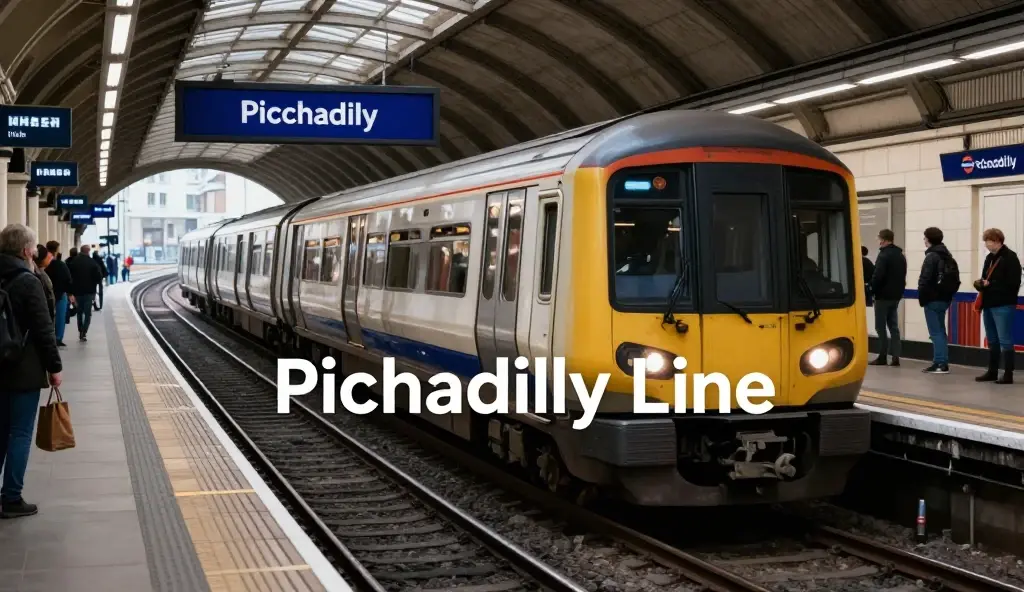
The Piccadilly line is one of the most important lines on the London Underground.
It is shown in dark blue on the Tube map and connects west London with central London and areas in the north and west.
The line is especially useful for travelers because it serves Heathrow Airport, central London, and several popular areas such as Hammersmith, South Kensington, Leicester Square, and King’s Cross St Pancras.
In 2026, the Piccadilly line is also notable for its newer trains, which are being introduced to improve capacity, accessibility, and passenger comfort.
This guide explains the Piccadilly line route, stations, history, branches, airport travel, travel tips, and important facts in simple language.
What Is the Piccadilly Line?
The Piccadilly line is a London Underground route operated by Transport for London. It is easy to identify because of its dark blue color on the Tube map. The line runs through several major areas of London and provides an important connection between Heathrow Airport, west London, central London, and northern destinations.
- 🚇 The Piccadilly line is part of the London Underground.
- 🔵 It is shown in dark blue on Tube maps.
- 🇬🇧 It operates across London.
- ✈️ It serves Heathrow Airport.
- 🏙️ It travels through central London.
- 🌆 It serves west London.
- 🌳 It reaches areas farther north.
- 🚉 It has many important stations.
- 🧳 Tourists often use the line.
- 💼 Commuters use it every day.
- 🎓 Students can use it to travel around London.
- 🔄 Several stations connect with other Tube lines.
- 📱 TfL provides live travel information.
- 🚆 It connects with wider transport services.
- ♿ Accessibility varies between stations.
- 🌟 It remains an important London route in 2026.
The Piccadilly line is especially useful for airport passengers and visitors because it provides a direct Underground connection between Heathrow and many central London locations. Travelers should still check current service information before starting an important journey.
Piccadilly Line History
The Piccadilly line has a long history that began in the early years of London’s Underground expansion. Parts of the route developed from older Underground services, and the line was later extended toward Heathrow and other areas. Over time, stations, trains, and infrastructure have changed as London has grown.
- 📜 The Piccadilly line has a long history.
- 🚇 It developed from earlier Underground routes.
- 🏗️ Different sections were expanded over time.
- 🏙️ London’s growth influenced its development.
- 🚉 More stations were added as the network expanded.
- ✈️ Heathrow became an important destination.
- 🔧 Infrastructure has been improved over many years.
- 🚆 Older trains served the line for decades.
- 🏙️ The route became important for west London.
- 🧳 Airport passengers increased its importance.
- 📅 The line has changed significantly since its early years.
- 🗺️ Extensions helped connect more communities.
- 🛠️ Modernization has continued into the 2020s.
- 🚇 New trains are being introduced.
- 📚 Its history is closely linked to London’s transport growth.
- 🌟 The line continues to evolve in 2026.
The history of the Piccadilly line helps explain why it is such an important route today. It combines older central London sections with newer transport developments and a major airport connection.
Piccadilly Line Route
The Piccadilly line crosses several important parts of London. Its western branches serve Heathrow Airport and destinations such as Uxbridge, while the central section travels through areas including Hammersmith, South Kensington, Piccadilly Circus, Leicester Square, and King’s Cross St Pancras.
- ✈️ Heathrow is one of the line’s major destinations.
- 🏙️ Hammersmith is an important west London station.
- 🏛️ South Kensington serves several museums.
- 🛍️ Knightsbridge is close to major shopping areas.
- 🎡 Green Park provides central London connections.
- 🎭 Piccadilly Circus is a famous central station.
- 🎬 Leicester Square serves the West End.
- 🚉 Covent Garden is popular with visitors.
- 🚆 King’s Cross St Pancras is a major transport hub.
- 🏙️ Finsbury Park is an important northern interchange.
- 🌳 Wood Green serves north London.
- 🏘️ Arnos Grove is on the northern section.
- 🌲 Cockfosters is a northern terminus.
- 🏘️ Uxbridge is a western destination.
- 🧭 Different branches require careful destination checks.
- 🌟 The route connects many important London locations.
Because the Piccadilly line has branches, not every train goes to Heathrow or Uxbridge. Passengers should check the destination shown on the train and platform display before boarding.
Piccadilly Line Stations
The Piccadilly line has many stations serving residential areas, shopping districts, tourist attractions, museums, offices, transport hubs, and the airport. Some stations are particularly useful for visitors because they are close to major London landmarks.
- 🚉 Stations provide access to many London neighborhoods.
- ✈️ Heathrow stations serve airport passengers.
- 🏛️ South Kensington is near major museums.
- 🛍️ Knightsbridge is close to famous shops.
- 🌳 Green Park provides central access.
- 🎭 Piccadilly Circus serves the West End.
- 🎬 Leicester Square is popular with tourists.
- 🛍️ Covent Garden is near shops and attractions.
- 🚆 King’s Cross St Pancras is a major interchange.
- 🌳 Finsbury Park connects with other services.
- 🏙️ Wood Green serves north London.
- 🌲 Cockfosters is the northern endpoint.
- 🏘️ Uxbridge is on the western branch.
- 🔄 Many stations connect with other Tube lines.
- 📱 Station information can help with route planning.
- 🌟 Each station serves a different part of London’s transport network.
Station facilities are not identical across the line. If you need step-free access, lifts, toilets, or other specific facilities, check the latest Transport for London information for the station you plan to use.
Piccadilly Line Branches
The Piccadilly line has western and northern branches, which makes its route more complex than a simple straight line. Services can travel toward Heathrow Airport or Uxbridge in the west, while trains in the north continue toward destinations such as Cockfosters.
- ✈️ Heathrow is a major western destination.
- 🏘️ Uxbridge is another western destination.
- 🌳 Cockfosters is a northern destination.
- 🏙️ Central London connects the branches.
- 🚉 Hammersmith is an important interchange area.
- 🏛️ South Kensington serves central-west London.
- 🎭 Leicester Square is on the central section.
- 🚆 King’s Cross St Pancras is an important interchange.
- 🧭 Destination boards show the final station.
- 👀 Passengers should check train displays.
- 📱 Journey planners can identify the right service.
- 🔄 Some journeys require changing trains.
- ⏰ Service patterns can vary.
- 🔧 Engineering works may change normal routes.
- 🗺️ Tube maps show the branch structure.
- 🌟 Understanding the branches makes travel easier.
A common mistake is assuming every Piccadilly line train travels to Heathrow. Checking the final destination is important, especially at busy central stations where several services may operate.
Piccadilly Line and Heathrow Airport
The Piccadilly line is famous for its connection to Heathrow Airport. It serves the airport’s Underground stations and gives passengers a public transport option between Heathrow and central London. This makes it particularly useful for travelers arriving in or leaving London.
- ✈️ The Piccadilly line serves Heathrow Airport.
- 🧳 Many tourists use it after arriving in London.
- 🚇 Underground services connect Heathrow with London.
- 🏙️ Central London can be reached directly on the line.
- 🎒 Travelers can use the Tube with luggage.
- 📱 Check current service information before leaving the airport.
- 🗺️ Confirm the correct Heathrow station for your terminal.
- 🚉 Airport stations are designed for passenger access.
- 🎫 Make sure your payment method is ready.
- ⏰ Allow extra time when traveling to catch a flight.
- 🚆 Other airport transport options are also available.
- 🧭 Check your destination before boarding.
- 🧳 Keep luggage close during busy journeys.
- 📢 Follow airport and station announcements.
- 🌟 The Underground is an important Heathrow transport option.
- ✈️ Planning ahead can make an airport journey easier.
When traveling to Heathrow for a flight, allow plenty of extra time. Underground journeys can be affected by delays or engineering works, so checking the latest service information is especially important for airport trips.
Piccadilly Line and Central London
The Piccadilly line serves several famous central London locations. Passengers can use it to reach Piccadilly Circus, Leicester Square, Covent Garden, Green Park, and other important areas. These stations are close to shops, restaurants, theatres, museums, and tourist attractions.
- 🏙️ The line serves central London.
- 🎭 Piccadilly Circus is a famous stop.
- 🎬 Leicester Square is close to West End theatres.
- 🛍️ Covent Garden is a popular visitor area.
- 🌳 Green Park provides access to central attractions.
- 🏛️ South Kensington is near museums.
- 🛍️ Knightsbridge is known for shopping.
- 🚶 Many attractions are within walking distance.
- 🍽️ Restaurants are available throughout central areas.
- 🎭 Theatre visitors often use the line.
- 📸 Tourists use the line for sightseeing.
- 🚇 Connections with other Tube lines are available.
- 🗺️ Station exits can lead to different streets.
- 📱 Journey planners help visitors choose routes.
- ⏰ Central London can be very busy.
- 🌟 The Piccadilly line is useful for sightseeing.
The central section is one of the most useful parts of the Piccadilly line for tourists. However, popular stations can become crowded, particularly during weekends, holidays, events, and evening entertainment periods.
Piccadilly Line and Piccadilly Circus
Piccadilly Circus is one of London’s most recognizable locations and an important Piccadilly line station. It is close to the West End, Regent Street, Soho, theatres, shops, and restaurants. The station makes it easy for visitors to explore central London on foot.
- 🎭 Piccadilly Circus is in central London.
- 🚇 The Piccadilly line serves the station.
- 🛍️ Regent Street is nearby.
- 🎭 West End theatres are within walking distance.
- 🍽️ Restaurants are found throughout the area.
- 🎵 Soho is close by.
- 📸 Tourists often visit the famous area.
- 🚶 Walking is useful around central London.
- 🗺️ Several streets meet near the station.
- 🏙️ The area can become very busy.
- 📱 Maps help visitors choose exits.
- 🎫 The station is part of the London Underground network.
- 🔄 Other Tube connections are available nearby.
- ⏰ Evening periods can be especially busy.
- 🧳 Visitors should stay aware of their belongings.
- 🌟 Piccadilly Circus is a major London landmark.
If you are visiting Piccadilly Circus, consider using the station as a starting point and walking to nearby attractions. Many famous parts of the West End are close enough to explore on foot.
Piccadilly Line and Leicester Square
Leicester Square is another major Piccadilly line station in central London. It is famous for cinemas, theatres, restaurants, and its location near Covent Garden and Chinatown. The station is particularly popular with visitors exploring London’s entertainment district.
- 🎬 Leicester Square is famous for cinemas.
- 🎭 West End theatres are nearby.
- 🚇 The Piccadilly line serves the station.
- 🛍️ Covent Garden is within walking distance.
- 🍜 Chinatown is nearby.
- 🍽️ Restaurants are common in the area.
- 📸 Tourists visit throughout the year.
- 🎭 Theatre fans often use the station.
- 🚶 Walking connects nearby attractions.
- 🗺️ Central London maps are useful.
- ⏰ The area can be crowded in the evening.
- 📱 Journey planners can show alternative routes.
- 🔄 Other Underground stations are nearby.
- 🧳 Visitors should plan around busy periods.
- 🎟️ Entertainment events can increase crowds.
- 🌟 Leicester Square is a key Piccadilly line destination.
Leicester Square is especially convenient for visitors who want to combine theatre, food, shopping, and sightseeing. From the station, many central London attractions can be reached without another train.
Piccadilly Line and South Kensington
South Kensington is an important Piccadilly line station in west-central London. It is famous for its nearby museums and cultural attractions, including the Natural History Museum, Science Museum, and Victoria and Albert Museum.
- 🏛️ South Kensington is a major cultural area.
- 🚇 The Piccadilly line serves the station.
- 🦖 Natural History Museum is nearby.
- 🔬 Science Museum is nearby.
- 🎨 Victoria and Albert Museum is nearby.
- 🧳 Tourists often visit the area.
- 🚶 Museums can be reached on foot.
- 🏙️ The area has many residential streets.
- 🍽️ Restaurants and cafés are nearby.
- 🗺️ Maps help visitors plan museum trips.
- 📱 Check attraction information before visiting.
- ⏰ Museums can be busy during holidays.
- 🎟️ Some attractions may have booking requirements.
- 🚇 Other Underground lines connect nearby.
- 📸 The area offers many cultural experiences.
- 🌟 South Kensington is one of the line’s most useful tourist stops.
For families and visitors interested in science, history, and art, South Kensington is one of the most useful Piccadilly line stations. Its central location makes it easy to combine several attractions in one day.
Piccadilly Line New Trains
One of the biggest changes for the Piccadilly line in the 2020s is the introduction of new trains. The new Elizabeth line-inspired Piccadilly line trains are designed to provide more capacity, wider doors, air conditioning, improved accessibility, and a more modern passenger experience. TfL has said the new trains are being introduced as part of a major modernization program.
- 🚇 New trains are being introduced.
- 🆕 They replace older Piccadilly line trains.
- ❄️ Air conditioning improves passenger comfort.
- 🚪 Wider doors can support easier boarding.
- ♿ Improved accessibility is a major feature.
- 🪑 The new trains have modern interiors.
- 📱 Passenger information systems are being improved.
- 👀 Digital displays help with travel information.
- 🌬️ Better ventilation supports comfort.
- 🚉 More capacity can help busy services.
- 🔧 Modern trains can support reliable operations.
- 🏙️ The upgrade is important for London transport.
- 📅 The rollout is taking place in stages.
- 🌟 The changes are significant for 2026.
- 🚇 Older trains may still operate during the transition.
- 🧭 Passengers can expect a more modern experience over time.
The new trains are an important part of the Piccadilly line’s future. The upgrade is intended to improve both capacity and passenger comfort while making the service more accessible.
Piccadilly Line Night Tube
The Piccadilly line has been part of London’s Night Tube network, providing overnight services on selected nights. Night services can be useful for passengers returning from concerts, entertainment, late work, or other evening activities. Current service arrangements should always be checked before traveling.
- 🌙 Night Tube supports late-night travel.
- 🚇 Piccadilly line services can operate overnight on selected nights.
- 📅 Friday nights are important for Night Tube travel.
- 📅 Saturday nights are also included.
- 🎭 Theatre visitors may benefit.
- 🎵 Concert and event travelers may use late services.
- ✈️ Airport passengers should check the latest timetable.
- 📱 Current TfL information is important.
- ⏰ Night services differ from daytime schedules.
- 🧭 Check the train destination.
- 🚉 Station arrangements can vary.
- 🦺 Follow safety instructions.
- 📢 Listen to announcements.
- 🗺️ Plan your return journey before going out.
- 🧳 Keep belongings secure.
- 🌟 Night travel is easier when planned in advance.
Late-night Underground travel can be different from daytime travel. Before setting out, check the current service status and make sure the station you need is operating as expected.
Piccadilly Line Travel Tips
The Piccadilly line is simple to use if you understand its destinations and branches. Travelers should check the train destination, especially when traveling between central London and Heathrow or Uxbridge. A journey planner can also help identify the quickest route.
- 🗺️ Check the Tube map first.
- 📱 Use an up-to-date journey planner.
- 👀 Read platform signs carefully.
- 🚇 Check the final train destination.
- ✈️ Confirm the correct Heathrow station.
- 🔄 Know where you need to change.
- 🎫 Prepare your payment method.
- ⏰ Allow extra time for airport journeys.
- 🧳 Keep luggage close.
- 🚶 Follow station signs.
- 📢 Listen for service announcements.
- 🛠️ Check engineering work before traveling.
- ♿ Check accessibility information if needed.
- 🌧️ Allow extra time during disruptions.
- 📅 Check live TfL updates.
- 🌟 Ask staff if you are unsure about your route.
The best Piccadilly line habit is to check the destination before boarding. This is especially important because trains may follow different branches and because airport journeys often require careful planning.
Piccadilly Line Accessibility
Accessibility has become an important part of the Piccadilly line modernization program. The new trains are designed with improved accessibility features, but station accessibility still varies. Passengers who need step-free access should check the specific stations involved in their journey.
- ♿ Accessibility varies between stations.
- 🛗 Some stations provide lifts.
- 🚶 Some stations have stairs or escalators.
- 🚇 New trains offer improved accessibility.
- 🚪 Wider doors make boarding easier.
- 📱 TfL provides station accessibility information.
- 🦽 Wheelchair users should plan routes carefully.
- 👨👩👧 Families may need extra planning.
- 🧳 Luggage can make station changes harder.
- 👁️ Clear signs support navigation.
- 👂 Audio announcements provide information.
- 📢 Staff can help passengers when needed.
- 🗺️ Accessible routes may differ from normal routes.
- 📅 Engineering work can temporarily change access.
- 🛠️ Modernization is improving the passenger experience.
- 🌟 Checking current information is important before travel.
The new trains are an important improvement, but passengers should remember that accessibility depends on the whole journey. A train may be accessible while a particular station entrance or interchange is not step-free.
Piccadilly Line Service Changes in 2026
Like other London Underground routes, the Piccadilly line can experience service changes because of engineering work, station improvements, maintenance, or other operational needs. The introduction of new trains is also changing the line’s passenger experience during 2026.
- 🔧 Underground infrastructure needs regular maintenance.
- 🚇 Engineering work can affect services.
- 📅 Weekend works can change routes.
- 🌙 Some work takes place overnight.
- 🚉 Stations may have temporary arrangements.
- 🆕 New trains are being introduced.
- 📢 TfL publishes service updates.
- 📱 Live travel information helps passengers.
- 🚌 Alternative transport may be available during closures.
- ⏰ Disruptions can increase journey times.
- 🛠️ Maintenance supports long-term reliability.
- 🗺️ Check alternative routes before traveling.
- 👀 Read platform signs during disruptions.
- 📅 Planned works can change.
- ✈️ Airport travelers should allow extra time.
- 🌟 Current TfL information should be checked before important journeys.
Service information is time-sensitive, so a travel guide cannot replace live updates. This is especially true for airport trips, early-morning journeys, and travel during planned engineering periods.
Piccadilly Line for Tourists
The Piccadilly line is one of the most useful Tube lines for tourists because it connects Heathrow Airport with central London and passes close to many major attractions. Visitors can use it to reach museums, shopping districts, theatres, parks, and transport hubs.
- 🧳 Tourists frequently use the Piccadilly line.
- ✈️ Heathrow provides a major airport connection.
- 🏛️ South Kensington serves famous museums.
- 🛍️ Knightsbridge is near major shopping.
- 🌳 Green Park is close to central attractions.
- 🎭 Piccadilly Circus is a famous landmark.
- 🎬 Leicester Square is popular for entertainment.
- 🛍️ Covent Garden is nearby.
- 🚆 King’s Cross St Pancras is a major transport hub.
- 🏙️ Central London is easy to explore from the line.
- 📸 Many famous locations are nearby.
- 🍽️ Restaurants are available along the route.
- 🗺️ Tube maps help visitors plan.
- 📱 Journey planners show connections.
- ⏰ Popular areas can become crowded.
- 🌟 Planning ahead makes sightseeing easier.
For first-time visitors, the Piccadilly line can be particularly helpful because it combines airport access with central London sightseeing. Still, travelers should check the exact destination and current service status before boarding.
Piccadilly Line vs Other London Underground Lines
The Piccadilly line has a distinctive role within London’s transport system. Its dark blue color, Heathrow connection, central London route, and northern and western branches make it different from other Underground services.
- 🔵 Piccadilly line is shown in dark blue.
- ✈️ It serves Heathrow Airport.
- 🏙️ It crosses central London.
- 🌆 It serves west London.
- 🌳 It reaches north London.
- 🚇 It has several branches.
- 🔄 It connects with many other Tube lines.
- ⚫ Northern line serves a different north-south route.
- 🔴 Central line mainly crosses London east to west.
- 🟢 District line covers a different route.
- 🟣 Elizabeth line provides rapid cross-London connections.
- 🚌 Buses complement the Tube.
- 🚆 National Rail provides additional travel options.
- 🚲 Cycling may suit shorter journeys.
- 🚶 Walking can be useful between nearby stations.
- 🌟 The best route depends on the whole journey.
No single Underground line is best for every journey. Travelers should consider distance, changes, service status, walking time, accessibility, and final destination when choosing a route.
Why the Piccadilly Line Matters in 2026
The Piccadilly line remains important because it connects one of London’s major airports with central London and serves many communities across the capital. The introduction of new trains also makes the line an important part of London’s ongoing transport modernization.
- ✈️ It provides an important Heathrow connection.
- 🚇 It carries everyday commuters.
- 🧳 It supports tourism.
- 💼 It connects business areas.
- 🎓 Students use it for travel.
- 🏛️ It reaches major museums.
- 🎭 It serves entertainment districts.
- 🛍️ It connects shopping areas.
- 🚆 It connects with other transport services.
- 🆕 New trains are modernizing the line.
- ♿ Accessibility is improving.
- ❄️ Air conditioning improves comfort on new trains.
- 🚪 Wider doors support easier boarding.
- 🛠️ Infrastructure upgrades support the future.
- 📱 Digital travel information helps passengers.
- 🌟 The Piccadilly line remains a key London route in 2026.
The combination of airport access, central London connections, outer-London destinations, and new trains gives the Piccadilly line an important role in London’s transport system. Its modernization is especially significant for passengers who use the route regularly.
FAQs:
The Piccadilly line can raise questions for first-time London visitors, particularly about Heathrow, branches, stations, and the new trains. These quick answers cover the most common questions travelers may have in 2026.
- ❓ What is the Piccadilly line?
It is a London Underground line connecting Heathrow, west London, central London, and northern destinations. - 🔵 What color is the Piccadilly line?
It is shown in dark blue on the Tube map. - ✈️ Does the Piccadilly line go to Heathrow Airport?
Yes. It serves Heathrow’s Underground stations. - 🏙️ Does the Piccadilly line go to central London?
Yes. It serves places including Piccadilly Circus, Leicester Square, Covent Garden, and King’s Cross St Pancras. - 🎭 Does it stop at Leicester Square?
Yes. - 🛍️ Does it go to Covent Garden?
Yes. - 🏛️ Does it stop near the London museums?
Yes. South Kensington is close to several major museums. - 🚆 Does the Piccadilly line go to King’s Cross?
Yes. King’s Cross St Pancras is an important station on the line. - 🌳 Where does the northern branch end?
Cockfosters is a northern terminus. - 🏘️ Does the Piccadilly line go to Uxbridge?
Yes. Uxbridge is served by a western branch. - 🌙 Does the Piccadilly line run at night?
Night Tube services operate on selected nights, subject to current TfL arrangements. - 🆕 Are there new Piccadilly line trains?
Yes. New trains are being introduced as part of the line’s modernization. - ♿ Are the new trains accessible?
They are designed with improved accessibility features. - 📱 Where can I check Piccadilly line delays?
Check current Transport for London service information. - 🧳 Is the Piccadilly line good for tourists?
Yes. It is particularly useful for Heathrow and central London sightseeing. - 🌟 Why is the Piccadilly line important in 2026?
It combines a major Heathrow connection with central London access and an ongoing train modernization program.
Conclusion
The Piccadilly line is a major London Underground route with an especially important role for airport travelers, tourists, commuters, and local residents. Its dark blue route connects Heathrow Airport and west London with central destinations such as South Kensington, Piccadilly Circus, Leicester Square, Covent Garden, and King’s Cross St Pancras before continuing toward northern areas. The introduction of new trains is also making 2026 an important period for the line. For the best travel experience, passengers should check the train destination, allow extra time for important journeys, and use current Transport for London information for service and accessibility updates. With its airport connection and wide range of central London destinations, the Piccadilly line remains one of London’s most useful Tube routes.

Andrew Collins creates inspiring content centered around success, motivation, leadership, and positive thinking.