
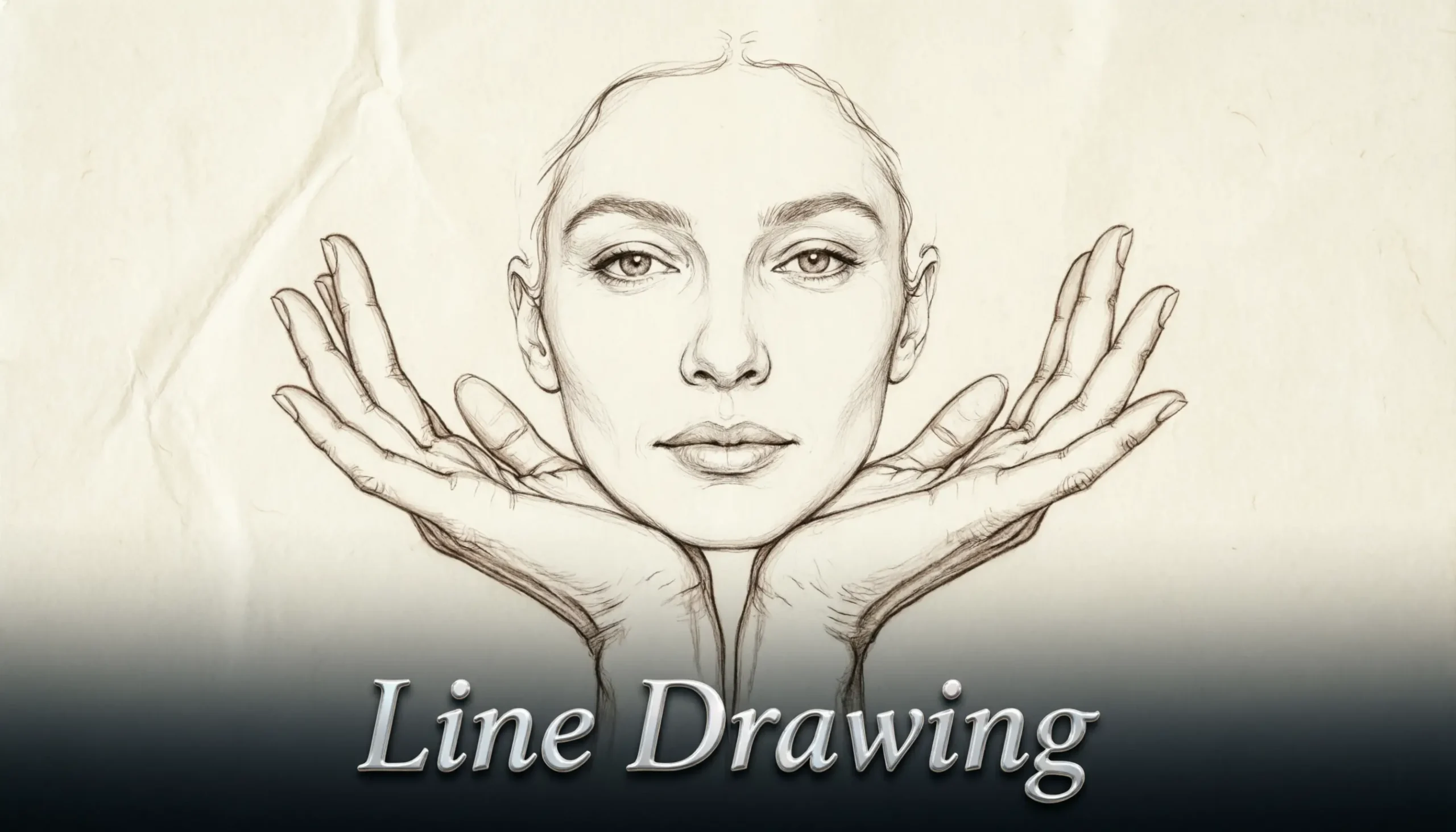
Line drawing is one of the simplest and most useful forms of drawing. It uses lines to show shapes, objects, movement, patterns, and ideas. A line can be straight, curved, thick, thin, broken, horizontal, vertical, or diagonal. In art, design, and geometry, different lines have different jobs.
Students often learn line drawing as one of the first steps in art and geometry. It helps build observation, hand control, shape awareness, and creative thinking. From a simple pencil sketch to a technical drawing, lines are everywhere. This guide explains the main types of line drawing, easy techniques, examples, uses, and helpful ideas for beginners in 2026.
What Is Line Drawing?
Line drawing is a type of drawing made mainly with lines instead of large areas of color or shading. A line can describe the edge of an object, show its shape, or create a pattern. For example, a simple drawing of a house can use straight lines for the walls, roof, windows, and door.
- ✏️ Line drawing uses lines to make pictures.
- 📏 Lines can show shape.
- 🏠 A house can be drawn with simple lines.
- 🌳 Trees can use curved and broken lines.
- 👤 Faces can begin with simple outlines.
- 🐱 Animals can be made with basic shapes.
- 📐 Geometry also uses line drawings.
- 🎨 Artists use lines to create style.
- 🖊️ Pens can make clean lines.
- 🖍️ Crayons can make bold lines.
- 📝 Pencils are useful for practice.
- 🧩 Lines can build larger shapes.
- 🔲 Lines can create patterns.
- 🌈 Different lines can show feelings.
- 👀 Line drawing helps improve observation.
- ⭐ Simple lines can create detailed art.
The main idea is easy: lines work together to show something. A beginner does not need advanced drawing skills to start. Even a few carefully placed lines can create a clear picture.
Types of Lines in Drawing
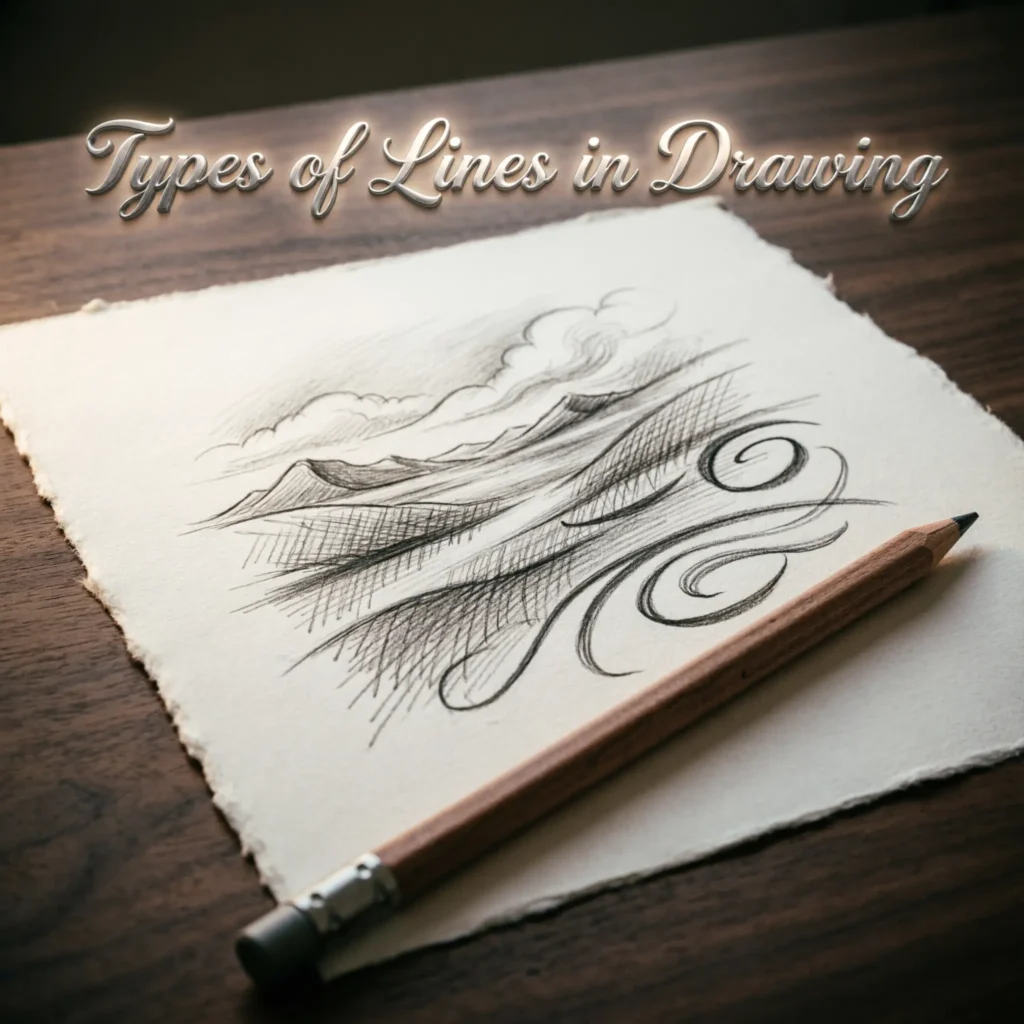
There are many types of lines in drawing, and each can create a different effect. Straight lines can look neat and strong, while curved lines can look soft and natural. Artists often mix several types to make a drawing more interesting.
- 📏 Straight lines move in one direction.
- ➖ Horizontal lines move side to side.
- 🧍 Vertical lines move up and down.
- ↗️ Diagonal lines move at an angle.
- 〰️ Curved lines bend smoothly.
- 🔄 Spiral lines turn around.
- ⚡ Zigzag lines change direction.
- ➿ Wavy lines move gently.
- ✂️ Broken lines have gaps.
- ⋯ Dotted lines use small marks.
- 🌀 Contour lines follow an object’s edge.
- 🖊️ Thick lines look bold.
- ✏️ Thin lines look light.
- 🌊 Flowing lines show movement.
- 🧱 Parallel lines stay the same distance apart.
- ✖️ Crossing lines meet each other.
Learning these line types gives students a useful drawing vocabulary. Once you understand how each line behaves, you can combine them to draw objects, people, landscapes, patterns, and technical diagrams.
Straight Line Drawing
A straight line drawing uses lines that do not bend. Straight lines are common in buildings, roads, furniture, geometric shapes, and technical drawings. They are also useful when students are learning how to control a pencil.
- 📏 Straight lines do not curve.
- ✏️ Use a pencil for light practice.
- 📐 A ruler can help make neat lines.
- 🏠 Walls often use straight lines.
- 🪟 Windows can use straight lines.
- 🚪 Doors use straight edges.
- 📚 Books have straight edges.
- 🛣️ Roads can include straight lines.
- 📦 Boxes use straight lines.
- 🔲 Squares use straight sides.
- ▭ Rectangles use straight sides.
- 🔺 Triangles use straight sides.
- 📐 Geometry uses many straight lines.
- 🏗️ Buildings use straight forms.
- 🖊️ Pens can make clean straight marks.
- ⭐ Practice improves line control.
Straight line practice is especially useful for beginners. Try drawing several lines of different lengths without using a ruler. This simple activity can improve hand control and help you become more confident with drawing.
Curved Line Drawing
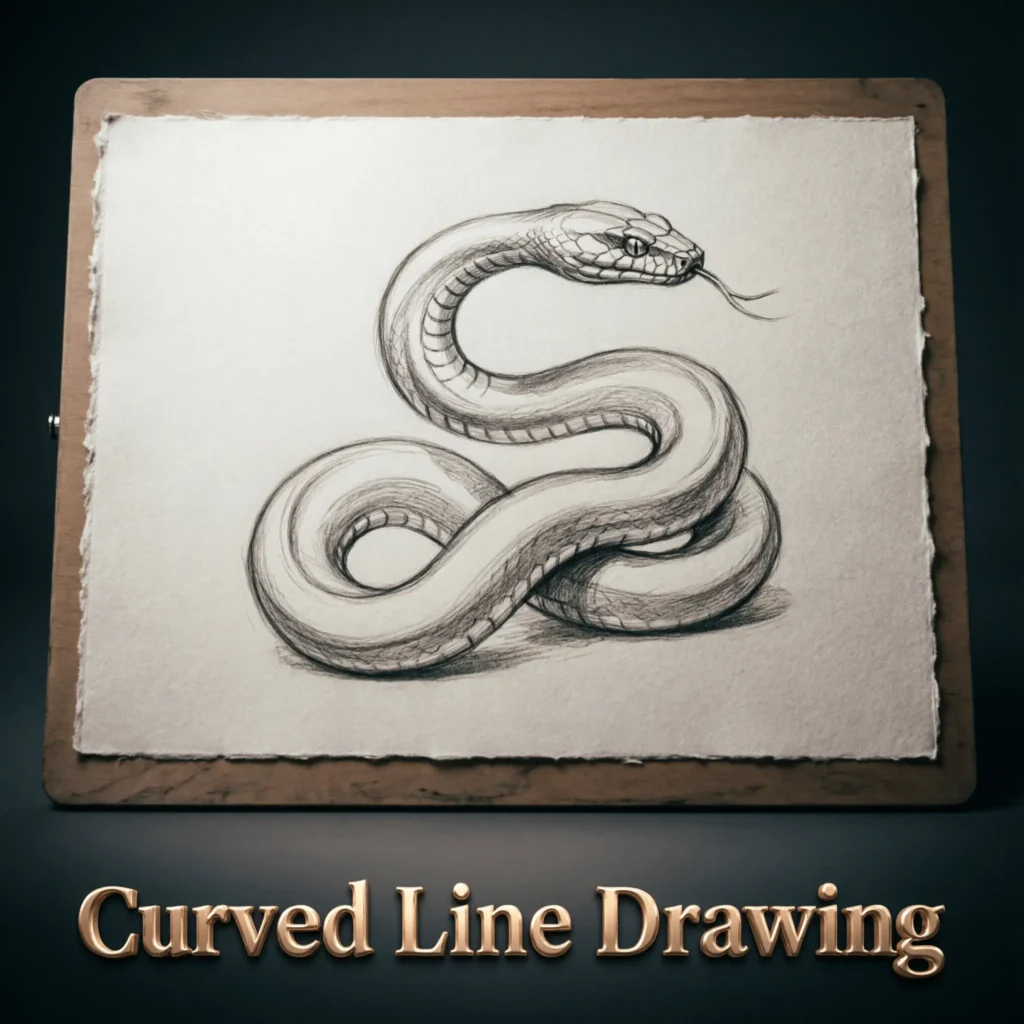
Curved line drawing uses lines that bend instead of staying straight. Curves appear in nature and in many everyday objects. They can make drawings look soft, smooth, friendly, or full of movement.
- 〰️ Curved lines bend.
- 🌊 Waves use curved lines.
- ☁️ Clouds can use soft curves.
- 🌙 A moon can include curved edges.
- 🌸 Flowers use many curves.
- 🍃 Leaves have curved outlines.
- 🐍 Snakes can be drawn with curves.
- 🐚 Shells can use curved patterns.
- 👂 Ears have curved shapes.
- 👀 Eyes contain curved lines.
- 👄 Lips use curved lines.
- 🏺 Pots can have curved edges.
- 🪑 Some furniture uses curves.
- 🎨 Curves can create soft styles.
- ✏️ Pencil pressure can change a curve.
- ⭐ Smooth practice creates better curves.
Curved lines can be difficult at first because the hand must move smoothly. Instead of trying to make one perfect curve, practice several slow curves. With time, your hand will become more comfortable with the movement.
Horizontal and Vertical Line Drawing
Horizontal and vertical lines are basic line types used in both art and geometry. A horizontal line moves from left to right, while a vertical line moves from top to bottom. Together, they can create many simple drawings.
- ➖ Horizontal lines move sideways.
- 🧍 Vertical lines move up and down.
- 🌅 Horizons use horizontal lines.
- 🌳 Tree trunks can use vertical lines.
- 🏠 Walls can use vertical lines.
- 🛣️ Roads may use horizontal lines.
- 📚 Books can use both types.
- 🪟 Windows use horizontal and vertical lines.
- 📐 Graphs use both directions.
- 🔲 Squares use horizontal and vertical edges.
- 🏢 Buildings use strong vertical lines.
- 🌊 Water can use horizontal strokes.
- 🧱 Brick walls use both lines.
- ✏️ Both are easy for beginners.
- 📏 Rulers can improve accuracy.
- ⭐ These lines are important in geometry.
These two line directions are useful because they create a strong visual structure. Students can start with horizontal and vertical lines before moving to diagonal and curved line drawing.
Diagonal Line Drawing
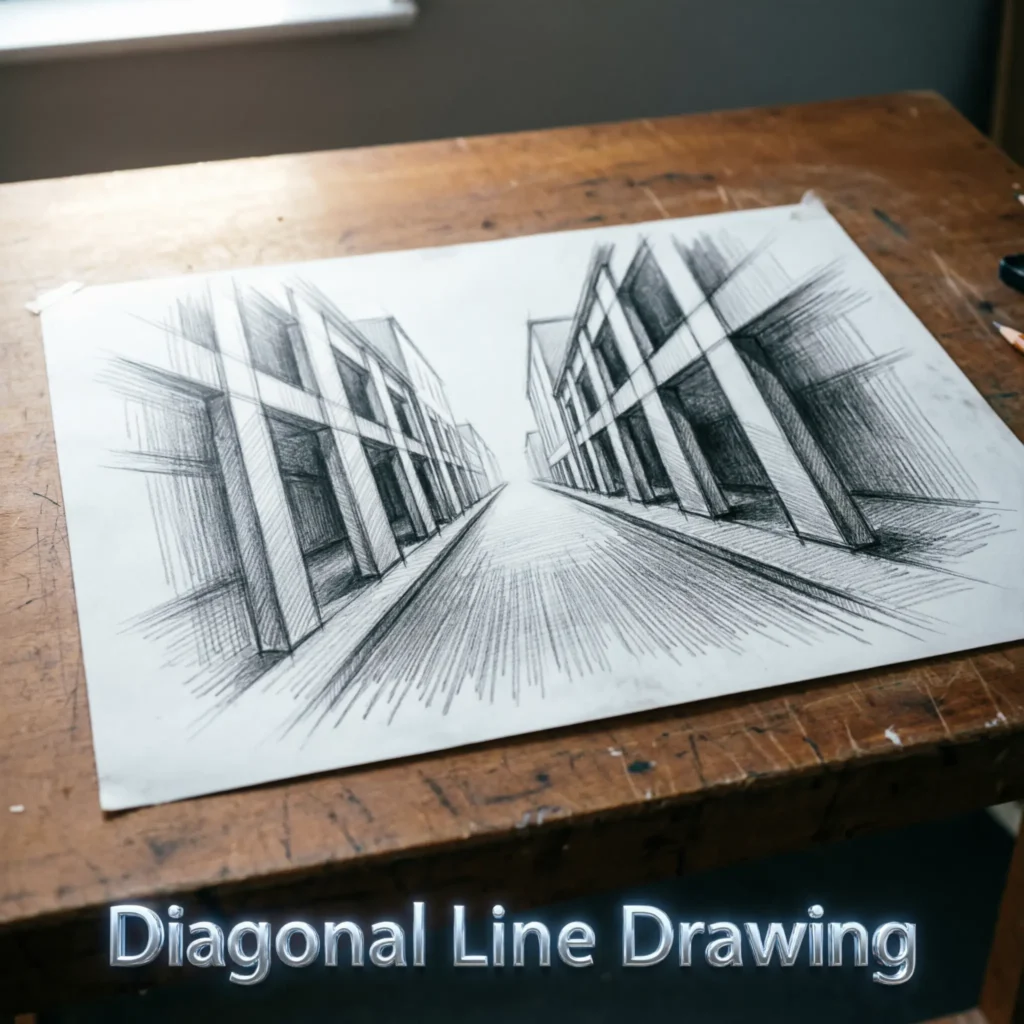
A diagonal line travels at an angle rather than straight across or straight up and down. Diagonal lines can make drawings feel active and energetic. They are common in roads, mountains, buildings, letters, and geometric figures.
- ↗️ Diagonal lines move at an angle.
- ↘️ They can slope downward.
- 🏔️ Mountains use diagonal edges.
- 🛣️ Roads can use diagonal lines.
- 🏠 Roofs often use diagonals.
- 📐 Triangles can contain diagonals.
- ✏️ Pencils make smooth diagonal strokes.
- 🖊️ Pens create sharp diagonal marks.
- ⚡ Diagonals can show energy.
- 🏃 They can suggest movement.
- 📦 Boxes may use diagonal details.
- 🎨 Artists use them for composition.
- 📐 Geometry uses diagonal segments.
- 🪜 Stairs can include diagonal parts.
- 🧩 Diagonals can divide shapes.
- ⭐ They add visual interest.
Diagonal lines can make a static drawing look more active. When used carefully, they can guide the viewer’s eyes toward a particular part of the picture.
Thick and Thin Line Drawing
Artists can change the thickness of a line to create contrast. A thick line can make an object look strong or important, while a thin line can show small details.
- 🖊️ Thick lines look bold.
- ✏️ Thin lines look delicate.
- 🖌️ Brushes can create different widths.
- 🖍️ Crayons can make broad strokes.
- 📝 Pencils can create fine details.
- 🖤 Thick outlines can define shapes.
- 🔎 Thin lines can show details.
- 🎨 Line weight creates contrast.
- 🏠 Buildings may use varied line weight.
- 🌳 Tree trunks can use thicker marks.
- 🍃 Leaves can use thin outlines.
- 👤 Portraits can use both types.
- 📐 Technical drawings use controlled thickness.
- 🖊️ Pen pressure can change width.
- ✨ Different widths add style.
- ⭐ Line weight improves visual clarity.
Using different line weights can make a drawing easier to understand. A strong outer line with lighter inner details can help the main shape stand out without adding complicated shading.
Contour Line Drawing
Contour line drawing focuses on the outer edges or visible shapes of an object. Artists use contour lines to study form and improve observation. A simple contour drawing can show an object without detailed shading.
- 👀 Contour drawing needs careful observation.
- ✏️ Lines follow visible edges.
- 🍎 An apple is easy to practice with.
- 🥄 Spoons have curved contours.
- 🐚 Shells offer interesting outlines.
- 👤 Faces can use contour lines.
- 🖐️ Hands are useful practice subjects.
- 👟 Shoes have many contours.
- 🪑 Furniture has clear edges.
- 🌿 Leaves have natural contours.
- 🏺 Pots have curved contours.
- 🐱 Animals can be outlined.
- 📦 Boxes have simple contours.
- 🎨 Contours describe shape.
- 🧠 They improve observation skills.
- ⭐ Practice can make drawing more accurate.
Contour drawing teaches students to really look at an object instead of drawing what they assume it looks like. This makes it a useful exercise for beginners who want to improve their observation and drawing skills.
Gesture Line Drawing
Gesture drawing uses quick lines to capture movement, action, or the main pose of a subject. It does not focus on small details. Instead, it tries to show what the subject is doing.
- 🏃 Gesture lines show movement.
- 🕺 They can show body action.
- ✏️ Draw quickly and lightly.
- ⏱️ Short practice sessions work well.
- 🧍 Start with the main body direction.
- 🦵 Add simple limb lines.
- 👐 Show the position of hands.
- 👀 Add the head direction.
- ⚡ Focus on action.
- 🎯 Avoid too many details.
- 🧠 Observe the whole pose.
- 🎨 Use flowing strokes.
- 🏀 Sports poses make good practice.
- 💃 Dancing poses show movement.
- 🚶 Walking figures are useful.
- ⭐ Gesture practice builds confidence.
Gesture drawing is helpful because it teaches artists to focus on the main idea instead of worrying about perfection. It is often used before a more detailed figure drawing.
Line Drawing in Geometry
In geometry, a line has a different and more exact meaning than it does in everyday art. A geometric line is straight and extends endlessly in both directions. Related ideas include line segments and rays.
- 📐 Geometry uses exact lines.
- ➖ A line extends in both directions.
- 📏 A line segment has two endpoints.
- ➡️ A ray has one endpoint.
- 🔵 Points can mark locations.
- 📍 Points can lie on lines.
- 📐 Angles use line segments or rays.
- 🔲 Shapes use line segments.
- ∥ Parallel lines never meet.
- ⟂ Perpendicular lines meet at 90°.
- ✖️ Intersecting lines cross.
- 📊 Graphs use coordinate lines.
- 🧭 Lines help describe position.
- 📐 Rulers help measure segments.
- 📝 Geometry diagrams use clear lines.
- ⭐ Line concepts support later math.
Understanding the difference between a line, line segment, and ray is important for students. These concepts appear in geometry exercises, diagrams, coordinate planes, angles, and many school exams.
Line Drawing Techniques for Beginners
Beginners can improve their line drawing by practicing basic strokes before attempting complex pictures. Good technique is less about expensive tools and more about regular practice and careful observation.
- ✏️ Start with a simple pencil.
- 📄 Use clean drawing paper.
- 📏 Practice straight lines.
- 〰️ Practice curved lines.
- ↗️ Practice diagonal lines.
- 🌀 Try spiral lines.
- ⚡ Practice zigzags.
- ⋯ Try dotted lines.
- 🖊️ Test different pens.
- 💪 Relax your drawing hand.
- 👀 Watch the subject carefully.
- 🐢 Draw slowly at first.
- 🔄 Repeat difficult strokes.
- 📐 Use a ruler when needed.
- 🧹 Keep the page clean.
- ⭐ Practice a little each day.
Regular practice is more useful than trying to create a perfect drawing immediately. Spend a few minutes each day drawing basic lines, then use those lines to create simple objects.
Line Drawing Ideas for Students
Students can turn basic lines into fun drawing projects. These activities can be used at home, in school, or during an art lesson. They also help connect art with geometry and observation.
- 🏠 Draw a simple house.
- 🌳 Draw a tree with curved lines.
- ☀️ Draw a sun with straight rays.
- 🌸 Draw a flower.
- 🐱 Draw a simple animal.
- 🐟 Draw a fish.
- 🏔️ Draw mountains.
- 🌊 Draw ocean waves.
- 🚗 Draw a simple car.
- 🚲 Draw a bicycle.
- 📦 Draw a box.
- 🪑 Draw a chair.
- 👤 Draw a simple face.
- 🌀 Make a line pattern.
- 🔷 Create a geometric design.
- ⭐ Make a picture using only lines.
These projects show students that complicated-looking pictures can begin with very simple strokes. They also make line drawing more enjoyable because students can see how basic marks turn into recognizable objects.
Line Drawing in Art and Design
Line drawing is important in many creative fields. Artists, illustrators, architects, fashion designers, graphic designers, and engineers all use lines in different ways.
- 🎨 Fine artists use expressive lines.
- ✏️ Illustrators create outlines.
- 🏗️ Architects make building drawings.
- 📐 Engineers create technical drawings.
- 👗 Fashion designers sketch clothing.
- 🖥️ Graphic designers use digital lines.
- 🧩 Designers create patterns.
- 🏠 Interior designers sketch rooms.
- 📱 Digital artists draw on tablets.
- 🖊️ Comic artists use line work.
- 📚 Illustrators create book pictures.
- 🗺️ Map designers use lines for roads.
- 📊 Charts use lines to show information.
- 🏭 Product designers sketch objects.
- 🎯 Logos can use simple line shapes.
- ⭐ Lines connect many creative fields.
The power of line drawing comes from its simplicity. A well-planned line can communicate shape, direction, depth, movement, or structure without needing lots of color or detail.
Line Drawing in Daily Life
People see line drawings in many places every day. They appear in signs, maps, instructions, buildings, books, packaging, apps, diagrams, and school materials.
- 🗺️ Maps use road lines.
- 🚦 Road signs use line shapes.
- 📱 Apps use line icons.
- 📚 Books contain illustrations.
- 🏠 House plans use lines.
- 🛍️ Packaging uses line graphics.
- 🧭 Maps show routes with lines.
- 🚆 Train maps use colored lines.
- 🏫 School diagrams use lines.
- 📐 Measuring tools use lines.
- 🛠️ Instruction manuals use drawings.
- 🧩 Puzzles use line patterns.
- 👕 Clothing designs use sketches.
- 🏗️ Construction plans use lines.
- 🖥️ Computer graphics use digital lines.
- ⭐ Lines help communicate ideas.
This shows why line drawing is more than an art exercise. Lines are a simple visual language that helps people understand objects, directions, measurements, plans, and information.
Line Drawing vs Shading
Line drawing and shading are two different ways to show an object. It mainly uses strokes and outlines, while shading uses changes in light and dark to create the feeling of depth and form.
- ✏️ Line drawing focuses on strokes.
- 🌑 Shading focuses on light and dark.
- 🖊️ Lines can create outlines.
- 🖍️ Shading can fill larger areas.
- 👤 Portraits can use both methods.
- 🍎 Objects can begin with outlines.
- 💡 Shading can show light direction.
- 📐 Line drawing can show structure.
- 🎨 Both can create depth.
- 📝 Beginners often start with lines.
- 🖌️ Shading needs value control.
- 👀 Both require observation.
- 🧩 Lines can define edges.
- 🌗 Shading can suggest roundness.
- ✨ Combining them adds detail.
- ⭐ Both are useful art skills.
A beginner does not need to choose only one method. Start with simple lines to build the shape, then add light shading when you are ready. This creates a clear and controlled drawing.
Digital Line Drawing in 2026
In 2026, digital line drawing is widely used for illustration, education, graphic design, animation, and online content. Tablets and drawing software allow artists to experiment with brushes, line thickness, layers, and editing tools.
- 🖥️ Digital drawing uses software.
- 📱 Tablets support line drawing.
- ✏️ Digital pencils imitate real pencils.
- 🖊️ Digital pens create clean outlines.
- 🔄 Mistakes can be undone.
- 📑 Layers keep drawings organized.
- 🎨 Brushes create different line styles.
- 🔎 Zoom helps with small details.
- 📐 Digital rulers improve accuracy.
- 🧩 Shapes can be edited easily.
- 💾 Drawings can be saved digitally.
- 🌐 Art can be shared online.
- 🎬 Animation uses digital line work.
- 📚 Education uses digital diagrams.
- 🏗️ Design software uses precise lines.
- ⭐ Digital tools make practice flexible.
Digital tools are useful, but the basic principles remain the same. Understanding straight, curved, diagonal, contour, thick, and thin lines helps whether you draw with a pencil or a digital stylus.
Conclusion:
Line drawing is a simple skill with many uses in art, geometry, design, education, and everyday communication. By learning straight, curved, horizontal, vertical, diagonal, thick, thin, contour, and gesture lines, students can build a strong foundation for more advanced drawing.
The best way to improve is to practice regularly. Start with basic strokes, combine them into shapes, and then use those shapes to create objects and scenes. In 2026, both traditional and digital line drawing remain useful skills for students, artists, designers, and anyone who wants to communicate ideas visually.

Andrew Collins creates inspiring content centered around success, motivation, leadership, and positive thinking.