

Can you park on a single yellow line? In the UK, the answer is often yes, but only outside the hours when the waiting restriction applies. The exact times are normally shown on a nearby sign or, in some areas, by a Controlled Parking Zone sign.
A single yellow line does not usually mean “no parking at all.” Instead, it tells drivers that waiting is restricted during certain times. Other rules can also apply, including loading restrictions, parking bays, bus stops, and local restrictions. This guide explains when you can park, when you cannot, what the signs mean, and the key rules to know in 2026.
Can You Park on a Single Yellow Line?
You may be able to park on a single yellow line when its waiting restriction is not operating. However, you should always check the nearby signs before leaving your vehicle. The restriction can change depending on the road, day, time, and local parking arrangements.
- 🟡 A single yellow line usually means waiting is restricted.
- 🕒 The restriction normally applies at stated times.
- 🪧 Check the nearest sign before parking.
- 🚗 Parking may be allowed outside restricted hours.
- 📅 Some restrictions apply only on certain days.
- 🏙️ Controlled Parking Zones can have zone-wide rules.
- 📍 Local restrictions can vary.
- 🅿️ Nearby parking bays may have separate rules.
- 📦 Loading restrictions can apply separately.
- 🚌 Bus stops can have additional restrictions.
- 🚶 Do not block pedestrians.
- 🚑 Keep emergency access clear.
- 💷 Illegal parking can result in a penalty charge.
- ♿ Blue Badge rules can provide certain exemptions.
- 🔎 Always check the complete parking situation.
- ✅ If the restriction is not operating, parking may be permitted.
The most important point is that a single yellow line is usually time-based. You cannot know whether parking is allowed simply by looking at the yellow line. The sign or applicable zone information tells you when the restriction operates.
What Times Can You Park on a Single Yellow Line?
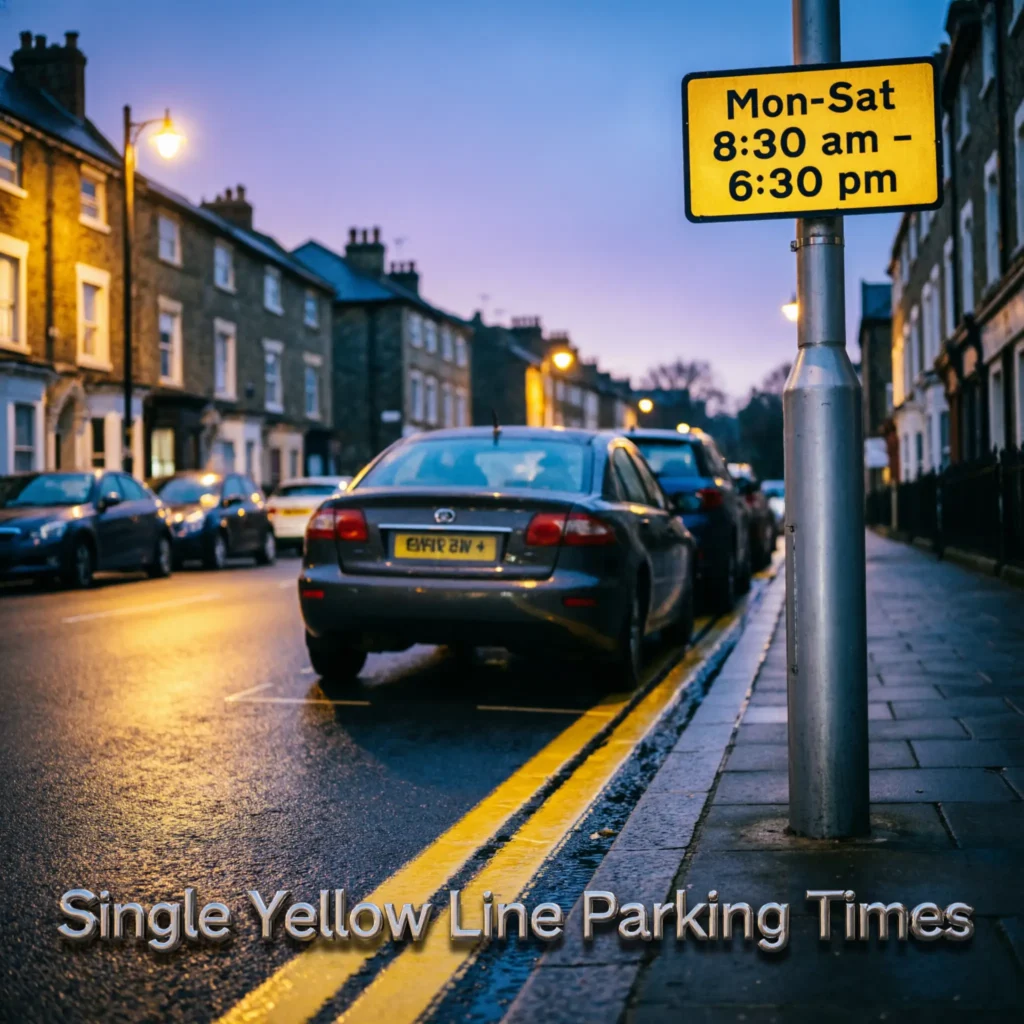
There is no single nationwide time when every single yellow line becomes available for parking. Different roads and controlled parking zones can have different restriction periods. The sign near the line normally provides the information you need.
- 🕒 Check the exact hours on the sign.
- 🪧 Read the sign carefully.
- 📅 Look for days of the week.
- 🌅 Morning restrictions may apply.
- 🌆 Evening restrictions may apply.
- 🌙 Some restrictions can extend into the night.
- 🏙️ Controlled zones can have area-wide times.
- 📍 Check whether the sign applies to your location.
- 🚗 Do not guess the operating hours.
- 🅿️ Parking bays may have different times.
- 📦 Loading restrictions may use separate times.
- ⚠️ Temporary restrictions can change normal rules.
- 📚 Local authority information can help.
- 🔎 Check for additional signs.
- 💷 Parking during restricted hours can lead to a penalty.
- ✅ Outside the restriction, parking may be allowed if no other rule prevents it.
For example, if a sign says waiting is restricted from 8am to 6pm, parking may be permitted after 6pm, provided no other restriction applies. Always use the actual sign at the location rather than assuming the same hours apply everywhere.
How Do Single Yellow Line Signs Work?
A single yellow line gives you the basic road-marking information, while signs can explain when the restriction applies. In some controlled parking zones, you may see the relevant hours when entering the zone rather than beside every individual yellow line.
- 🪧 Signs provide important parking information.
- 🕒 Times tell you when restrictions operate.
- 📅 Days may also be shown.
- 🟡 The road line marks the restriction.
- 🏙️ CPZ signs can cover several streets.
- 📍 Make sure the sign applies to your road.
- 🚗 Check before leaving your vehicle.
- 🅿️ Parking bays may have separate signs.
- 📦 Look for loading information.
- 🚌 Check nearby bus-stop restrictions.
- 🚧 Watch for temporary restrictions.
- 📚 Read all relevant signs.
- 🔎 Look carefully at additional plates.
- 💷 Follow the restriction to avoid penalties.
- 📱 Current council information can be useful.
- ✅ Use a clearly legal parking space if unsure.
The sign is especially important because the same type of yellow line can operate at different times in different locations. Never assume that a rule you saw on another street automatically applies to your current parking space.
Can You Park on a Single Yellow Line at Night?
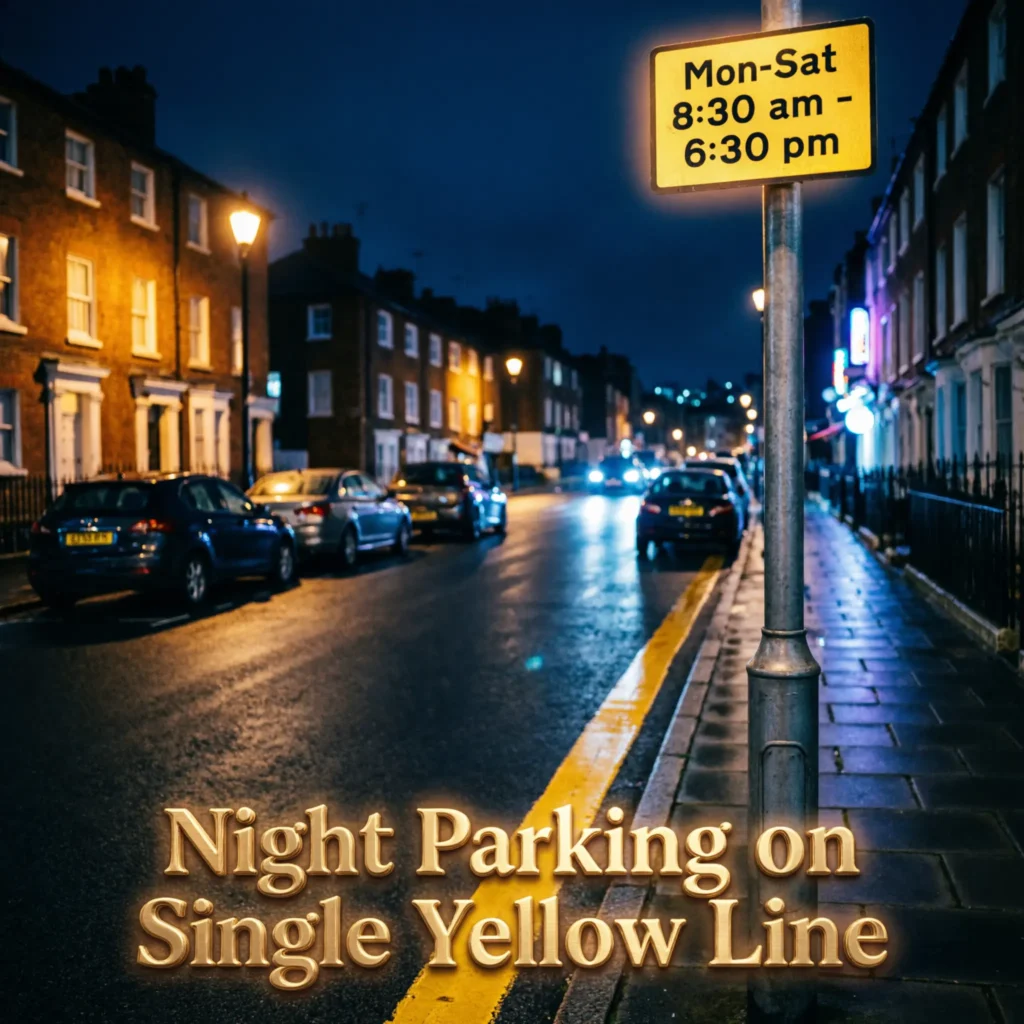
You may be able to park on a single yellow line at night if the waiting restriction has ended. However, this depends entirely on the operating hours shown on the applicable sign or controlled-zone information.
- 🌙 Night-time parking may be allowed.
- 🕒 Check when the restriction ends.
- 🪧 Read the nearby sign.
- 🏙️ Some areas have long operating periods.
- 📅 Restrictions may apply every day.
- 🚗 Do not assume nighttime always means free parking.
- 📍 Location matters.
- 🅿️ Check nearby parking bays.
- 📦 Loading restrictions can still matter.
- 🚌 Bus stops may have separate rules.
- 🚧 Temporary restrictions can operate at night.
- 💷 Penalties can apply during restricted hours.
- 🔎 Check the road before leaving your car.
- 📚 Use current local information.
- ⚠️ Do not rely on memory.
- ✅ Park only when all applicable rules allow it.
The phrase “single yellow line at night” does not have one universal answer. If the restriction operates only during daytime hours, parking may be permitted overnight. If it operates longer, you must wait until the restriction has ended.
Can You Park on a Single Yellow Line on Sunday?
Sunday parking depends on the hours and days covered by the local restriction. Some single yellow lines may have restrictions that include Sunday, while others may not. The sign or controlled-zone information should tell you what applies.
- 📅 Sunday can have different parking rules.
- 🕒 Check the stated operating days.
- 🪧 Read the sign before parking.
- 🟡 The yellow line itself does not show every detail.
- 🏙️ CPZ rules may cover Sunday.
- 🚗 Do not assume Sunday is unrestricted.
- 📍 Check the exact street.
- 🅿️ Parking bays may have separate Sunday rules.
- 📦 Loading restrictions can differ.
- 🚌 Bus stops have their own controls.
- 🚧 Temporary restrictions can apply.
- 💷 Penalties can apply on Sundays.
- 🔎 Check local authority information.
- 📱 Online parking information can help.
- ⚠️ Avoid relying on another driver’s example.
- ✅ Follow the sign at your location.
Sunday is not automatically a free-parking day. Always check the sign because local councils can use different operating periods for different streets and zones.
Can You Park on a Single Yellow Line on a Bank Holiday?
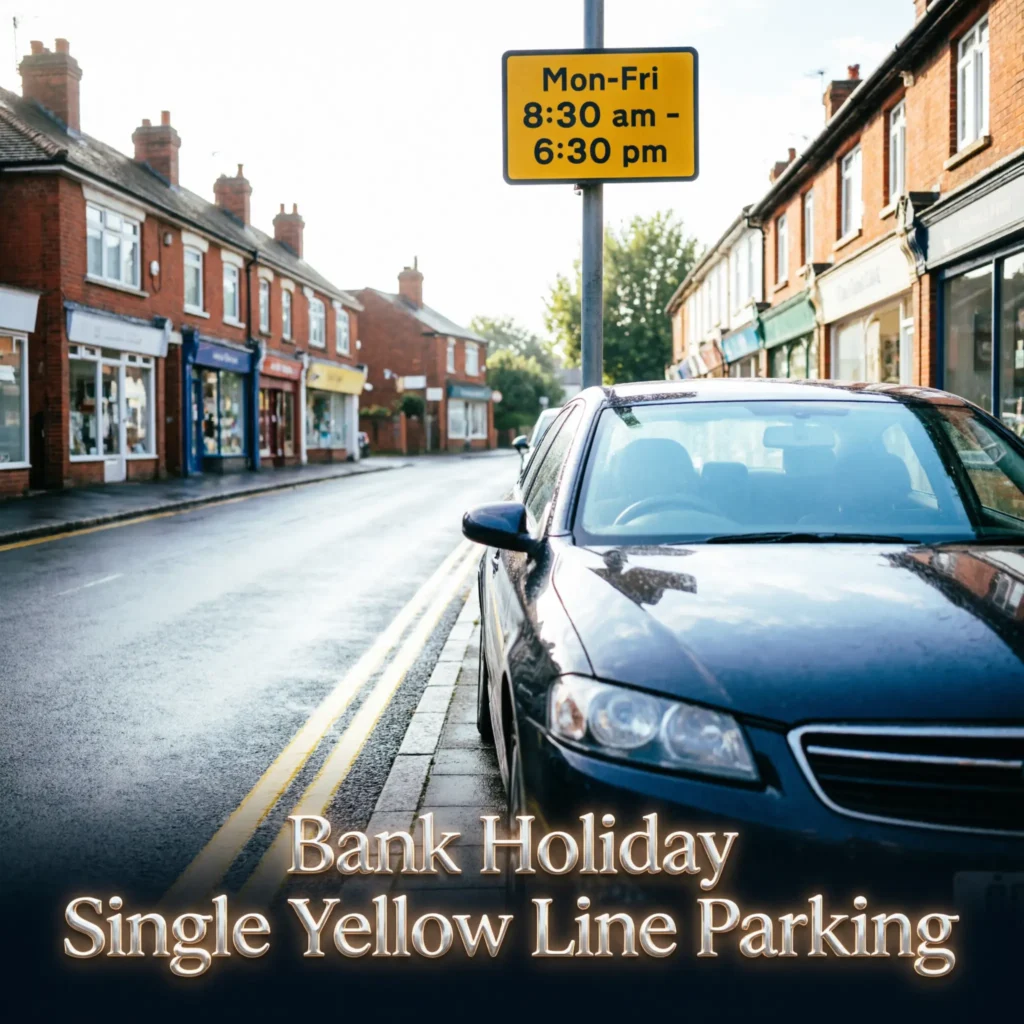
A bank holiday does not automatically cancel every single yellow line restriction. Whether you can park depends on the specific restriction and how its operating days are defined. Some signs may apply on bank holidays, while others may use different arrangements.
- 🏦 Bank holidays can have special traffic conditions.
- 🟡 Single yellow restrictions may still apply.
- 🕒 Check the operating times.
- 🪧 Read the sign carefully.
- 📅 Check whether the restriction covers the day.
- 🏙️ Local councils can manage restrictions differently.
- 🚗 Do not assume bank holidays are free.
- 🅿️ Parking bays may have separate rules.
- 📦 Loading restrictions can remain relevant.
- 🚌 Bus-stop restrictions can still apply.
- 🚧 Temporary restrictions may be introduced.
- 📱 Check official local information.
- 📚 Read current parking guidance.
- 💷 Penalties can apply if restrictions are active.
- 🔎 Look for additional signs.
- ✅ Confirm before leaving the vehicle.
The safest approach is to treat a bank holiday like any other day and check the applicable sign. Do not rely on the common belief that every parking restriction disappears on public holidays.
Can You Load on a Single Yellow Line?
Loading and unloading can be treated differently from ordinary parking. A single yellow line may allow certain loading activity when waiting is restricted, but this can change if there is a separate loading prohibition shown by yellow kerb marks or signs.
- 📦 Loading may have different rules.
- 🚚 Deliveries can involve loading activity.
- 🟡 A single yellow line does not explain every loading rule.
- 🟨 Yellow kerb marks can indicate restrictions.
- 🪧 Loading signs provide extra information.
- 🕒 Loading restrictions can have specific times.
- 🚗 Leaving the vehicle unattended can matter.
- 📍 Location affects the rules.
- 🛍️ Shops may need delivery access.
- 🏢 Businesses can have loading needs.
- 🚫 Loading may be prohibited in some places.
- 📚 Check local guidance.
- 🔎 Look closely at the kerb.
- ⚠️ Do not confuse loading with ordinary parking.
- 💷 Illegal loading can lead to enforcement.
- ✅ Check all signs before unloading.
Loading rules are one of the most important exceptions to understand. A driver should never assume that a single yellow line automatically gives permission to stop for deliveries. Additional signs and kerb markings must be considered.
Can You Wait on a Single Yellow Line?
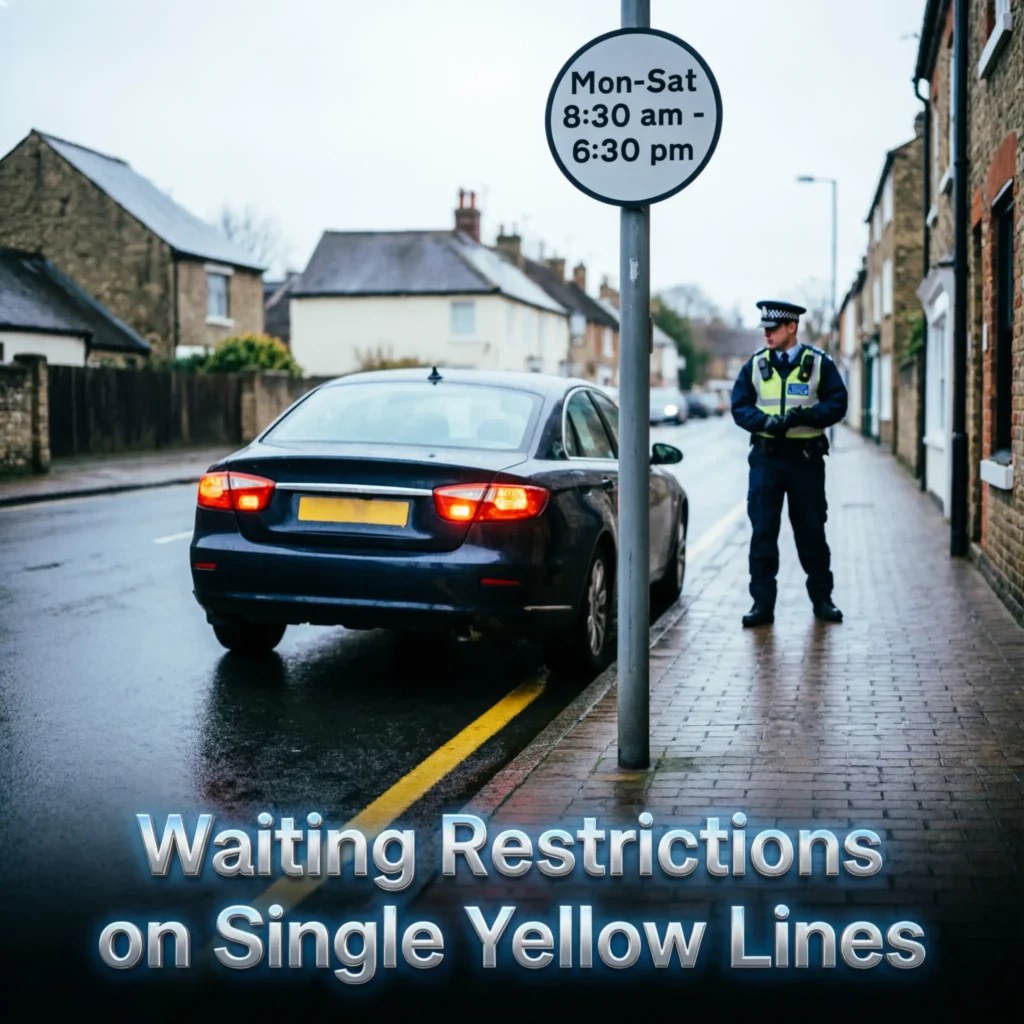
A single yellow line normally restricts waiting, which is a broader concept than simply leaving a car parked. Whether a brief stop is permitted can depend on why the vehicle stopped and the circumstances.
- 🟡 The main restriction concerns waiting.
- 🚗 Parking is commonly considered waiting.
- 🕒 Restrictions apply during stated periods.
- 🪧 Signs explain operating times.
- 📦 Loading can have separate provisions.
- 🚑 Emergency situations can be treated differently.
- 👤 Passenger activity can matter.
- 🚌 Bus stops have separate restrictions.
- 🚦 Traffic conditions can affect stopping.
- 📍 Local rules may add restrictions.
- ⚠️ “Only one minute” is not automatically safe.
- 💷 Enforcement can occur during restricted times.
- 🔎 Check the signs before stopping.
- 🚶 Avoid obstructing pedestrians.
- 🛣️ Keep road users safe.
- 📚 Understand the restriction rather than guessing.
A common mistake is thinking that a very short stop is always legal. The reason for stopping and what happens during the stop can matter. If you are unsure, do not assume that a quick stop is automatically allowed.
Single Yellow Line vs Double Yellow Line
The difference between single and double yellow lines is one of the most common parking questions. A single yellow line normally has time-based waiting restrictions, while a double yellow line generally prohibits waiting at any time, subject to specific legal exceptions.
- 🟡 Single yellow usually means time-based restriction.
- 🟡🟡 Double yellow generally means no waiting at any time.
- 🕒 Single yellow requires checking the hours.
- 🚫 Double yellow normally operates continuously.
- 🪧 Signs are important for single yellow lines.
- 📍 Location matters for both.
- 📦 Loading rules can be separate.
- ♿ Blue Badge rules have specific provisions.
- 🚗 Neither line should be treated casually.
- 🚌 Bus-stop restrictions can add controls.
- 🚶 Pedestrian safety still matters.
- 💷 Penalties can apply to violations.
- 📚 Road markings have specific meanings.
- 🔎 Check additional signs.
- ⚠️ An empty road does not mean parking is legal.
- ✅ Always follow the applicable restriction.
A simple way to remember the difference is: single yellow = check the time; double yellow = generally no waiting at any time. There are exceptions, so drivers should still check the complete parking situation.
Can Blue Badge Holders Park on a Single Yellow Line?
Blue Badge holders have certain parking concessions, but these do not provide unlimited permission to park on every yellow line. Specific restrictions, including loading bans and special stopping controls, can affect whether an exemption applies.
- ♿ Blue Badge holders have specific parking rights.
- 🟡 Some single yellow restrictions may allow exemptions.
- 🕒 Time limits can apply.
- 🪧 Signs must still be checked.
- 🟨 Kerb markings can create separate restrictions.
- 📦 Loading bans require special attention.
- 🚌 Bus stops can have separate rules.
- 🚗 The badge must be displayed correctly.
- 🪪 Required clock rules may apply.
- 📍 Local conditions can matter.
- 📚 Official Blue Badge guidance should be checked.
- 🔎 Do not assume every yellow line is permitted.
- ⚠️ Special restrictions can override ordinary expectations.
- 💷 Penalties may apply where an exemption does not cover the situation.
- ♿ Accessible parking rules are specific.
- ✅ Check the current rules before leaving the vehicle.
Blue Badge rights are designed to support people with mobility needs, but they still operate within specific legal limits. Checking the official guidance and signs is the best way to avoid misunderstandings.
What Happens If You Park Illegally on a Single Yellow Line?
If you park or wait on a single yellow line during its restricted hours without a valid exception, you may receive a Penalty Charge Notice (PCN). The exact amount and enforcement process can vary by local authority.
- 💷 A PCN may be issued.
- 🟡 The restriction must be active.
- 🕒 Timing can be important.
- 📍 Local authorities manage many restrictions.
- 🪧 Signs can provide evidence of the rule.
- 📸 Enforcement officers may record violations.
- 🚗 Moving the vehicle may prevent continued enforcement.
- 📚 Check the PCN instructions if one is issued.
- 🔎 Review the stated reason for the penalty.
- 📝 Keep relevant evidence if you believe it is incorrect.
- 📱 Local councils explain their appeal process.
- ⚠️ Do not ignore a valid notice.
- 💳 Payment deadlines may apply.
- 📅 Discount periods may be available.
- 🏙️ Rules vary by authority.
- ✅ Follow the official instructions on the notice.
A parking penalty is not the same thing as a criminal conviction.
How to Check Before Parking on a Single Yellow Line
The easiest way to avoid a parking mistake is to use a quick checklist before leaving your vehicle. Look at the road marking, find the relevant sign, check the time and day, and look for other restrictions.
- 👀 Look at the yellow line.
- 🪧 Find the nearest relevant sign.
- 🕒 Check the operating hours.
- 📅 Check the operating days.
- 🏙️ Look for a CPZ sign.
- 🅿️ Check nearby parking bays.
- 📦 Look for loading restrictions.
- 🟨 Check yellow kerb markings.
- 🚌 Check for bus-stop restrictions.
- 🚧 Look for temporary restrictions.
- ♿ Consider Blue Badge rules if relevant.
- 📍 Make sure the sign applies to your location.
- 📱 Check official local information if unsure.
- 💷 Consider possible penalty charges.
- 🧭 Find an alternative space if necessary.
- ✅ Park only when the applicable rules allow it.
This simple process takes very little time but can prevent many parking problems. When there is any doubt, a clearly marked legal parking bay is usually a safer choice than relying on an assumption about a yellow line.
Common Questions About Parking on a Single Yellow Line
The question “Can you park on a single yellow line?” has a simple basic answer, but the details depend on the time, location, signs, and other restrictions. These are some of the most common questions drivers ask.
- ❓ Can you park on a single yellow line? Yes, potentially, but only when the waiting restriction is not operating and no other restriction prevents it.
- 🕒 What time can I park? Check the hours shown on the applicable sign.
- 🌙 Can I park there overnight? It depends on when the restriction ends.
- 🏦 Can I park there on a bank holiday? Do not assume so; check the local restriction.
- 🟨 What do yellow kerb marks mean? They can indicate loading restrictions.
- ♿ Can Blue Badge holders park there? Certain exemptions can apply, subject to specific rules.
- 💷 Can I get a fine? You may receive a Penalty Charge Notice for illegal parking or waiting.
- 🪧 Why are signs important? They can show the hours when the yellow-line restriction operates.
- 🚗 Can I stop for one minute? Do not assume a short stop is automatically legal.
- 📍 Are all single yellow lines the same? No, their operating times and local conditions can differ.
- 📱 Where can I check the rules? Use current official local authority or government parking information.
- ✅ What is the safest approach? Check the sign, time, day, road markings, and additional restrictions before parking.
The answer is therefore not simply “yes” or “no.” You can park on a single yellow line only when the applicable waiting restriction allows it and no other rule prevents parking. Checking the sign is the most important step.
Single Yellow Line Parking Tips for 2026
In 2026, drivers have more digital tools for checking parking information, but technology should support rather than replace attention to physical road signs. Local parking rules can change, and temporary restrictions may not appear correctly on older maps or websites.
- 📱 Check current official parking information.
- 🪧 Read the sign at the location.
- 🕒 Confirm the exact restriction hours.
- 📅 Check the operating days.
- 🗺️ Use local parking maps when useful.
- 🚗 Plan your parking before traveling.
- 🅿️ Use designated bays when possible.
- 📦 Check loading restrictions.
- 🟨 Look at kerb markings.
- 🚧 Watch for temporary restrictions.
- 🚌 Check special stopping areas.
- ♿ Review Blue Badge rules when relevant.
- 📚 Prefer current official guidance.
- 💷 Avoid unnecessary penalty risks.
- 🧭 Allow extra time to find legal parking.
- ✅ If unsure, choose a clearly permitted space.
Good parking decisions usually come down to one simple habit: stop and read before you park.
Conclusion:
So, can you park on a single yellow line? In the UK, you often can, but only when the waiting restriction is not operating and no other parking or stopping restriction applies. The exact hours depend on the sign, controlled parking zone, and local rules.
Always check the single yellow line parking times, nearby signs, loading restrictions, kerb markings, and any special rules that apply to your vehicle. Do not assume that Sunday, nighttime, or bank holidays automatically make parking legal.

David Parker is a content writer focused on motivational lines, personal development messages, and powerful words that inspire action.