

The Suffragette line is one of the six named London Overground routes introduced as part of TfL’s 2024 rebrand. It runs across northeast London, linking Gospel Oak with Barking Riverside and serving areas including Hampstead, Islington, Walthamstow, Leyton, and Barking. (Experience London blog)
The name honors the Suffragette movement, which campaigned for women’s right to vote. In 2026, the line remains an important part of London’s transport network, with useful connections to Underground, Elizabeth line, and National Rail services. (Experience London blog)
What Is the Suffragette Line?
The Suffragette line is a London Overground route in northeast London. It was given its current name in 2024 when TfL introduced names for the six separate London Overground routes.
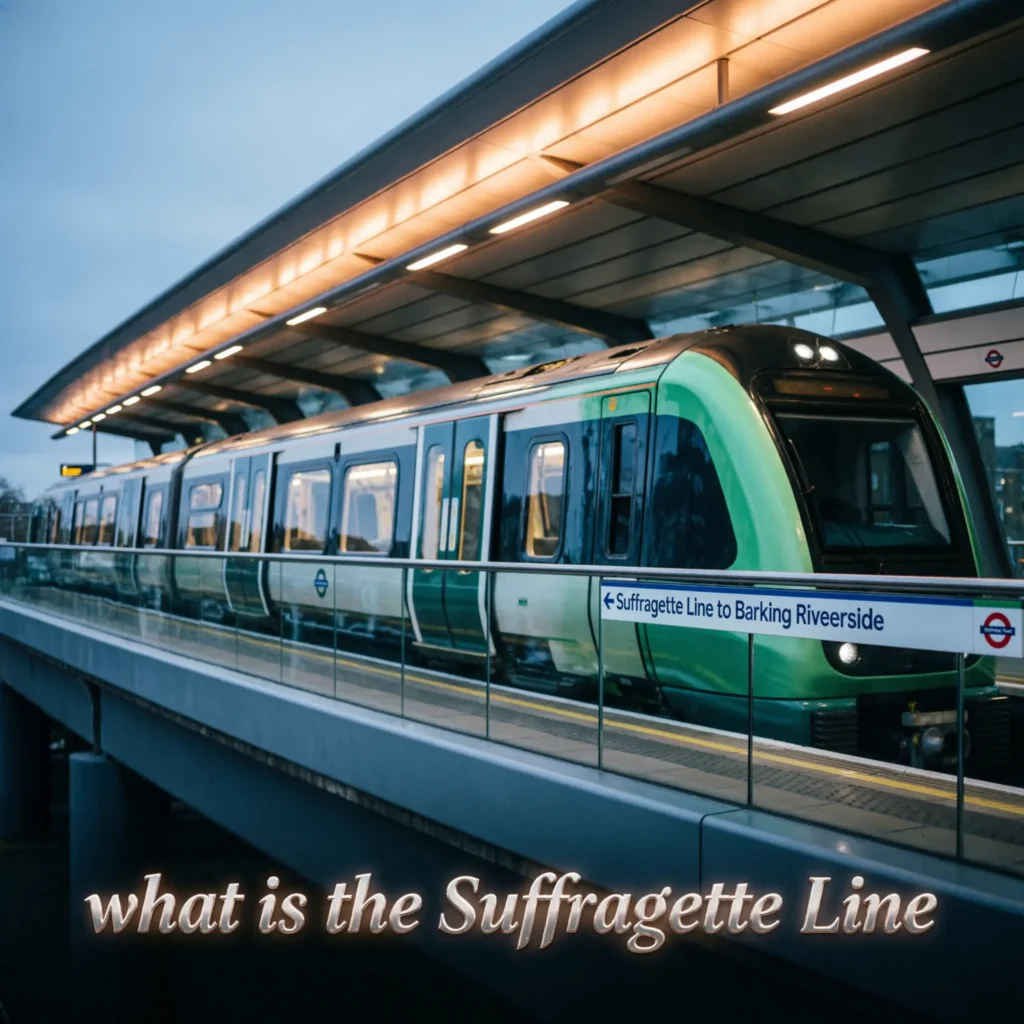
- 🟠 It is part of London Overground.
- 🚆 The route connects Gospel Oak and Barking Riverside.
- 🗺️ It has its own name on TfL maps.
- 👩 The name honors the Suffragette movement.
- 🏙️ It serves northeast London.
- 🚉 Gospel Oak is one end of the route.
- 🚉 Barking Riverside is the other end.
- 🚇 It connects with several Underground lines.
- 🚆 It connects with other rail services.
- 🏘️ It serves residential areas.
- 💼 It helps commuters reach central London connections.
- 🎓 Students can use several stations.
- 🧳 Visitors can use it for sightseeing.
- 📱 Journey planners can show current services.
- 🔎 Station signs identify the route.
- 📅 Current timetables should be checked before travel.
The line is useful because it provides a cross-London route without requiring passengers to travel through central London for every journey.
Suffragette Line Route
The Suffragette line travels between Gospel Oak and Barking Riverside, passing through several important northeast London neighborhoods. The route includes stations such as Upper Holloway, Harringay Green Lanes, Walthamstow Queen’s Road, Leyton Midland Road, and Barking. (Transport for London)
- 🚉 Gospel Oak is the western end.
- 🚉 Upper Holloway follows on the route.
- 🚉 Crouch Hill provides another connection.
- 🚉 Harringay Green Lanes serves Harringay.
- 🚉 South Tottenham connects with other services.
- 🚉 Blackhorse Road is an important interchange.
- 🚉 Walthamstow Queen’s Road serves Walthamstow.
- 🚉 Leyton Midland Road serves Leyton.
- 🚉 Leytonstone High Road is on the route.
- 🚉 Wanstead Park serves Wanstead.
- 🚉 Woodgrange Park is in northeast London.
- 🚉 Barking is a major interchange.
- 🚉 Barking Riverside is the eastern terminus.
- 🟠 The line is part of London Overground.
- 🗺️ The route appears on current TfL maps.
- 📱 Live information can help with journey planning.
The route gives passengers a useful alternative to traveling through central London, especially when connecting between northeast London neighborhoods.
Suffragette Line Stations
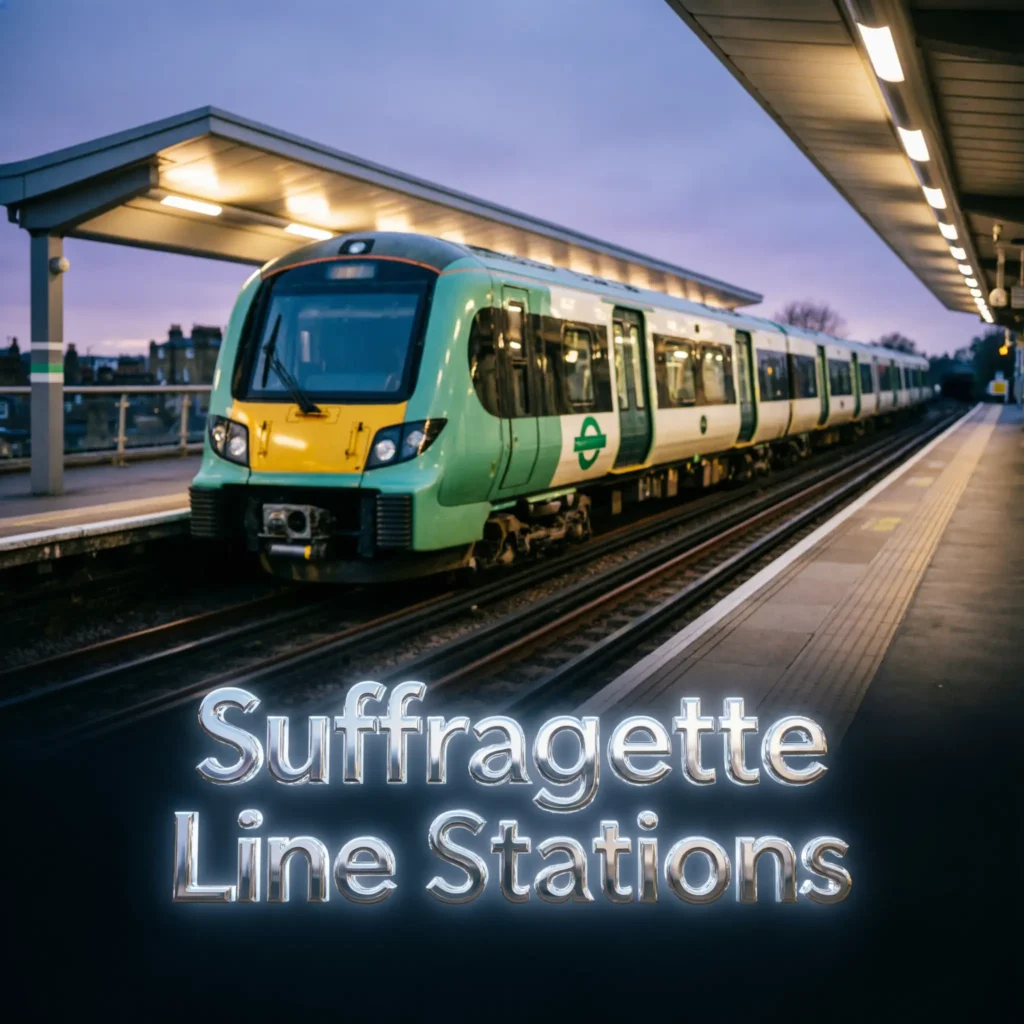
The Suffragette line has a range of stations across northeast London. Some are mainly local stops, while others provide connections to major Underground and rail services.
- 🚉 Gospel Oak
- 🚉 Upper Holloway
- 🚉 Crouch Hill
- 🚉 Harringay Green Lanes
- 🚉 South Tottenham
- 🚉 Blackhorse Road
- 🚉 Walthamstow Queen’s Road
- 🚉 Leyton Midland Road
- 🚉 Leytonstone High Road
- 🚉 Wanstead Park
- 🚉 Woodgrange Park
- 🚉 Barking
- 🚉 Barking Riverside
- 🚆 National Rail connections are available at some locations.
- 🚇 Underground connections are available at key stations.
- 🗺️ Station order should be checked on the latest TfL map.
The number of stops makes the line useful for local journeys as well as longer connections. Some stations also provide easy changes to other parts of London’s transport network.
Gospel Oak on the Suffragette Line
Gospel Oak is the western end of the Suffragette line. It is an important interchange because passengers can connect with the Mildmay line and continue their journey across London.
- 🚉 Gospel Oak is a terminus.
- 🚆 It is part of London Overground.
- 🔄 Passengers can connect with the Mildmay line.
- 🗺️ It appears on current Overground maps.
- 🏙️ Hampstead is nearby.
- 🌳 Hampstead Heath is accessible from the area.
- 🚶 Walking connections are available nearby.
- 📱 Journey planners can show interchange options.
- 🎒 It can be useful for local trips.
- 🚆 Overground services continue toward Barking Riverside.
- 🟠 The Suffragette line uses the station.
- 🟣 Other Overground routes are nearby.
- 🧭 It marks the western end of this route.
- 📢 Check platform information before boarding.
- ⏱️ Allow time for changes.
- 📅 Check the current timetable for 2026 journeys.
Gospel Oak is particularly useful for passengers traveling between northwest and northeast London through Overground connections.
Blackhorse Road Station
Blackhorse Road is one of the most useful interchange stations on the Suffragette line. It provides a connection with the Victoria line, making it easier to continue toward central London.
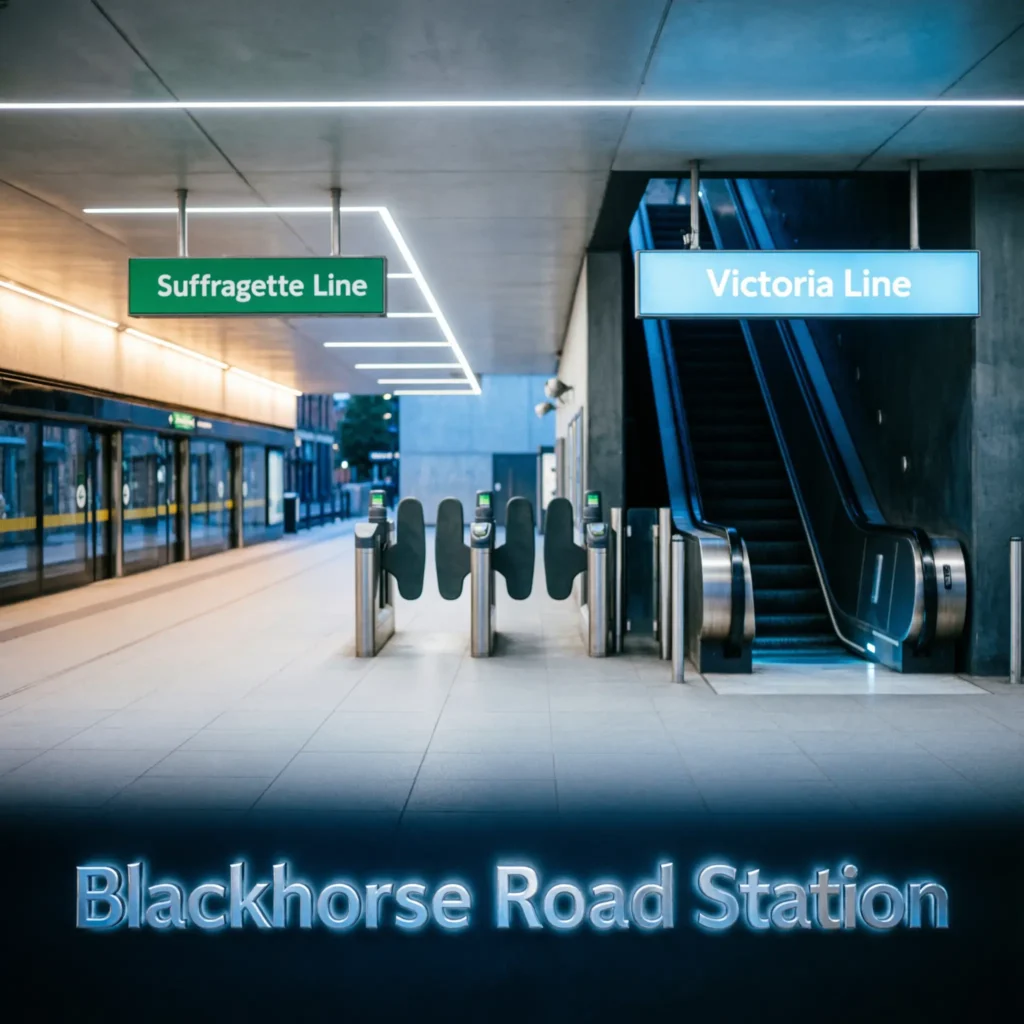
- 🚉 Blackhorse Road is on the Suffragette line.
- 🚇 It connects with the Victoria line.
- 🟠 Overground trains serve the station.
- 🚇 Victoria line trains provide fast connections.
- 🏙️ Walthamstow is nearby.
- 🔄 Passengers can change services.
- 🗺️ It is clearly shown on transport maps.
- 📱 Journey planners can calculate connections.
- 🎓 The area serves local communities.
- 💼 Commuters use the station.
- 🧳 Visitors can change here.
- ⏱️ Allow time for interchange.
- 📢 Follow station signs.
- 🚉 Check the correct platform.
- 🔎 Live service information can be useful.
- 📅 Check current TfL information before traveling.
Blackhorse Road is one of the key stations to remember when planning a journey between the Suffragette line and central London.
Walthamstow on the Suffragette Line
The Suffragette line serves Walthamstow through Walthamstow Queen’s Road. The area also has other important transport connections, making it a useful location for changing routes.
- 🚉 Walthamstow Queen’s Road is on the route.
- 🏙️ It serves Walthamstow.
- 🚇 Walthamstow Central is nearby.
- 🚇 The Victoria line serves Walthamstow Central.
- 🚆 Overground provides cross-London travel.
- 🛍️ Local shopping areas are nearby.
- 🏘️ The area has residential neighborhoods.
- 📱 Journey apps can show walking connections.
- 🚶 Some transfers require walking.
- 🗺️ Check the map before changing stations.
- 💼 Commuters use the route.
- 🎓 Local students can use the network.
- 🧳 Visitors can reach the area by rail.
- ⏱️ Allow extra time for transfers.
- 📢 Follow station signs.
- 📅 Check current service information.
Walthamstow demonstrates how the Suffragette line works with other London transport services rather than operating as an isolated railway.
Leyton and Leytonstone Stations
The Suffragette line passes through Leyton Midland Road and Leytonstone High Road, giving residents access to other parts of northeast London.
- 🚉 Leyton Midland Road is on the line.
- 🚉 Leytonstone High Road is also served.
- 🏙️ Both stations serve local communities.
- 🚇 Other Tube stations are available nearby.
- 🗺️ The stations appear on Overground maps.
- 🚆 The line provides cross-London connections.
- 🛍️ Local shops are accessible.
- 🏘️ Residential areas surround the stations.
- 📱 Apps can show nearby alternatives.
- 🚶 Walking may connect nearby stations.
- 💼 Commuters use these stations.
- 🎓 Students can use local rail services.
- 🧳 Visitors can travel through the area.
- ⏱️ Journey times vary by destination.
- 📢 Check platform signs.
- 📅 Check the latest timetable before travel.
These stations are useful for passengers who want to travel across northeast London without going through central London.
Barking and Barking Riverside
It Riverside form the eastern end of the Suffragette line. It is a major transport interchange, while Barking Riverside provides access to a growing riverside area.
- 🚉 Barking is a major station.
- 🚉 Barking Riverside is the eastern terminus.
- 🚆 National Rail services connect at Barking.
- 🚇 Underground services connect at Barking.
- 🚌 Bus connections extend the network.
- 🌊 Barking Riverside is near the River Thames.
- 🏘️ The Riverside area is developing.
- 🧳 Visitors can use the route.
- 💼 Commuters can change at Barking.
- 🗺️ The route ends at Barking Riverside.
- 📱 Current journey information is useful.
- 🚆 Trains run between Gospel Oak and Barking Riverside.
- 🔄 Barking provides multiple transport options.
- 📢 Check service announcements.
- ⏱️ Allow time when changing trains.
- 📅 Check the current timetable.
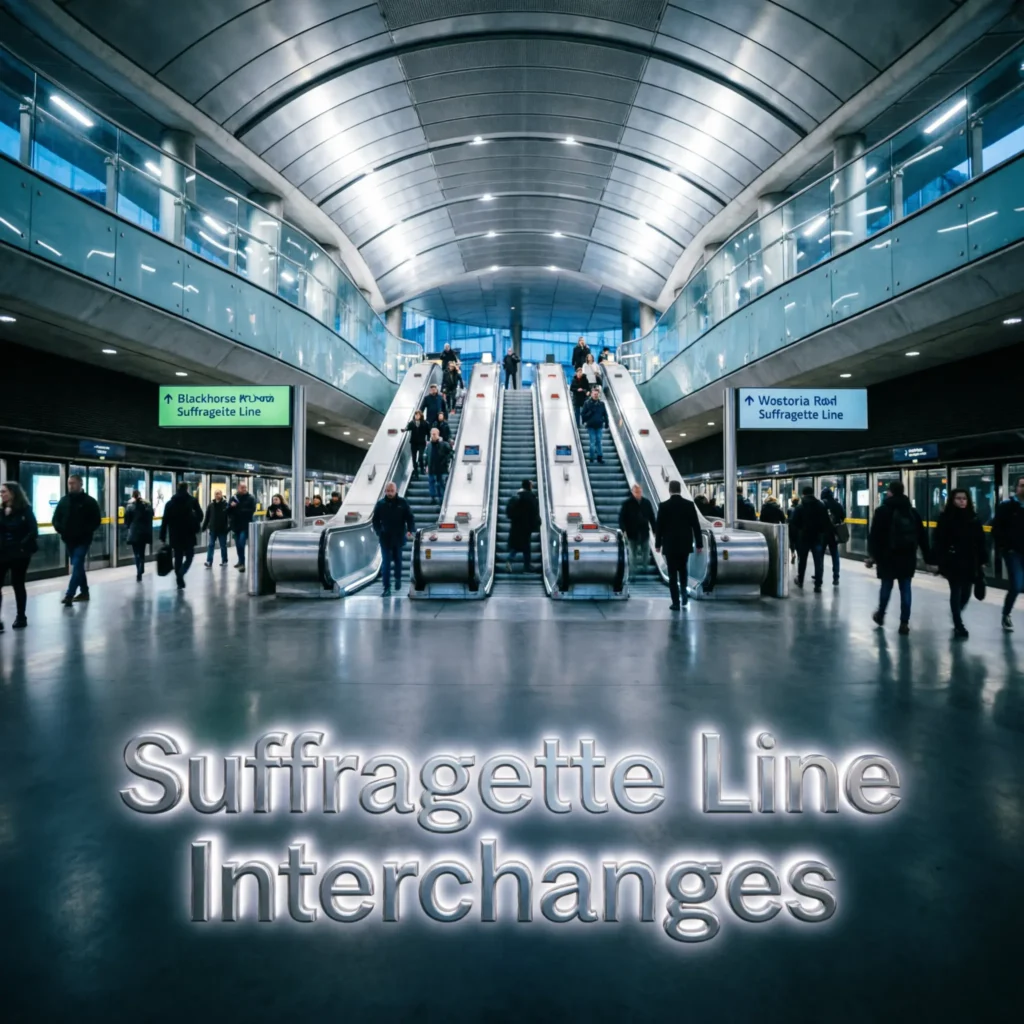
Suffragette Line Interchanges
Several stations allow passengers to change between the Suffragette line and other transport services. These interchanges make the route more useful for longer journeys.
- 🔄 Gospel Oak connects with the Mildmay line.
- 🚇 Blackhorse Road connects with the Victoria line.
- 🚇 Seven Sisters is accessible through nearby connections.
- 🚆 Barking connects with National Rail.
- 🚇 Barking connects with the District line.
- 🚇 Barking connects with the Hammersmith & City line.
- 🚆 Some stations connect with other rail services.
- 🚌 Buses provide additional connections.
- 📱 Journey planners show interchange options.
- 🗺️ Transport maps show major connections.
- 🚶 Some changes involve walking.
- ⏱️ Allow time for transfers.
- 📢 Follow signs inside stations.
- 🎒 Keep belongings secure.
- 🔎 Check the correct platform.
- 📅 Live service information can help.
The most useful interchange depends on where you are going. Blackhorse Road and Barking are particularly important for connections with the wider Underground network.
Suffragette Line and the Victoria Line
The Victoria line is one of the most useful connections for Suffragette line passengers. Blackhorse Road provides a direct interchange between the two routes.
- 🚇 Victoria line serves Blackhorse Road.
- 🟠 Suffragette trains also serve the station.
- 🔄 Passengers can change lines.
- 🏙️ Central London becomes easier to reach.
- 🚇 Victoria line serves major central stations.
- 📱 Journey planners show connection times.
- 🗺️ Both routes appear on London transport maps.
- 💼 Commuters often use the interchange.
- 🎓 Students can use the connection.
- 🧳 Tourists can change trains.
- ⏱️ Check waiting times.
- 📢 Follow signs between platforms.
- 🚉 Confirm the train destination.
- 🧭 Choose the correct direction.
- 🔎 Check for service disruptions.
- 📅 Use current 2026 travel information.
This interchange makes the Suffragette line more valuable for journeys that continue toward central London.
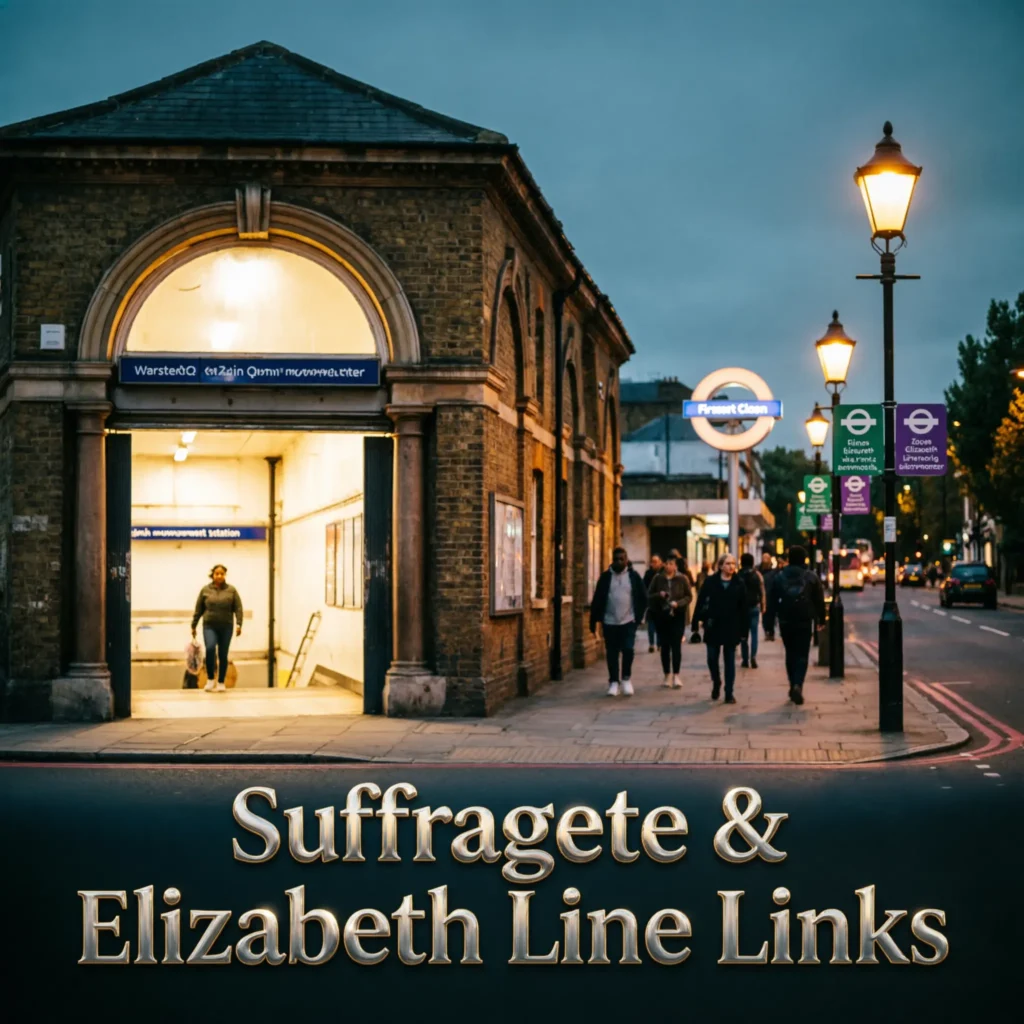
Suffragette Line and the Elizabeth Line
The Suffragette line does not directly share a station with the Elizabeth line along its entire route, but passengers can make connections through the wider London transport network.
- 🚆 The Elizabeth line provides east-west travel.
- 🟠 The Suffragette line serves northeast London.
- 🔄 Passengers can use interchange stations.
- 🚉 Barking is an important rail hub.
- 🚉 Forest Gate is on the Elizabeth line.
- 🚇 Underground connections can help.
- 📱 Journey planners can find suitable routes.
- 🗺️ TfL maps show connections.
- 💼 Commuters benefit from interchange options.
- 🧳 Visitors can combine rail services.
- ⏱️ Transfers may require extra time.
- 🚶 Some changes involve walking.
- 📢 Check platform information.
- 🚆 Check train destinations carefully.
- 🔎 Look for live service updates.
- 📅 Use current 2026 timetables.
Because London’s transport network is interconnected, a journey may involve more than one Overground, Underground, or Elizabeth line service.
Why Is It Called the Suffragette Line?
The name Suffragette line was chosen as part of TfL’s 2024 London Overground rebrand. The name recognizes the Suffragette movement and its campaign for women’s voting rights. (Experience London blog)
- 👩 The name recognizes women campaigners.
- 🗳️ Suffragettes campaigned for voting rights.
- 📜 The movement is important to British history.
- 🏛️ The name connects transport with history.
- 👩🎓 Education can help explain the name.
- 🟠 The route carries the Suffragette name today.
- 🚆 It is part of London Overground.
- 🗺️ The name appears on transport maps.
- 📚 The name encourages historical interest.
- 🇬🇧 Suffragette history is strongly linked to Britain.
- 👥 The movement involved many campaigners.
- 📢 TfL introduced six named Overground routes.
- 🌍 The names reflect different communities and histories.
- 🏙️ The line serves London neighborhoods.
- ⭐ The name gives the route a distinct identity.
- 📅 The branding remains in use in 2026.
The naming project gave individual Overground routes distinct identities, making them easier to recognize and connecting them with London’s history and communities. (Experience London blog)
Suffragette Line Map
The Suffragette line map shows the route from Gospel Oak to Barking Riverside and the major interchange points along the way. TfL’s current timetable and map information can be used to check the latest station and connection details. (Transport for London)
- 🗺️ Gospel Oak is at one end.
- 🗺️ Barking Riverside is at the other.
- 🚉 Upper Holloway is on the route.
- 🚉 Crouch Hill is on the route.
- 🚉 Harringay Green Lanes is on the route.
- 🚉 South Tottenham is on the route.
- 🚉 Blackhorse Road is an important interchange.
- 🚉 Walthamstow Queen’s Road is served.
- 🚉 Leyton Midland Road is served.
- 🚉 Leytonstone High Road is served.
- 🚉 Wanstead Park is served.
- 🚉 Woodgrange Park is served.
- 🚉 Barking is a major interchange.
- 🟠 The line is part of London Overground.
- 🔄 Connections make the map more useful.
- 📱 Digital maps can provide live journey information.
For travel in 2026, it is best to check the latest TfL map or timetable because engineering works and temporary service changes can affect journeys.
Suffragette Line Travel Tips for 2026
A little planning can make journeys on the Suffragette line easier. Service patterns can change because of maintenance, engineering work, or other transport conditions.
- 📱 Check live TfL information.
- 🗺️ Use the latest map.
- 🚆 Check your train destination.
- 🔄 Plan connections before leaving.
- ⏱️ Allow extra time for transfers.
- 🚉 Check platform signs.
- 📢 Listen to station announcements.
- 🚧 Look for engineering works.
- 🎒 Keep belongings secure.
- 🧳 Allow extra time with luggage.
- ♿ Check accessibility information if needed.
- 📱 Keep your journey details available.
- 🚌 Consider buses for alternative routes.
- 🚇 Check Underground connections.
- 🔎 Recheck your route before important journeys.
- 📅 Use current 2026 service information.
TfL’s published timetable is valid from December 2025 until further notice, but passengers should still check live updates on the day of travel. (Transport for London)
Suffragette Line in 2026
The Suffragette line 2026 continues to be an important London Overground route. Its combination of local stations and major interchanges makes it useful for everyday travel across northeast London.
- 🟠 It remains a London Overground route.
- 🚆 It links Gospel Oak and Barking Riverside.
- 🗺️ Its name appears on current transport information.
- 👩 Its name honors the Suffragette movement.
- 🚉 Blackhorse Road provides an important interchange.
- 🚉 Barking connects with wider transport.
- 🚉 Gospel Oak connects with another Overground route.
- 🏙️ It serves many northeast London neighborhoods.
- 💼 It supports commuter journeys.
- 🎓 It supports local travel.
- 🧳 Tourists can use the route.
- 📱 Digital travel tools make planning easier.
- 🚧 Engineering works can cause temporary changes.
- 📢 Live updates remain important.
- 🔎 Current timetables should be checked.
- ⭐ The route has a distinctive historical identity.
The line is more than a railway route: its name connects London’s modern transport system with the history of the campaign for women’s voting rights.
Common Questions About the Suffragette Line
The Suffragette line is still relatively new by name, so travelers often have questions about its route, stations, connections, and history.
- ❓ What is the Suffragette line? It is a London Overground route between Gospel Oak and Barking Riverside.
- 🚆 Is the Suffragette line part of London Overground? Yes.
- 🟠 What color is the Suffragette line? It has its own Overground branding on TfL maps.
- 🚉 Where does the Suffragette line start? Gospel Oak is one terminus.
- 🚉 Where does it end? Barking Riverside is the other terminus.
- 🚇 Does it connect with the Victoria line? Yes, at Blackhorse Road.
- 🚇 Does it connect with the Underground? Yes, at several points through direct or nearby interchanges.
- 🚆 Does it connect with National Rail? Yes, including at Barking.
- 👩 Why is it called the Suffragette line? The name honors the Suffragette movement.
- 📅 When was the name introduced? It was introduced as part of the 2024 London Overground rebrand.
- 🗺️ Where can I find the map? Current TfL maps and timetables show the route.
- 🚉 Does it go to Walthamstow? Yes, through Walthamstow Queen’s Road.
- 🚉 Does it go to Leyton? Yes, it serves Leyton Midland Road.
- 🚉 Does it go to Barking? Yes.
- 🧳 Is it useful for tourists? Yes, particularly for reaching northeast London and making connections.
- 📱 Should I check live updates? Yes, especially before traveling.
Conclusion:
The Suffragette line is a key London Overground route connecting Gospel Oak and Barking Riverside through northeast London. It serves important areas such as Harringay, Tottenham, Walthamstow, Leyton, and Barking, while providing useful connections with other transport services. (Transport for London)
Its name also carries historical meaning, honoring the Suffragette movement and its campaign for women’s voting rights. For travelers in 2026, the best way to use the route is to combine the current TfL map with live service information before starting a journey.

Andrew Collins creates inspiring content centered around success, motivation, leadership, and positive thinking.