

A single yellow line on the road usually means there are restrictions on parking or waiting during certain times. In the UK, the exact rule depends on the nearby sign or controlled parking zone information. Unlike a double yellow line, a single yellow line can allow parking at some times and restrict it at others.
In 2026, understanding single yellow line parking rules is useful for drivers who want to avoid fines and park legally. The key is to check the signs, road markings, nearby restrictions, and local rules before leaving a vehicle. This guide explains what a single yellow line means, when parking may be allowed, loading rules, common mistakes, and important differences between single and double yellow lines.
What Does a Single Yellow Line Mean?
A single yellow line generally indicates a waiting restriction. This means you cannot simply assume that parking is allowed whenever you see an empty space beside the line. The restriction normally applies during specific hours shown on a nearby sign or indicated by controlled-zone information.
- 🟡 A single yellow line marks a waiting restriction.
- 🚗 Parking may be allowed outside restricted hours.
- 🕒 Restricted hours are important.
- 🪧 Nearby signs provide key information.
- 📍 Rules can vary by location.
- 🅿️ A marked parking bay may have separate rules.
- 🚫 Waiting can be restricted during certain periods.
- 📅 Some restrictions apply only on certain days.
- 🏙️ Local councils manage many restrictions.
- 📚 Road markings have specific meanings.
- 👀 Drivers should check signs before parking.
- 💷 Breaking restrictions can lead to a penalty.
- 🚦 Traffic rules can differ from parking rules.
- 📦 Loading may have separate regulations.
- ♿ Blue Badge rules can have special provisions.
- 🔎 Always check the exact local restriction.
The simple rule is: a single yellow line does not always mean “no parking at all.” It usually means waiting is restricted at particular times. The nearby sign or zone information tells you when that restriction applies.
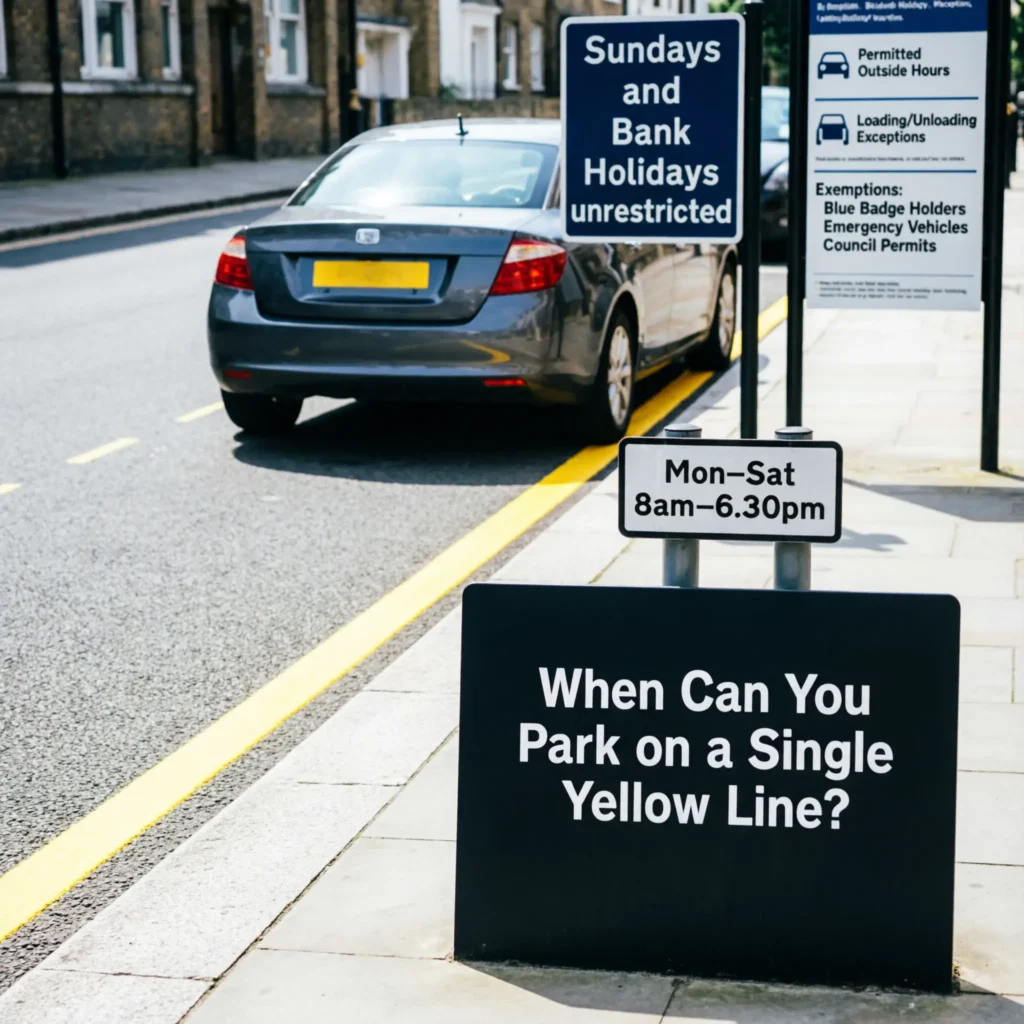
When Can You Park on a Single Yellow Line?
Parking on a single yellow line may be permitted outside the hours when the waiting restriction operates. However, this does not mean every single yellow line can be used freely. Other restrictions, parking bays, loading rules, or local signs may still apply.
- 🕒 Check the restriction hours first.
- 🪧 Read the nearest sign carefully.
- 🚗 Parking may be allowed outside those hours.
- 📅 Check whether the restriction operates daily.
- 🏙️ Controlled zones may use zone signs.
- 📍 Location-specific rules still apply.
- 🅿️ Check for nearby parking bays.
- 📦 Loading restrictions may apply separately.
- 🚫 Do not block entrances.
- 🚑 Keep emergency access clear.
- 🚶 Avoid obstructing pedestrians.
- 🚌 Do not interfere with bus stops.
- 🚦 Check other road markings.
- ♿ Consider accessibility requirements.
- 💷 Avoid parking during restricted times.
- 📚 Follow the current local rules.
The most important habit is to check the sign before leaving your vehicle. A driver who sees a single yellow line but ignores the time restriction may receive a penalty even if the road looks quiet.
Single Yellow Line Parking Times
The operating times for a single yellow line are not necessarily the same everywhere. Signs can show the hours when waiting is prohibited. In some controlled parking zones, entry signs can provide information that applies to several roads within the zone.
- 🕒 Restriction times can vary.
- 🪧 Signs may show exact hours.
- 📅 Some restrictions apply on certain days.
- 🏙️ Controlled zones may use zone information.
- 🌙 Some restrictions can operate at unusual times.
- 🌅 Morning restrictions are possible.
- 🌆 Evening restrictions are possible.
- 🏢 Busy areas may have longer controls.
- 🚗 Drivers should not guess the hours.
- 📍 Check signs near the parking location.
- 📚 Local authority information can explain restrictions.
- 💷 Parking at the wrong time can result in a penalty.
- 🔎 Look for additional signs.
- 🅿️ Parking bays may have separate hours.
- 📦 Loading restrictions can use different times.
- ⚠️ Temporary restrictions may also appear.
There is no single national time that applies to every single yellow line. The correct answer comes from the sign or applicable controlled parking zone. If the hours are unclear, check official local parking information before leaving the vehicle.
Single Yellow Line vs. Double Yellow Line
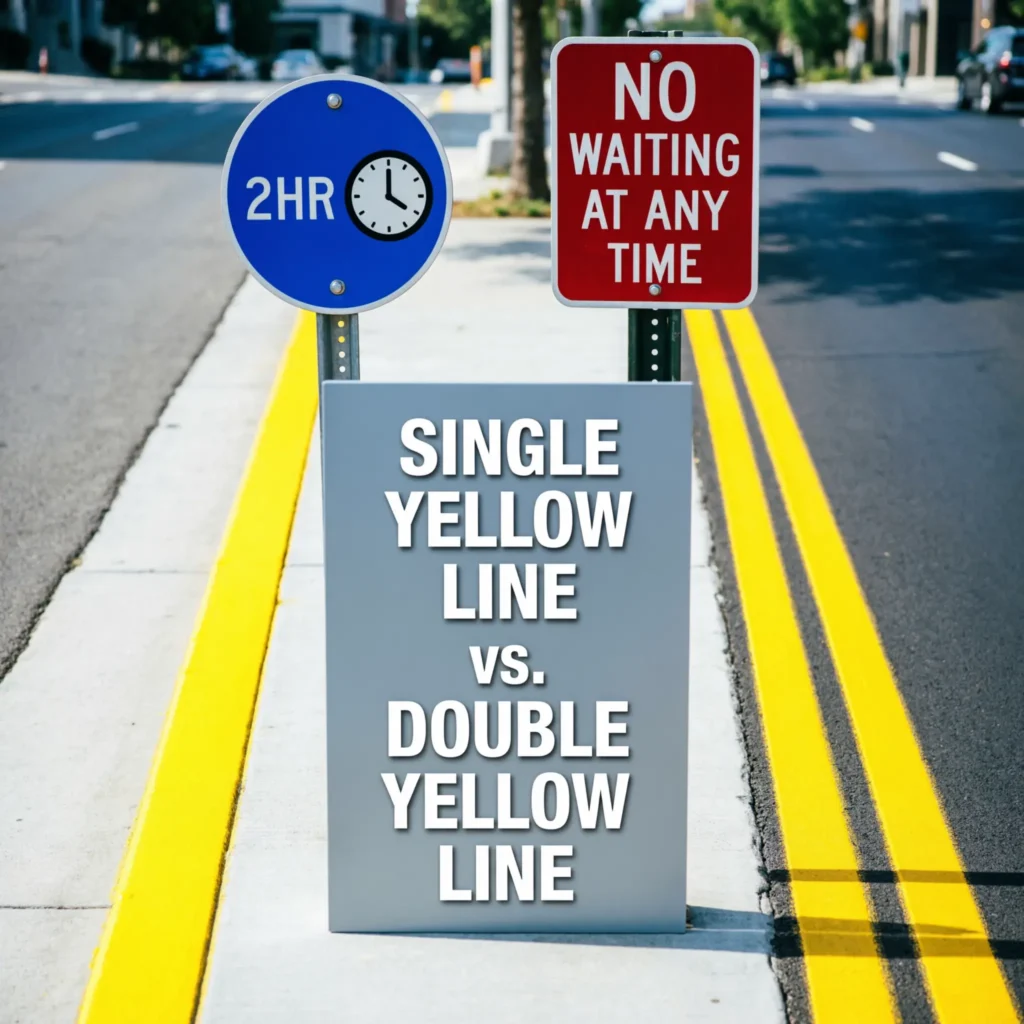
Single and double yellow lines are both used to control waiting, but they are not identical. A single yellow line usually has time-based restrictions, while a double yellow line generally indicates that waiting is prohibited at all times, subject to specific legal exceptions.
- 🟡 Single yellow lines usually have time restrictions.
- 🟡🟡 Double yellow lines generally operate at all times.
- 🪧 Single yellow lines require checking signs.
- 🚫 Double yellow lines normally prohibit waiting.
- 🕒 Time is central to single yellow restrictions.
- 📍 Location still matters for both.
- 📦 Loading rules can be separate.
- ♿ Blue Badge rules have specific provisions.
- 🚗 Parking is not automatically allowed on yellow lines.
- 🚌 Other restrictions can apply nearby.
- 🚶 Road safety remains important.
- 💷 Penalties can apply to illegal waiting.
- 📚 Signs should always be checked.
- 🔎 Road markings should be read with signs.
- 🏙️ Local enforcement may vary.
- ⚠️ Never assume an empty road means parking is legal.
The easiest memory trick is that single yellow usually means “check the time,” while double yellow usually means “waiting is prohibited at all times.” However, exceptions and other restrictions mean drivers should still check the complete parking situation.
Single Yellow Line and Parking Signs
Parking signs provide important information about when restrictions operate. A yellow line should not be viewed by itself when determining whether you can legally wait or park. Signs can explain operating hours and other local restrictions.
- 🪧 Look for signs near the yellow line.
- 🕒 Check the stated hours.
- 📅 Check days when shown.
- 📍 Make sure the sign applies to your location.
- 🏙️ Controlled zones may use entry signs.
- 🚗 Do not rely only on another driver’s behavior.
- 📚 Read all visible restrictions.
- 🔎 Check for additional signs nearby.
- 📦 Look for loading information.
- 🅿️ Check parking bay signs.
- ♿ Look for accessible parking information.
- 🚌 Watch for bus-stop restrictions.
- 🚫 Check for stopping restrictions.
- ⚠️ Temporary signs can change normal arrangements.
- 📱 Local council websites can provide further information.
- 💷 Keep evidence of the restriction in mind if a dispute occurs.
Signs and road markings work together. A single yellow line gives you an important clue, but the sign normally provides the time information needed to decide whether waiting is permitted at that moment.
Can You Wait on a Single Yellow Line?
The word waiting is important in UK parking rules. A restriction on waiting can apply even when a driver is not thinking of the activity as “parking.” Stopping briefly may have different legal treatment depending on the reason and circumstances.
- 🟡 A yellow line can restrict waiting.
- 🚗 Parking is one form of waiting.
- 🕒 Restrictions operate at stated times.
- 🪧 Signs explain the restriction.
- 🚑 Emergency situations can have different rules.
- 🚌 Bus stops have separate controls.
- 📦 Loading may have specific rules.
- 👤 Passenger activity can matter.
- 🚦 Traffic conditions can affect stopping.
- 🏙️ Local restrictions may add conditions.
- 📚 The legal meaning of waiting is important.
- ⚠️ Do not assume “just for a minute” is always safe.
- 💷 Enforcement can apply during restricted hours.
- 🔎 Read the sign before stopping.
- 🚶 Avoid obstructing pedestrians.
- 🛣️ Keep traffic moving safely.
A common mistake is believing that a very short stop is automatically allowed. The legal position can depend on why the vehicle stopped and what the driver was doing, so it is safer to understand the exact restriction rather than rely on assumptions.
Loading on a Single Yellow Line
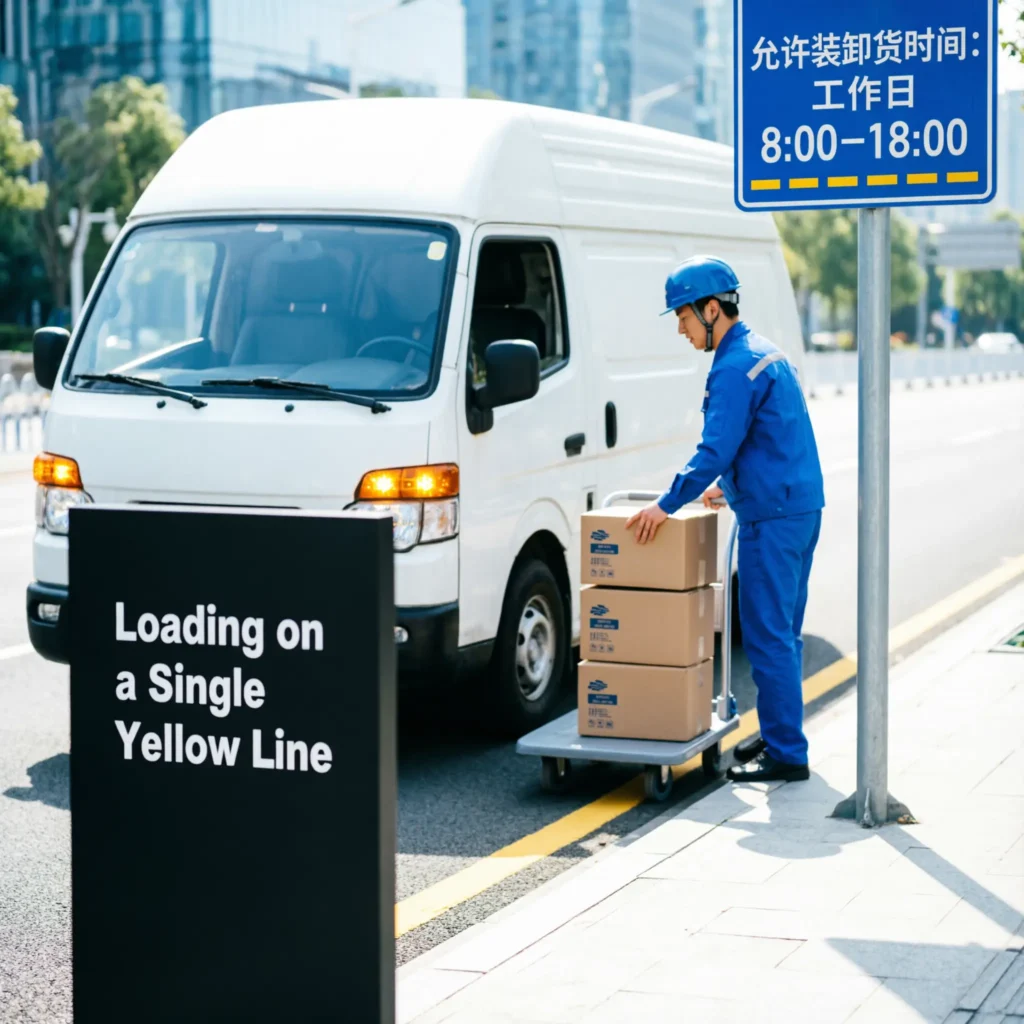
Loading and unloading can have different rules from ordinary parking. A single yellow line may allow certain loading activity during periods when normal waiting is restricted, unless a separate loading prohibition applies. Yellow kerb markings or nearby signs can provide additional information.
- 📦 Loading can have separate rules.
- 🚚 Unloading goods may be treated differently from parking.
- 🪧 Check for loading restriction signs.
- 🟡 Yellow lines alone do not tell the whole story.
- 🟨 Kerb markings can indicate loading restrictions.
- 🕒 Loading rules can have specific times.
- 🚗 Leaving a vehicle unattended can matter.
- 📍 Location affects the rule.
- 🛍️ Deliveries may involve loading activity.
- 🏢 Businesses may use loading areas.
- 🚫 Loading can be prohibited in some places.
- 📚 Read all nearby signs.
- 🔎 Check local authority guidance.
- ⚠️ Do not treat loading as ordinary parking.
- 💷 Illegal loading can result in enforcement.
- 🚚 Plan deliveries around restrictions.
Loading is one of the areas where drivers can easily become confused.
Single Yellow Lines in Controlled Parking Zones
A Controlled Parking Zone (CPZ) is an area where parking or waiting restrictions are managed through signs and road markings. Instead of seeing a separate time plate beside every yellow line, drivers may sometimes rely on zone entry signs for information about restrictions.
- 🏙️ CPZ means Controlled Parking Zone.
- 🪧 Entry signs provide important information.
- 🟡 Yellow lines can operate under zone rules.
- 📍 The zone can cover several streets.
- 🚗 Drivers should check before entering.
- 📚 Zone signs are legally important.
- 🅿️ Parking bays can have different rules.
- 📦 Loading restrictions may still apply.
- 🚫 Other restrictions can exist.
- 🧭 Keep the zone information in mind.
- 💷 Enforcement can apply within the zone.
- 📱 Councils often publish CPZ maps.
- ⚠️ Temporary changes can occur.
- 🗺️ Maps can help drivers understand the zone.
Single Yellow Line Parking in London
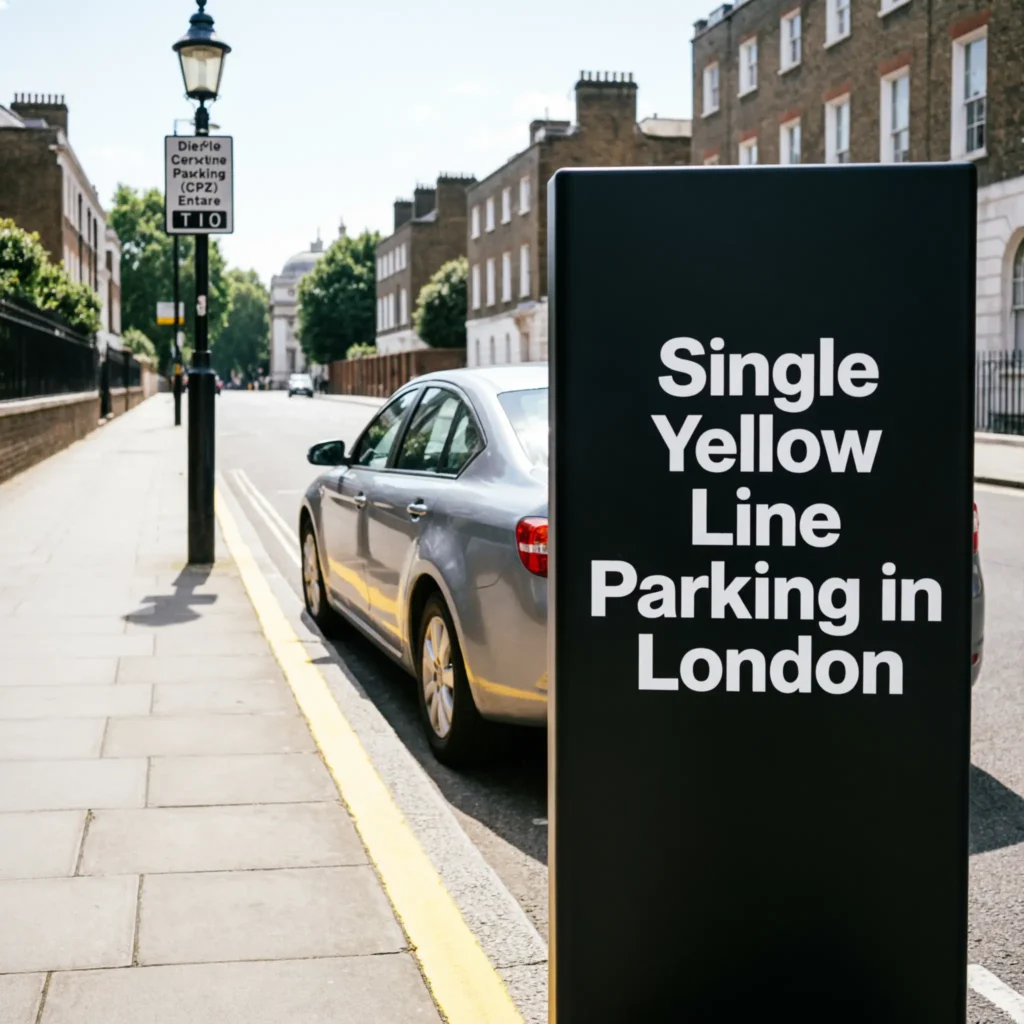
London has many controlled parking zones and different local parking restrictions. A single yellow line may operate during times shown on nearby signs or zone entry signs. Boroughs can manage parking restrictions within their areas, so drivers should check the exact local rules.
- 🏙️ London has many controlled parking areas.
- 🟡 Single yellow lines are common.
- 🪧 Signs provide restriction information.
- 🕒 Times can differ between locations.
- 📍 Borough rules can affect parking arrangements.
- 🚗 Drivers should check local signs.
- 🅿️ Parking bays have separate controls.
- 📦 Loading restrictions can apply.
- 🚌 Bus routes may have additional restrictions.
- 🚲 Road layouts can affect parking.
- ♿ Accessible parking rules can apply.
- 💷 Penalty charges may apply for violations.
- 📚 Borough websites provide local information.
- 🗺️ Local parking maps can be useful.
Single Yellow Line Parking in the UK
Single yellow line rules are part of the wider UK road-marking system. Although the basic meaning is broadly consistent, parking management is carried out by local authorities and specific restrictions can differ by location.
- 🇬🇧 Single yellow lines are widely used in the UK.
- 🕒 Time restrictions are important.
- 🪧 Signs explain operating periods.
- 🏙️ Councils manage many parking restrictions.
- 📍 Local conditions can vary.
- 🅿️ Parking bays have separate rules.
- 📦 Loading restrictions may apply.
- ♿ Blue Badge rules have specific provisions.
- 🚗 Drivers should check signs.
- 📚 Highway rules explain road markings.
- 💷 Penalties can result from illegal parking.
- 🔎 Controlled zones need careful attention.
- 🛣️ Road layout can add restrictions.
- ⚠️ Temporary restrictions may appear.
- 📱 Official council information can provide updates.
Blue Badge and Single Yellow Lines
Blue Badge holders have specific parking rights in the UK, but these rights are not unlimited. The rules can differ depending on the type of restriction, location, loading prohibition, and local regulations. A Blue Badge holder should check the current official guidance before parking.
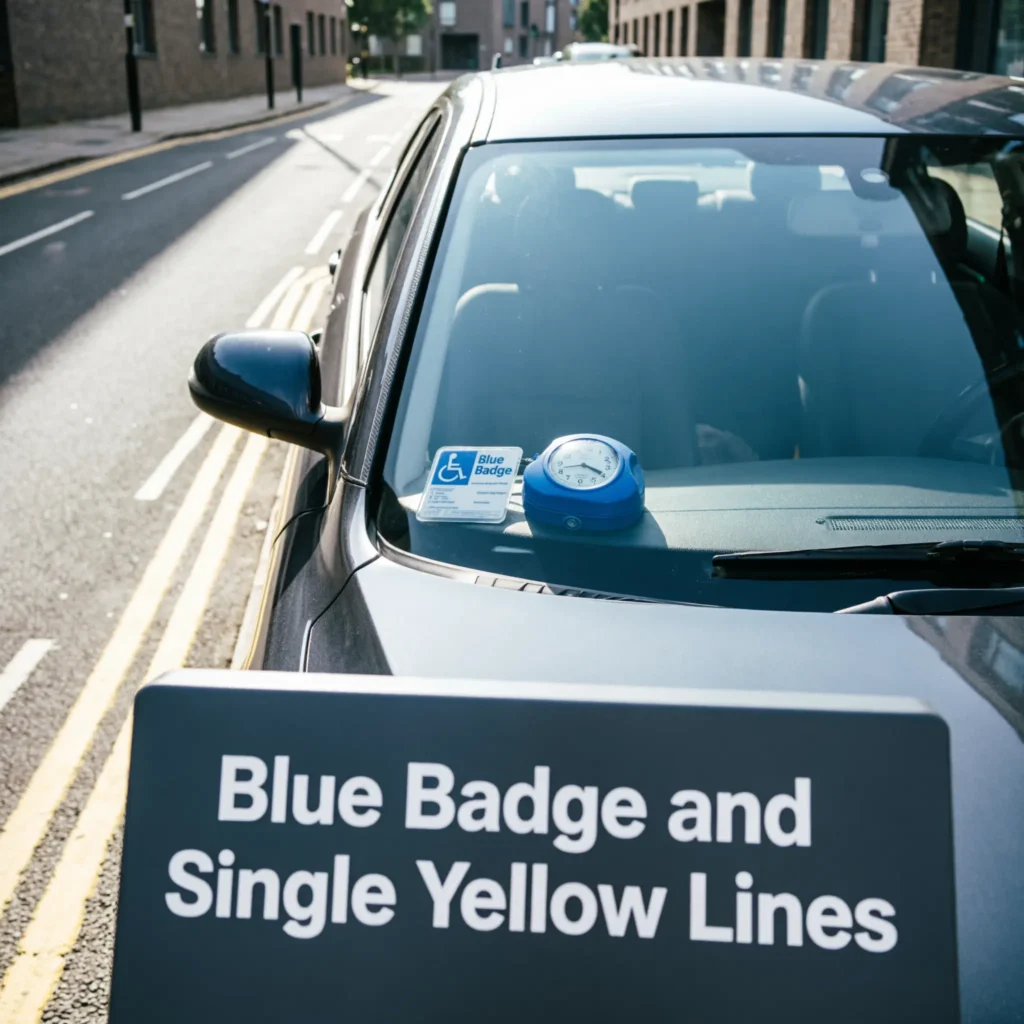
- ♿ Blue Badge holders have special parking rights.
- 🟡 Some yellow-line restrictions may have exceptions.
- 🕒 Time limits can apply in some situations.
- 🪧 Signs remain important.
- 🚫 Loading bans can have separate rules.
- 📦 Loading restrictions need careful attention.
- 📍 Local restrictions can differ.
- 🚗 The badge should be displayed correctly.
- 🪪 The correct documents may be required.
- 🅿️ Dedicated accessible bays have their own rules.
- 🏙️ Local authorities enforce restrictions.
- 🔎 Do not assume every yellow line is permitted.
- ⚠️ Bus stops and special restrictions can have different rules.
Common Single Yellow Line Parking Mistakes
Many parking penalties happen because drivers misunderstand the difference between a road marking and a parking permission. A single yellow line is not an invitation to park whenever you want. Checking the restriction before leaving the vehicle can prevent many common errors.
- ❌ Ignoring the nearby sign.
- ❌ Assuming all yellow lines have the same hours.
- ❌ Confusing single and double yellow lines.
- ❌ Ignoring loading restrictions.
- ❌ Missing controlled-zone signs.
- ❌ Blocking an entrance.
- ❌ Blocking a pedestrian route.
- ❌ Ignoring temporary signs.
- ❌ Forgetting about parking bays.
- ❌ Assuming Blue Badge rules cover every restriction.
- ❌ Parking without checking local rules.
- ❌ Relying on outdated information.
- ❌ Forgetting that restrictions can change.
- ❌ Leaving without checking the sign.
Most of these mistakes are easy to avoid. Take a moment to read the signs, identify the operating hours, and check for additional restrictions. A few seconds of attention can prevent an unexpected parking penalty.
How to Check a Single Yellow Line Before Parking
Before parking beside a single yellow line, use a simple checking process. Look at the road marking, find the nearest relevant sign, check the restriction time, and look for additional markings or restrictions. This approach is more reliable than guessing from the appearance of the road.
- 👀 Look at the road marking.
- 🪧 Find the nearest parking sign.
- 🕒 Read the restriction hours.
- 📅 Check the days.
- 🏙️ Look for a CPZ sign.
- 📦 Check for loading restrictions.
- 🟨 Look at the kerb.
- 🅿️ Check nearby parking bays.
- 🚫 Look for stopping restrictions.
- 🚌 Check bus-stop markings.
- ♿ Consider Blue Badge rules if relevant.
- 📱 Check current council information if unsure.
- 💷 Think about possible penalty charges.
- 🧭 Plan an alternative parking location if needed.
- 🚗 Only leave the vehicle when the rules allow it.
This quick process makes single yellow line parking much easier to understand. When in doubt, choose a legal parking space rather than relying on an assumption that could result in a penalty.
Common Questions About Single Yellow Line Parking
Single yellow line parking creates many questions because the restriction is often time-based rather than permanent. The answers below cover the main things drivers want to know when they see a yellow line beside the road.
- ❓ Can you park on a single yellow line? Sometimes, but only when the applicable waiting restriction is not operating and no other restriction prevents parking.
- 🕒 What time can you park on a single yellow line? Check the nearby sign or controlled-zone information.
- 🟡 Is a single yellow line the same as double yellow? No. Their restrictions generally operate differently.
- 🪧 Do I need to check the sign? Yes, the sign can tell you when the restriction applies.
- 🟨 What do yellow kerb marks mean? They can indicate loading restrictions.
- 💷 Can you get a fine? Illegal waiting or parking can result in a penalty charge.
- ♿ Can Blue Badge holders park there? Some exemptions may apply, but they are subject to specific rules and restrictions.
- 📅 Do restrictions apply every day? Not necessarily; check the relevant sign.
- 🌙 Can you park there at night? It depends on the stated restriction hours.
- 📍 Are the rules the same everywhere? No, local restrictions can differ.
- 📱 Where can I check local rules? The relevant local authority or official parking information is a useful source.
- ⚠️ What if there is no sign? Check whether you are in a controlled zone and look for other applicable restrictions.
The key idea is that time and location matter. A single yellow line does not give a universal yes-or-no answer to parking. The correct decision depends on the restriction operating at that specific place and time.
Single Yellow Line Parking Tips for 2026
Parking rules continue to matter in busy towns and cities, where road space is limited and enforcement is common. In 2026, digital maps and online council information can make research easier, but drivers should still pay attention to physical signs at the parking location.
- 📱 Check official online parking information.
- 🪧 Read physical signs at the location.
- 🕒 Confirm current restriction times.
- 🗺️ Use local parking maps when helpful.
- 🚗 Plan parking before your journey.
- 🅿️ Choose designated bays when available.
- 📦 Check loading restrictions.
- ♿ Review accessible parking rules if relevant.
- 🏙️ Check local authority information.
- 📚 Use current road-rule guidance.
- ⚠️ Watch for temporary restrictions.
- 🚧 Look for roadworks and temporary signs.
- 💷 Keep penalty rules in mind.
- 🔎 Never rely only on old advice.
- 🧭 Allow extra time to find legal parking.
- ✅ When unsure, choose a clearly permitted parking space.
Technology can help drivers plan, but the road itself remains important. Signs and markings at the location can reflect current restrictions that an old website, map, or memory may not show.
Conclusion:
Single yellow line parking is mainly about understanding when waiting is restricted. Unlike a double yellow line, a single yellow line can allow parking outside the restricted hours, but the exact rule depends on the nearby sign, controlled parking zone, and any additional restrictions.
Before parking, check the sign, restriction times, road markings, kerb markings, and local rules. Be especially careful around loading restrictions, bus stops, controlled parking zones, and other special areas. When the information is unclear, checking the relevant official local authority guidance is the safest option.

Natalie Carter writes emotional and uplifting lines about relationships, happiness, confidence, and everyday experiences.