

The Victoria line is one of the busiest and most useful routes on the London Underground. It runs between Walthamstow Central and Brixton, linking north-east London with important central London destinations such as King’s Cross St Pancras, Euston, Oxford Circus, Green Park, and Victoria. The line is shown in light blue on the Tube map and is also known for its Night Tube service on Friday and Saturday nights. In 2026, the Victoria line remains an important choice for commuters, students, tourists, and anyone traveling across London. (Transport for London)
What Is the Victoria Line?
The Victoria line is a deep-level London Underground route connecting Walthamstow Central in north-east London with Brixton in south London. It travels through central London and offers direct connections to several major Tube, rail, shopping, and tourist destinations.

- 🚇 It is part of the London Underground.
- 🔵 Its Tube-map color is light blue.
- 🏙️ It crosses central London.
- 🚉 Walthamstow Central is its northern terminus.
- 🚉 Brixton is its southern terminus.
- 🏛️ Victoria is one of its best-known stations.
- 🛍️ Oxford Circus serves a major shopping area.
- 🚆 Euston connects with National Rail.
- 🚉 King’s Cross St Pancras is a major interchange.
- 🌳 Green Park provides access to central attractions.
- 🚌 Several stations connect with local buses.
- 🌙 Night Tube operates on the route.
- 📱 TfL provides live travel information.
- 🗺️ The route is easy to follow on the Tube map.
- 🧳 Tourists use it to reach many popular areas.
- 🌟 It remains an important London route in 2026.
The line is especially useful because passengers can travel through central London without making several changes. Its route connects residential neighborhoods, business areas, shopping streets, railway stations, and tourist destinations.
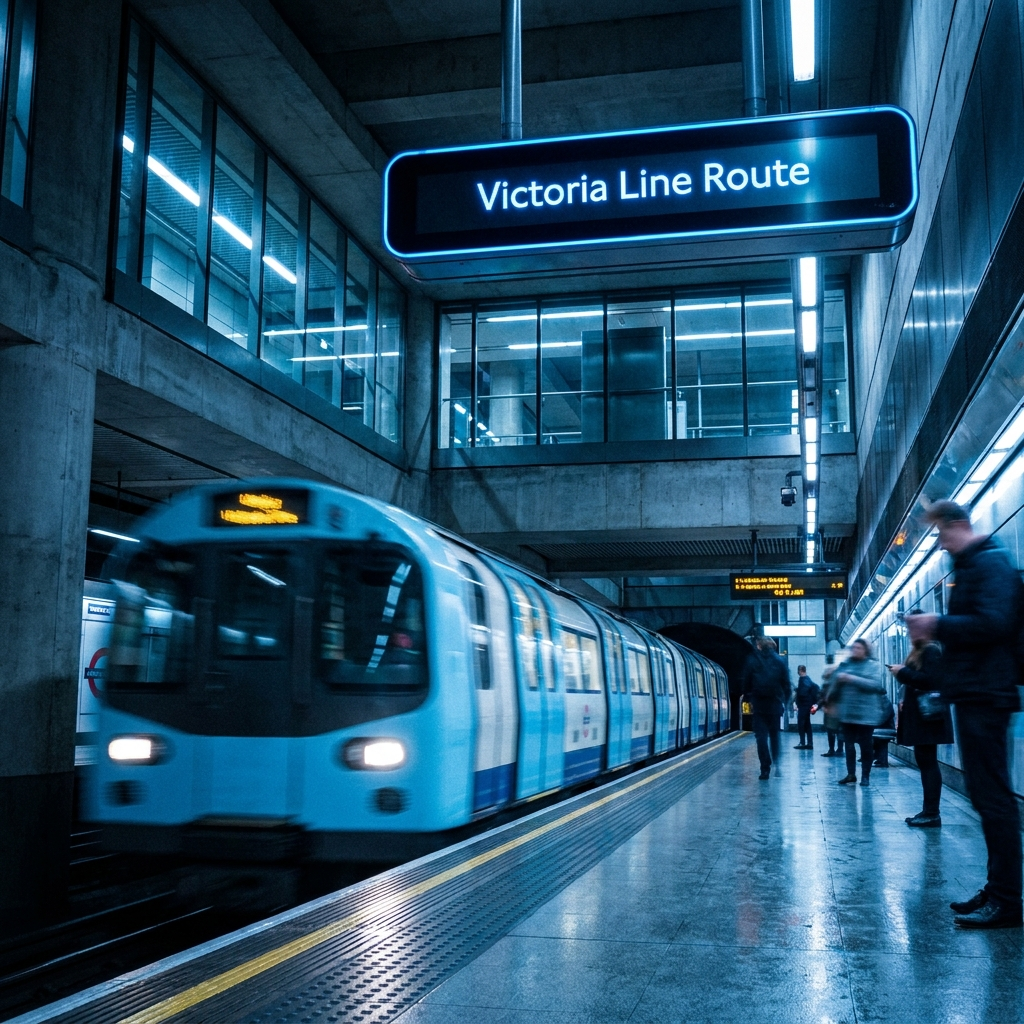
Victoria Line Route
The Victoria line runs broadly north-east to south through London. From Walthamstow Central, trains travel through Tottenham and Finsbury Park before reaching central London. They then continue through Victoria, Vauxhall, Stockwell, and finally Brixton.
- 🚉 Walthamstow Central is the northern terminus.
- 🚇 Blackhorse Road comes next.
- 🚆 Tottenham Hale provides rail connections.
- 👥 Seven Sisters is a busy interchange.
- 🌳 Finsbury Park serves north London.
- 🚉 Highbury & Islington is another useful connection.
- 🚆 King’s Cross St Pancras is a major transport hub.
- 🚆 Euston serves railway passengers.
- 🏙️ Warren Street is near central attractions.
- 🛍️ Oxford Circus serves Oxford Street.
- 🌳 Green Park is close to several landmarks.
- 🏛️ Victoria connects with National Rail.
- 🏘️ Pimlico serves a central residential area.
- 🚌 Vauxhall connects with rail and buses.
- 🚇 Stockwell is an important south London stop.
- 🌟 Brixton is the southern terminus.
The route is particularly useful for journeys between north-east London and central or south London. TfL’s 2026 timetable lists the stations from Brixton through Walthamstow Central and provides current first and last train information. (Transport for London)
Victoria Line Stations
The Victoria line has 16 stations. Learning the station order can make journeys much easier, especially for visitors using the Tube for the first time.
- 🚉 Walthamstow Central
- 🚇 Blackhorse Road
- 🚆 Tottenham Hale
- 🚉 Seven Sisters
- 🌳 Finsbury Park
- 🚇 Highbury & Islington
- 🚆 King’s Cross St Pancras
- 🚆 Euston
- 🏙️ Warren Street
- 🛍️ Oxford Circus
- 🌳 Green Park
- 🏛️ Victoria
- 🏘️ Pimlico
- 🚌 Vauxhall
- 🚇 Stockwell
- 🌟 Brixton
The station order is important when checking whether a train is traveling in the correct direction. Trains toward Walthamstow Central are northbound, while trains toward Brixton are southbound.
Victoria Line and Walthamstow Central
Walthamstow Central is the northern end of the Victoria line. It provides a useful starting point for passengers traveling from north-east London toward the city center.
- 🚉 It is the northern terminus.
- 🔵 Victoria line trains operate from here.
- 🚆 It connects with London Overground services.
- 🏘️ It serves Walthamstow.
- 🛍️ Local shops are nearby.
- 🚌 Bus services connect the surrounding area.
- 🚇 Trains travel south toward Brixton.
- 🗺️ It is easy to identify as a terminus.
- 📱 Live departures can help with planning.
- ⏰ Morning journeys can be busy.
- 🎒 Travelers should allow extra time with luggage.
- 🚶 Nearby areas can be reached on foot.
- 🏙️ It provides access to central London.
- 🔄 Rail connections make it more useful.
- 📋 Passengers should check service updates.
- 🌟 It remains an important transport point in 2026.
For travelers starting in north-east London, Walthamstow Central offers a direct Victoria line journey toward several major central London destinations.
Victoria Line and Tottenham Hale
Tottenham Hale is an important station on the northern part of the Victoria line. It provides connections with rail services and is useful for passengers traveling between north London and central London.
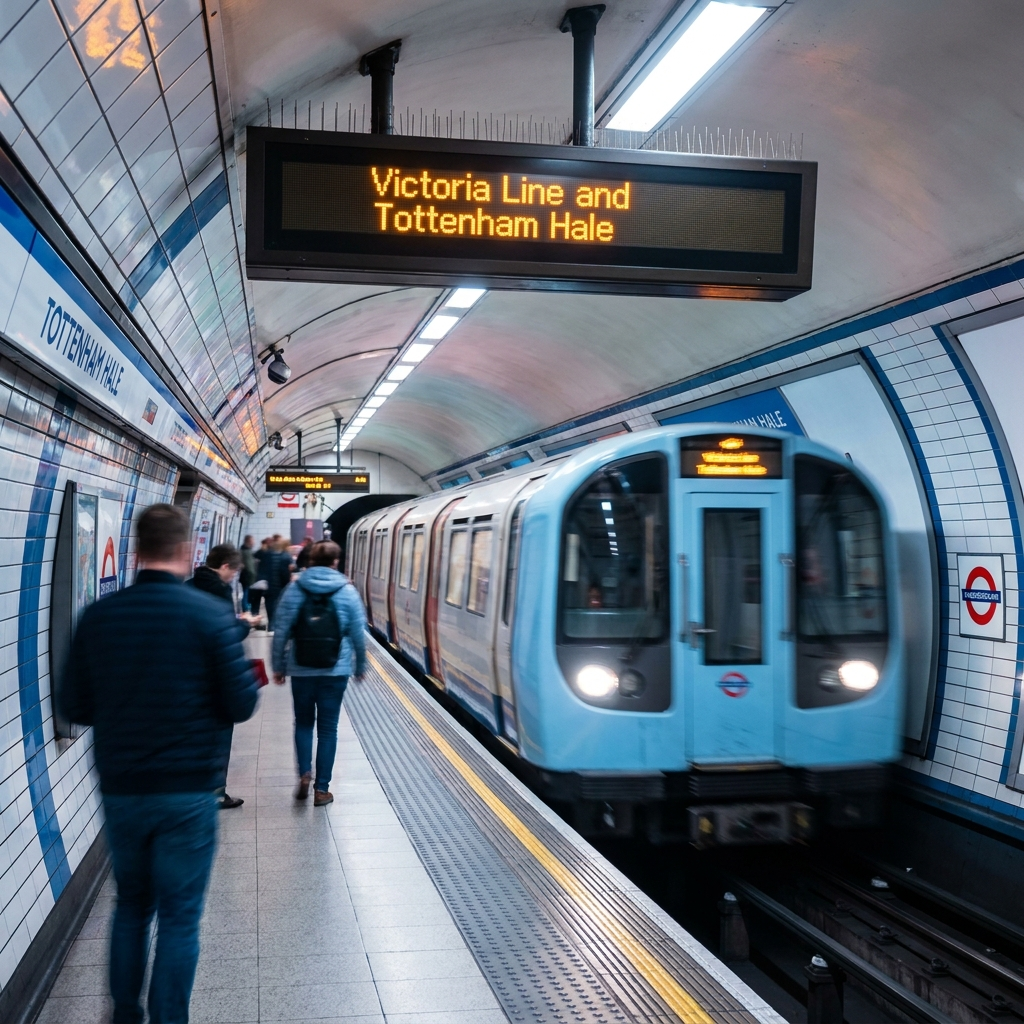
- 🚉 Tottenham Hale is on the Victoria line.
- 🚆 National Rail services connect here.
- 🚇 Victoria line trains run south.
- 🚌 Local buses serve the area.
- 🏙️ It serves north London.
- 🔄 It provides useful transport connections.
- 🚉 Seven Sisters is nearby on the route.
- 🧳 Visitors can use it for north London travel.
- 📱 Journey information is available through TfL.
- ⏰ Peak times can be busy.
- 🚶 Local neighborhoods surround the station.
- 🗺️ Signs help passengers find connections.
- 🚆 Rail passengers can change to the Underground.
- 🎒 It can be useful for commuters.
- 📋 Checking live service information is helpful.
- 🌟 It remains an important Victoria line station.
Tottenham Hale shows how the Victoria line works with London’s wider transport network rather than operating as an isolated Tube route.
Victoria Line and King’s Cross St Pancras
King’s Cross St Pancras is one of London’s largest transport hubs. The Victoria line provides a direct Underground connection to this area, where passengers can change between Tube and rail services.
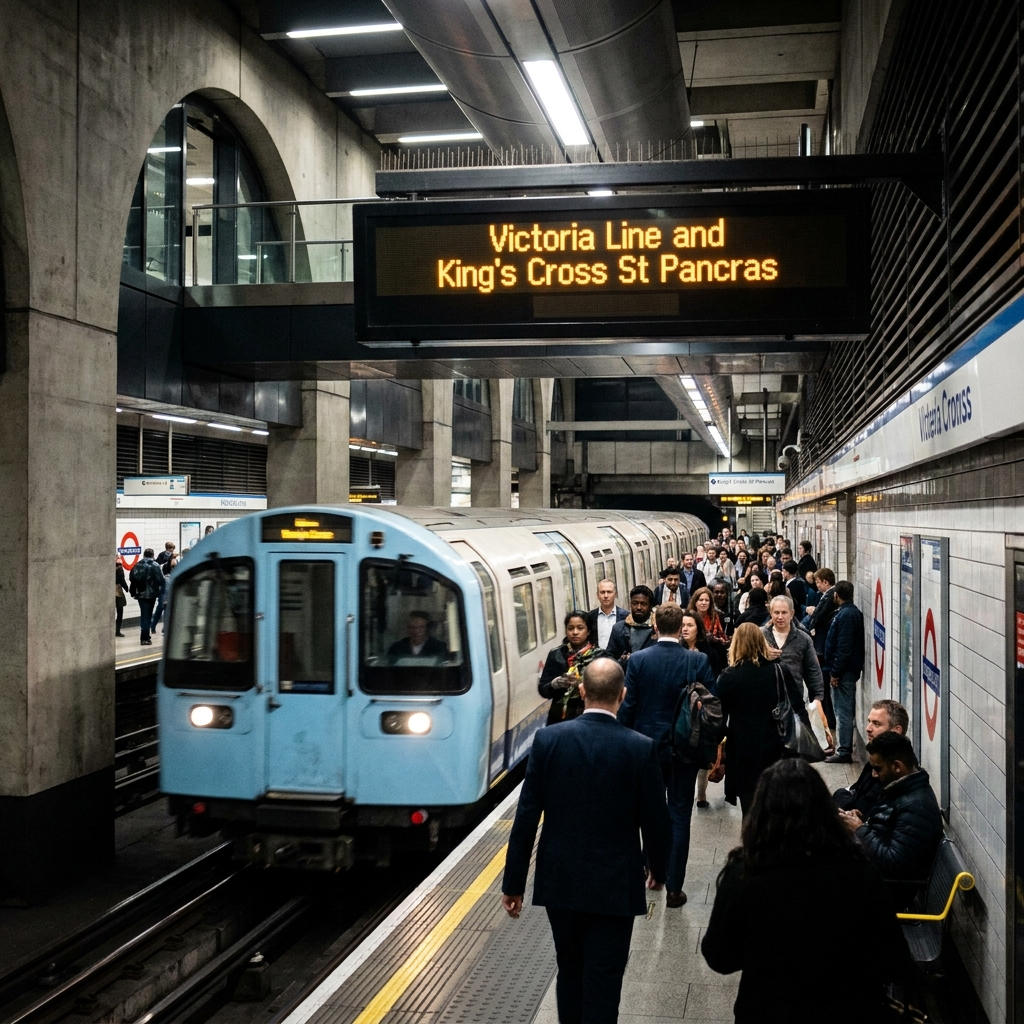
- 🚆 It is a major railway area.
- 🚇 The Victoria line serves the station.
- 🔴 Several other Tube lines connect here.
- 🚄 St Pancras International is nearby.
- 🚆 National Rail services are available.
- 🧳 It is important for visitors arriving by train.
- 📚 The British Library is nearby.
- 🚌 Bus services operate around the area.
- 🔄 Passengers can change Underground lines.
- 🗺️ Clear signs help with transfers.
- ⏰ The station can become very busy.
- 🎒 Travelers with luggage should allow extra time.
- 🚶 Several destinations are walkable.
- 📱 Journey planners can help visitors.
- 🌆 It provides access to central London.
- 🌟 It is one of the key Victoria line interchanges.
For tourists arriving at King’s Cross or St Pancras, the Victoria line can make reaching places such as Oxford Circus and Victoria much easier.
Victoria Line and Euston
Euston is another major transport hub on the Victoria line. The station is particularly useful for passengers combining National Rail journeys with London Underground travel.
- 🚆 Euston is a major railway station.
- 🔵 The Victoria line serves Euston.
- 🚇 The Northern line also serves the area.
- 🚄 National Rail trains operate from Euston.
- 🧳 Long-distance travelers use the station.
- 🏙️ It is close to central London.
- 🚌 Bus connections are available.
- 🔄 Passengers can change Tube services.
- 📱 TfL information helps with journey planning.
- ⏰ Rush hours can be crowded.
- 🎒 Luggage may make transfers slower.
- 🚶 Nearby streets connect to other destinations.
- 🗺️ Station signs guide passengers.
- 🚆 Rail and Underground services work together.
- 📋 Checking the correct Euston entrance is useful.
- 🌟 Euston remains a key Victoria line stop.
Euston is especially convenient for people traveling into London by train and then continuing their journey by Underground.
Victoria Line and Oxford Circus
Oxford Circus is one of the best-known central London stations on the Victoria line. It sits at the meeting point of Oxford Street and Regent Street and is surrounded by major shopping areas.
- 🛍️ Oxford Circus serves Oxford Street.
- 🔵 The Victoria line stops here.
- 🔴 The Central line also stops here.
- 👟 Major shops are nearby.
- 🛒 Oxford Street attracts many visitors.
- 🏙️ Regent Street is close.
- 🚶 Carnaby Street is within walking distance.
- 🧳 Tourists often use this station.
- 📸 The area is popular for sightseeing.
- ⏰ It can become extremely busy.
- 🚇 Two major Tube lines meet here.
- 🗺️ Different station exits lead to different streets.
- 📱 Journey planners can help visitors.
- 🛍️ Holiday shopping can increase crowds.
- 🚶 Some nearby journeys may be quicker on foot.
- 🌟 Oxford Circus is a major Victoria line destination.
The station is particularly useful for shopping trips because it puts passengers close to one of London’s most famous retail areas.
Victoria Line and Green Park
Green Park is a central London station on the Victoria line. It is close to Buckingham Palace, St James’s Park, and several important parts of Westminster and Mayfair.
- 🌳 Green Park serves central London.
- 🔵 The Victoria line stops here.
- 🔴 The Piccadilly line connects here.
- 🟡 The Jubilee line connects here.
- 👑 Buckingham Palace is nearby.
- 🌳 St James’s Park is within walking distance.
- 🏙️ Mayfair is close.
- 🚶 Several destinations can be reached on foot.
- 📸 Tourists frequently visit the area.
- 🧳 Visitors can change Tube lines here.
- 🗺️ Station exits serve different directions.
- 📱 Journey planners help with connections.
- ⏰ Tourist periods can be busy.
- 🚇 It is a useful central interchange.
- 🏛️ Westminster attractions are nearby.
- 🌟 Green Park is an important Victoria line station.
Green Park is particularly useful when visiting London’s royal and central areas because it combines several Tube routes in one location.
Victoria Line and Victoria Station
Victoria station is one of the most important points on the route. It connects the Victoria line with National Rail and other Underground services and provides access to Buckingham Palace and many central London destinations.
- 🏛️ Victoria is a major London transport hub.
- 🔵 The Victoria line serves it.
- 🟢 The District line connects here.
- 🟡 The Circle line connects here.
- 🚆 National Rail services operate from Victoria.
- 🏛️ Buckingham Palace is nearby.
- 🌳 St James’s Park is close.
- 🚌 Many bus routes serve the area.
- 🧳 Tourists frequently use the station.
- 💼 Many offices surround the area.
- 🛍️ Shops and restaurants are nearby.
- 🔄 It provides several transport connections.
- 📱 TfL tools help with journey planning.
- ⏰ It can become crowded during busy periods.
- 🚶 Several attractions are accessible on foot.
- 🌟 It remains one of London’s major transport hubs.
The Victoria line’s connection with the railway station makes it especially useful for people arriving from outside central London.
Victoria Line and Pimlico
Pimlico is a central London station between Victoria and Vauxhall. It is well known for its quiet residential streets and its closeness to Tate Britain.
- 🏘️ Pimlico is in central London.
- 🔵 The Victoria line serves the station.
- 🎨 Tate Britain is nearby.
- 🚶 The gallery can be reached on foot.
- 🌊 The River Thames is close.
- 🏛️ Westminster is nearby.
- 🏘️ The area has residential streets.
- 🖼️ Art lovers can visit Tate Britain.
- 🚌 Local bus services add connections.
- 🚇 Victoria is one stop away.
- 🚉 Vauxhall is nearby on the route.
- 📸 Visitors can explore the local streets.
- 📱 Journey planners can help tourists.
- ⏰ The station is usually quieter than some major hubs.
- 🎨 The station has a distinctive historic tile design.
- 🌟 Pimlico adds a cultural stop to the Victoria line.
TfL’s Art on the Underground program highlights Pimlico’s distinctive tile artwork and its connection with Tate Britain. (Art on the Underground)
Victoria Line and Vauxhall
Vauxhall is an important south London station that combines Underground, National Rail, and bus connections. It is also close to the River Thames.
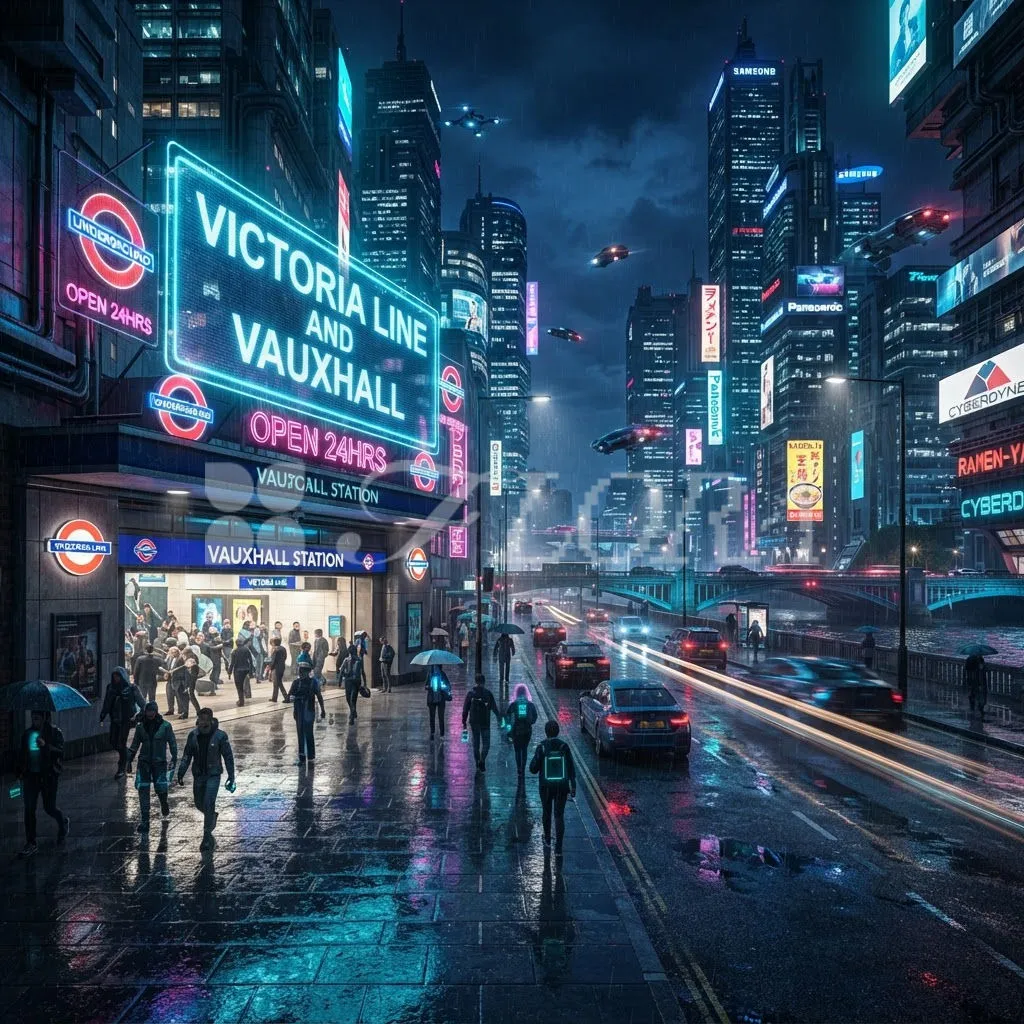
- 🚇 Vauxhall is on the Victoria line.
- 🚆 National Rail services connect here.
- 🚌 Local buses serve the station.
- 🌊 The River Thames is nearby.
- 🏙️ Central London is easy to reach.
- 🏘️ Vauxhall is an important south London area.
- 🚶 Walking routes connect nearby neighborhoods.
- 💼 Offices are found around the area.
- 🏠 Residential buildings are also nearby.
- 🧳 Visitors can use Vauxhall for central travel.
- 🔄 Rail and Underground services connect.
- 📱 TfL provides journey information.
- ⏰ Commuter periods can be busy.
- 🗺️ Station signs help passengers transfer.
- 🚉 It is an important transport interchange.
- 🌟 Vauxhall remains a useful Victoria line stop in 2026.
Vauxhall is a good example of a station where several types of public transport come together, giving passengers more options for completing their journey.
Victoria Line and Brixton
Brixton is the southern terminus of the Victoria line. It is one of south London’s most recognizable neighborhoods and is known for its markets, food, music, and cultural history.
- 🚉 Brixton is the southern terminus.
- 🏙️ Brixton is in south London.
- 🛍️ Brixton Market is nearby.
- 🎵 The area has a strong music history.
- 🍽️ Many food choices are available.
- 🚌 Local buses serve the neighborhood.
- 🚇 The Victoria line provides central London access.
- 🧳 Tourists visit the area.
- 📸 Brixton has a distinctive character.
- 🏘️ Residential areas surround the station.
- 🚶 Many local attractions are walkable.
- 📱 TfL tools help with travel planning.
- ⏰ The station can be busy.
- 🗺️ Passengers should check train destinations when traveling north.
- 🌟 Brixton gives the line an important southern connection.
The extension from Victoria to Brixton opened in July 1971, completing the route as it appears today on the Tube map. (Art on the Underground)
Victoria Line History
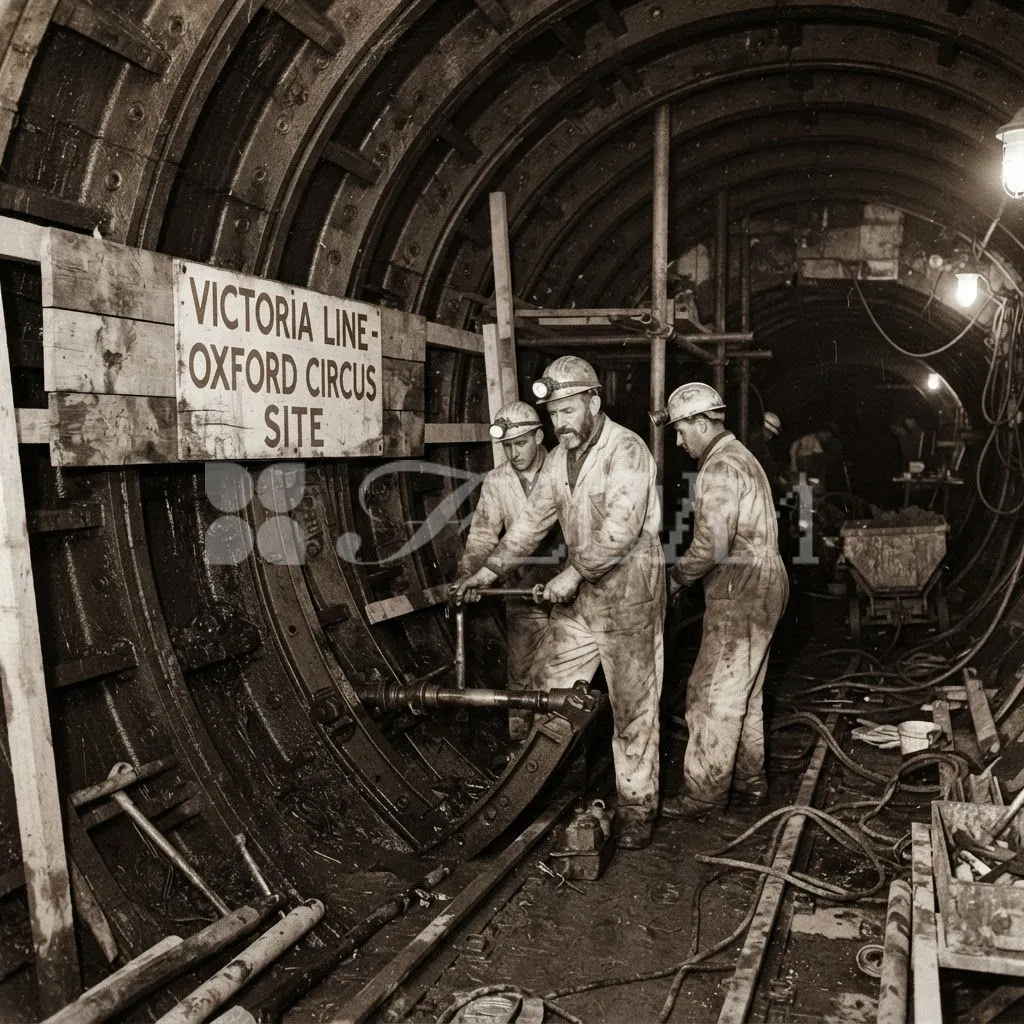
The history of the Victoria line is closely linked to London’s growth and the development of modern Underground engineering. The first section opened to passengers in 1968, while the official opening ceremony took place on March 7, 1969.
- 📜 Planning took place before construction.
- 🏗️ Construction began in the early 1960s.
- 🚇 Deep tunneling was required.
- 🛠️ New tunneling methods were used.
- ❄️ Ground-freezing techniques helped with difficult conditions.
- 🏙️ Oxford Circus required careful engineering.
- 📅 The first passenger section opened in 1968.
- 👑 Queen Elizabeth II officially opened the line in 1969.
- 🚉 The official opening section ran to Victoria.
- 🚇 The line later expanded south.
- 📅 The Victoria-to-Brixton extension opened in 1971.
- 🎨 Stations were given individual tile motifs.
- 💡 The stations had a modern design for their time.
- 🚆 The original trains included advanced features.
- 🏙️ The line became an important cross-London route.
- 🌟 Its engineering history remains significant in 2026.
TfL records say the Victoria line was the first new Tube line constructed for more than 20 years and used new tunneling methods. The official opening took place on March 7, 1969. (Transport for London)
Victoria Line Stations and Art
One special feature of the Victoria line is its station artwork. Many platforms feature distinctive tile motifs that help give individual stations their own identity.
- 🎨 Each station has its own visual character.
- 🔵 Tile designs were part of the original station concept.
- 🧩 Platform recesses feature decorative designs.
- 🏛️ The artwork reflects the era of construction.
- 🖼️ Several artists and designers contributed work.
- 📍 Walthamstow Central has a distinctive motif.
- 📍 Finsbury Park has its own design.
- 📍 Highbury & Islington has a unique motif.
- 📍 Blackhorse Road has a station design.
- 📍 Tottenham Hale has a distinctive pattern.
- 📍 Seven Sisters also has a tile motif.
- 🎨 Pimlico received a later artistic treatment.
- 👀 The designs can help identify stations.
- 📸 They provide interesting details for visitors.
- 🚇 Art adds character to an otherwise functional system.
- 🌟 The designs remain part of the line’s identity.
TfL’s Art on the Underground archive notes that individual tile designs were used behind platform seating areas to give each Victoria line station its own character. (Art on the Underground)
Victoria Line Night Tube
The Victoria line is one of London’s Night Tube routes. Night Tube trains operate through the night on Friday nights into Saturday morning and Saturday nights into Sunday morning.
- 📅 Friday night services continue overnight.
- 📅 Saturday night services continue overnight.
- 🚇 Trains run between Brixton and Walthamstow Central.
- 🌃 The service helps late-night travelers.
- 👷 Night workers can use the route.
- 🎵 Visitors can travel after evening events.
- 🚌 It connects with other night transport.
- 📱 Passengers should check live service information.
- ⏰ Overnight journeys follow a different timetable.
- 🚉 Major stations remain part of the route.
- 💳 Normal TfL payment options can be used according to fare rules.
- 🗺️ The full route is covered by the Night Tube service.
- 🔄 Connections with other Night Tube lines can be useful.
- 📋 Planned engineering work can sometimes affect travel.
- 🌟 It remains an important part of London’s 24-hour transport network.
TfL’s current 2026 Victoria line timetable states that Night Tube service operates between Brixton and Walthamstow Central throughout Friday/Saturday and Saturday/Sunday overnight periods. (Transport for London)
Victoria Line Timetable and Travel Tips
Victoria line passengers can make journeys easier by checking the latest timetable and service information before leaving. First and last trains vary by station, direction, and day, so a live TfL check is better than relying on a general travel time.
- 📱 Check live TfL service information.
- 🗺️ Look at the Tube map before traveling.
- 🚇 Check the train’s final destination.
- ⏰ Check first train times when traveling early.
- 🌙 Check Night Tube times for late journeys.
- 🚉 Allow extra time at large interchanges.
- 🎒 Allow more time when carrying luggage.
- 📢 Listen to platform announcements.
- 📋 Read service-status messages.
- 🛠️ Check planned engineering work.
- 🔄 Plan changes between Tube lines.
- 🚆 Check National Rail connections separately.
- ♿ Check accessibility for the complete route.
- 🚶 Consider walking for very short central trips.
- 🚌 Look at bus alternatives during disruption.
- 🌟 Recheck your route before important journeys.
TfL’s May 2026 timetable provides current first and last train information for the Victoria line and confirms the overnight Night Tube pattern. (Transport for London)
Victoria Line in 2026
The Victoria line remains a key part of London’s transport system in 2026. Its central route, frequent services, major interchanges, and overnight operation make it useful for many different types of passengers.
- 🚇 It links north-east and south London.
- 🔵 It remains light blue on the Tube map.
- 🏙️ It crosses central London.
- 🚉 It serves major railway stations.
- 🛍️ It serves Oxford Circus.
- 👑 It serves Victoria.
- 🚆 It serves King’s Cross St Pancras.
- 🚆 It serves Euston.
- 🌳 It serves Green Park.
- 🏘️ It serves Walthamstow.
- 🎵 It serves Brixton.
- 🌙 Night Tube operates on Friday and Saturday nights.
- 📱 Digital travel tools make planning easier.
- 🎨 Its historic station artwork adds character.
- 🛠️ Planned works can change individual journeys.
- 🌟 It continues to be an important London route.
The current 2026 timetable shows the Victoria line operating between Brixton and Walthamstow Central, with regular daytime services and overnight Night Tube operation on the relevant weekend nights. (Transport for London)
Frequently Asked Questions About the Victoria line
The Victoria line is easy to understand once you know its main stations, direction, and connections. These common questions provide quick answers for students, commuters, tourists, and first-time London visitors.
- ❓ What is the Victoria line? It is a London Underground route connecting Walthamstow Central and Brixton.
- 🔵 What color is the Victoria line? It is light blue on the London Tube map.
- 🚉 Where does the Victoria line start? Its northern terminus is Walthamstow Central.
- 🚉 Where does the Victoria line end? Its southern terminus is Brixton.
- 🏛️ Does the Victoria line stop at Victoria? Yes.
- 🛍️ Does the Victoria line go to Oxford Circus? Yes.
- 🚆 Does the Victoria line stop at Euston? Yes.
- 🚉 Does it serve King’s Cross St Pancras? Yes.
- 🌳 Does it stop at Green Park? Yes.
Conclusion:
The Victoria line is one of London’s most useful Underground routes, connecting Walthamstow Central, Tottenham Hale, Seven Sisters, King’s Cross St Pancras, Euston, Oxford Circus, Green Park, Victoria, Pimlico, Vauxhall, Stockwell, and Brixton. Its history began with major engineering work in the 1960s, and the line was officially opened in 1969. The route was completed to Brixton in 1971. (Transport for London)
In 2026, the Victoria line continues to serve commuters and visitors across London. Its central stations connect with major rail routes, shopping districts, parks, tourist attractions, and other Underground lines. The Night Tube also provides overnight travel between Brixton and Walthamstow Central on Friday and Saturday nights. (Transport for London)
For the latest journey information, passengers should always check current TfL service updates and the timetable before travelin

Natalie Carter writes emotional and uplifting lines about relationships, happiness, confidence, and everyday experiences.