

The Elizabeth line stations connect major parts of London and nearby areas through a fast, modern rail service. The line runs from Reading and Heathrow in the west to Shenfield and Abbey Wood in the east, with central London stations linking important areas such as Paddington, Bond Street, Tottenham Court Road, Farringdon, Liverpool Street, and Canary Wharf.
For 2026 travelers, knowing the Elizabeth line stations can make journeys easier, especially when changing trains, visiting airports, sightseeing, or traveling across London. This guide explains the stations, routes, connections, accessibility, and useful travel tips in simple English.
What Is the Elizabeth Line?
The Elizabeth line is a major railway service operated as part of London’s transport network. It provides connections across central London and links the capital with destinations in Berkshire, Essex, and London’s Heathrow Airport.
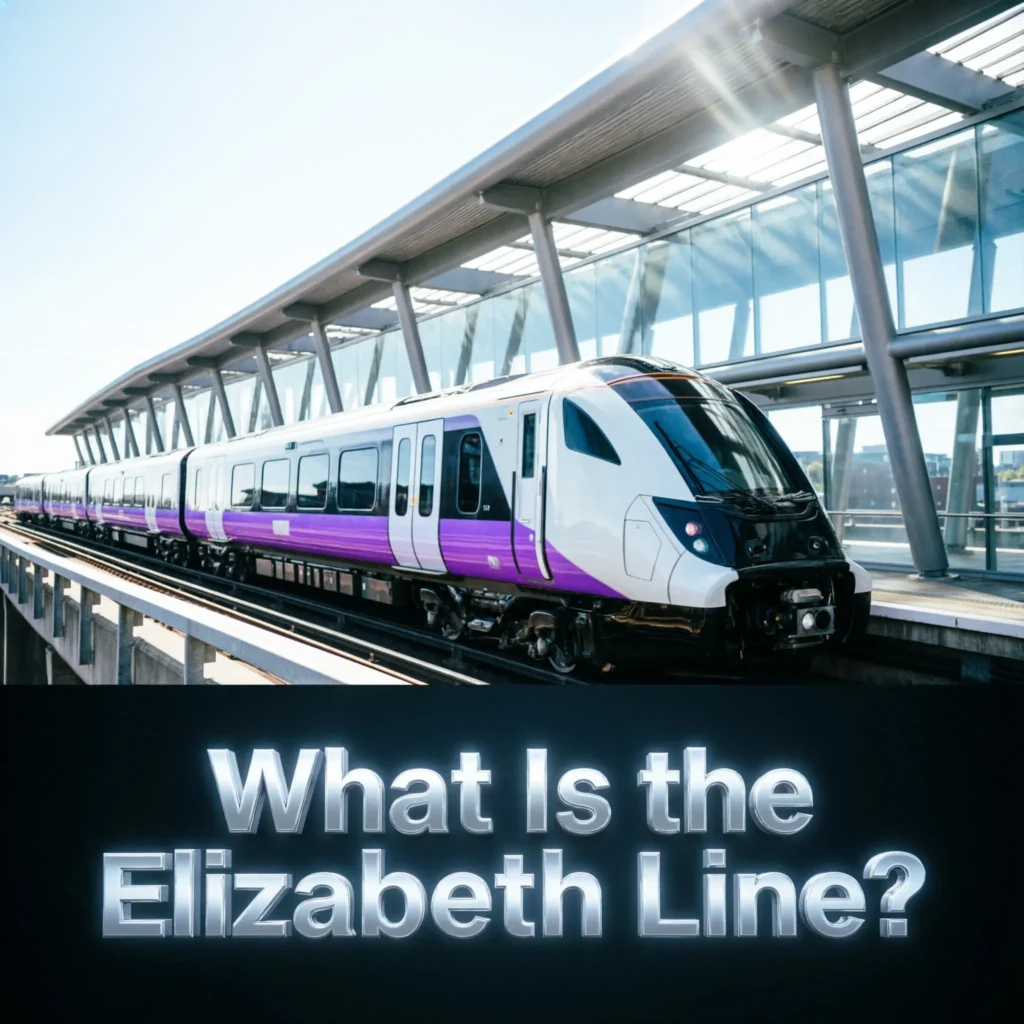
- 🚆 The Elizabeth line is a railway service.
- 🟣 It is shown in purple on London transport maps.
- 🇬🇧 It serves London and nearby areas.
- ✈️ It connects with Heathrow Airport.
- 🌆 It crosses central London.
- 🚉 It has stations in east and west London.
- 🛤️ It uses different railway branches.
- 🏙️ It serves important central areas.
- 🚇 It connects with other London transport services.
- ♿ Many stations offer step-free access.
- 🧳 It is useful for airport travelers.
- 💼 It serves major business areas.
- 🛍️ It reaches shopping districts.
- 🎓 It helps connect residential areas with central London.
- 📱 Digital travel tools make journey planning easier.
- 🗺️ Station knowledge helps travelers choose the best route.
The Elizabeth line is especially useful because it combines several railway routes into one recognizable service. Instead of treating each branch as a completely separate journey, passengers can use the Elizabeth line to travel across much of the capital and beyond.
Elizabeth Line Stations in Central London
The central section contains some of the most important Elizabeth line stations. These stops make it easier to reach London’s shopping areas, financial districts, cultural attractions, and major interchange points.
- 🚉 Paddington is a major western interchange.
- 🏙️ Bond Street serves the West End.
- 🎭 Tottenham Court Road is near major attractions.
- 🚆 Farringdon is a major interchange.
- 🚉 Liverpool Street connects with the City.
- 🏦 Canary Wharf serves a major business district.
- 🛍️ Bond Street is useful for shopping.
- 🎨 Tottenham Court Road serves central London.
- 🚇 Farringdon connects with other rail services.
- 🚆 Liverpool Street provides major rail connections.
- 🧳 Paddington is useful for travelers.
- 💼 Canary Wharf is important for commuters.
- 🗺️ Central stations make cross-London journeys easier.
- ♿ Accessibility varies by station.
- 📱 Real-time travel information can help passengers.
- ⏱️ Journey times depend on the destination and service.
These central stations are among the most useful stops for visitors. They also provide connections to other parts of London’s transport system, making the Elizabeth line an important option for daily travel and sightseeing.
Elizabeth Line Stations From Paddington to Abbey Wood
The central Elizabeth line section provides a continuous route across London between the western and eastern sides. The stations on this core section are frequently used by commuters, visitors, and airport passengers.
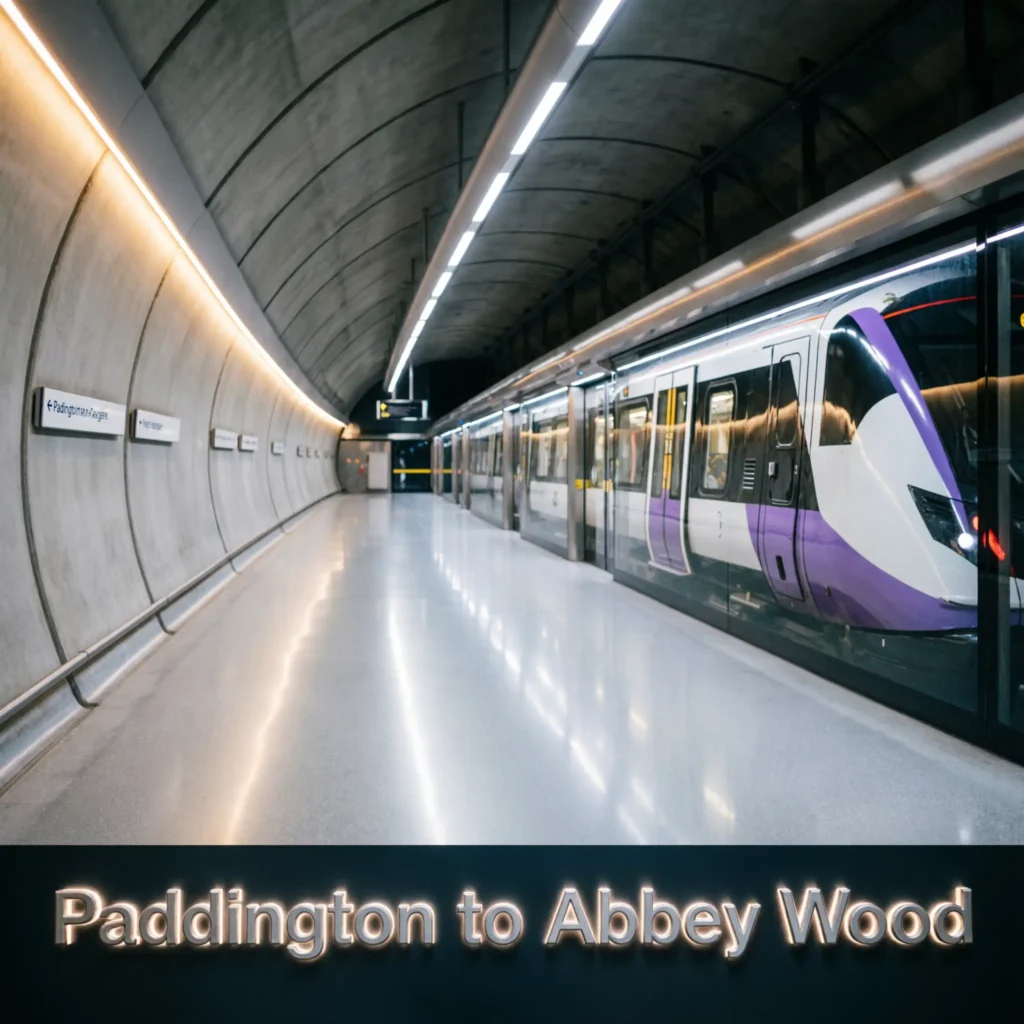
- 🚉 Paddington is on the western side.
- 🏙️ Bond Street follows Paddington.
- 🎭 Tottenham Court Road serves central London.
- 🚆 Farringdon is an important interchange.
- 🚉 Liverpool Street connects with the City.
- 🏦 Whitechapel provides east London access.
- 🌉 Canary Wharf serves the Docklands.
- 🏙️ Custom House serves the Royal Docks.
- 🚆 Woolwich is an important southeast London stop.
- 🌳 Abbey Wood is the eastern end of the core route.
- 🧭 The stations cross London from west to east.
- 🚇 Several stops connect with other services.
- 🧳 Airport passengers can use the central section.
- 💼 Commuters use the route daily.
- 📱 Travel apps can show live information.
- 🗺️ Checking the destination before boarding is important.
This central section is one of the main reasons the Elizabeth line is useful. A passenger can travel across central London without needing to make several Underground changes, depending on the journey.
Elizabeth Line Stations From Heathrow
The Elizabeth line provides rail connections between central London and Heathrow Airport. This makes the service useful for visitors arriving in London as well as residents traveling to the airport.
- ✈️ Heathrow Airport is connected to the Elizabeth line.
- 🚆 Heathrow Terminal 2 & 3 is served.
- ✈️ Heathrow Terminal 4 has an Elizabeth line station.
- ✈️ Heathrow Terminal 5 has an Elizabeth line station.
- 🧳 Airport passengers can bring luggage.
- 🚉 Paddington provides a central London connection.
- 🏙️ Bond Street connects with the West End.
- 🎭 Tottenham Court Road serves central areas.
- 🚆 Farringdon offers major connections.
- 🚉 Liverpool Street serves the City.
- 📱 Check the train destination before boarding.
- 🕒 Journey times depend on the service.
- 🎫 Fares depend on the journey and payment method.
- ♿ Accessible facilities are available at many stations.
- 🗺️ Airport travelers should check their terminal.
- ✈️ Allow extra time when traveling for a flight.
Airport passengers should check the exact terminal they need before traveling. Heathrow has several terminals, and choosing the correct station can save time when carrying luggage or preparing for a flight.
Elizabeth Line Stations to Reading
The western branch extends beyond London to Reading. This makes the Elizabeth line useful for people traveling between London and parts of Berkshire.
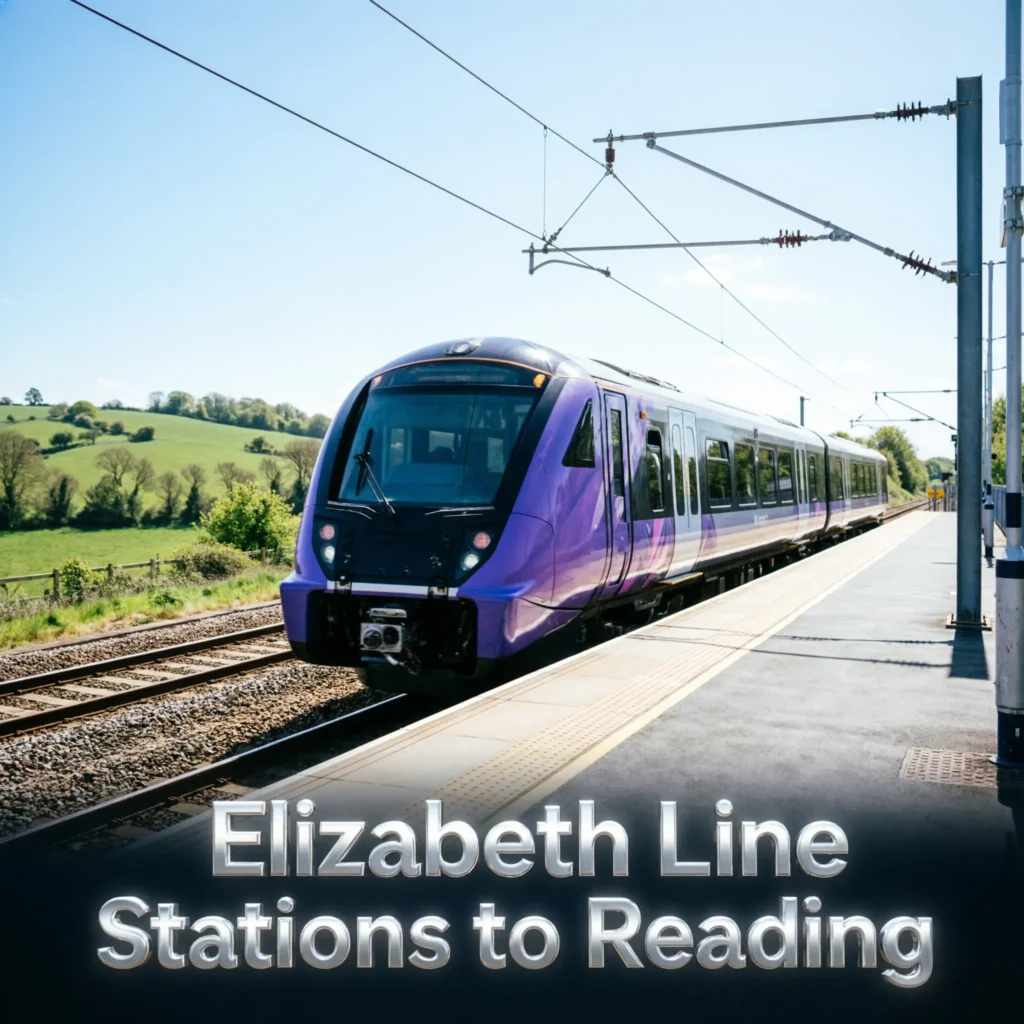
- 🚆 Reading is the western endpoint.
- 🏙️ Reading is outside Greater London.
- 🌳 The route serves communities west of London.
- 🚉 Stations connect local areas with London.
- 🏢 Commuters use the service.
- 🎓 Students can use the railway.
- 🧳 Visitors can travel toward central London.
- 🚆 Paddington provides a central interchange.
- 🏙️ Ealing Broadway is an important London station.
- 🚉 Acton Main Line serves west London.
- 🌆 Southall provides local access.
- 🏘️ Hanwell serves a residential area.
- 🚉 West Ealing provides another local connection.
- 📱 Check the destination shown on the train.
- 🕒 Timetables can vary.
- 🗺️ Check the complete route before traveling.
The Reading branch is useful because it brings a large number of travelers directly toward central London. It also gives people living west of the capital another option for reaching major central destinations.
Elizabeth Line Stations to Shenfield
The eastern branch reaches Shenfield in Essex. This route provides a connection between east London, Essex communities, and central London.
- 🚆 Shenfield is an eastern endpoint.
- 🌳 Shenfield is in Essex.
- 🏘️ The route serves suburban communities.
- 🚉 Brentwood is an important stop.
- 🏙️ Romford is another major station.
- 🚆 Ilford serves east London.
- 🏘️ Goodmayes provides local access.
- 🚉 Chadwell Heath serves residents.
- 🏙️ Seven Kings is on the route.
- 🚉 Maryland is close to Stratford.
- 🏟️ Stratford provides major connections.
- 📱 Check the train’s destination.
- 🕒 Services can vary by time.
- 🗺️ Route planning helps avoid the wrong branch.
- 🎫 Check the correct fare.
- 🚆 The line provides access to central London.
Passengers traveling east should pay attention to the destination displayed on the train. Some Elizabeth line services travel toward Shenfield, while others use the Abbey Wood branch.
Elizabeth Line Stations to Abbey Wood
The southeastern branch runs through parts of east and southeast London to Abbey Wood. It serves areas including Whitechapel, Canary Wharf, Woolwich, and Abbey Wood.
- 🚉 Whitechapel is an important interchange.
- 🏦 Canary Wharf serves the business district.
- 🏙️ Custom House serves the Royal Docks.
- 🚆 Woolwich provides southeast London access.
- 🌳 Abbey Wood is the eastern endpoint.
- 🚇 Whitechapel connects with other transport services.
- 💼 Canary Wharf is busy with commuters.
- 🏗️ Custom House serves the wider Royal Docks area.
- 🛍️ Local areas are accessible from stations.
- 🧳 Visitors can use the route for sightseeing.
- 🚆 Trains connect with central London.
- 📱 Check service information before traveling.
- 🕒 Journey times depend on the service.
- ♿ Step-free access is available at many stations.
- 🗺️ Check the final destination before boarding.
- 🚉 Abbey Wood provides local rail connections.
The Abbey Wood branch is especially useful for travelers heading toward southeast London. It also gives passengers an alternative to some longer journeys using older Underground and rail combinations.
Elizabeth Line Stations to Reading
One of the biggest advantages of the Elizabeth line is its connection with other transport services. Several stations act as major interchange points, allowing passengers to continue their journeys across London.
- 🚆 Paddington connects with National Rail services.
- 🚇 Bond Street connects with the Jubilee and Central lines.
- 🎭 Tottenham Court Road connects with the Central and Northern lines.
- 🚆 Farringdon connects with Thameslink.
- 🚇 Farringdon connects with the Underground.
- 🚉 Liverpool Street connects with National Rail.
- 🚇 Liverpool Street connects with Underground services.
- 🏦 Canary Wharf connects with the Jubilee line.
- 🚇 Whitechapel connects with the District and Hammersmith & City lines.
- 🚆 Stratford offers major rail connections.
- 🚇 Stratford connects with the Central and Jubilee lines.
- 🚆 Woolwich provides rail connections.
- ✈️ Heathrow stations serve airport passengers.
- 🚌 Many stations connect with local buses.
- 🚲 Some stations offer cycle facilities nearby.
- 🗺️ Interchanges can reduce overall journey time.
Interchanges are particularly helpful when planning a London journey. Choosing a station where you can make one simple change may be easier than using several smaller connections.
Elizabeth Line Stations and Accessibility
Accessibility is an important part of modern public transport. Many Elizabeth line stations were designed or upgraded with step-free travel in mind, although passengers should check the specific station and route before traveling.
- ♿ Step-free access is available at many stations.
- 🚉 Modern stations include accessible features.
- 🛗 Lifts are available where provided.
- 🚪 Wide entrances can support easier movement.
- 🧳 Luggage can be easier to manage.
- 👨🦽 Wheelchair users can check station access.
- 👶 Families with pushchairs can benefit from step-free routes.
- 🔎 Check accessibility before traveling.
- 📱 Transport information can provide updates.
- 🚆 Trains include accessible areas.
- 🪑 Priority seating is available.
- 🗺️ Accessible journey planning can help.
- 🧭 Station staff can provide assistance.
- ⏱️ Allow extra time if assistance is needed.
- ⚠️ Lift availability can sometimes change.
- ✅ Check current travel information before departure.
If accessibility is important for your journey, it is best to check the current station information before traveling. This is especially useful when making an interchange or carrying large luggage.
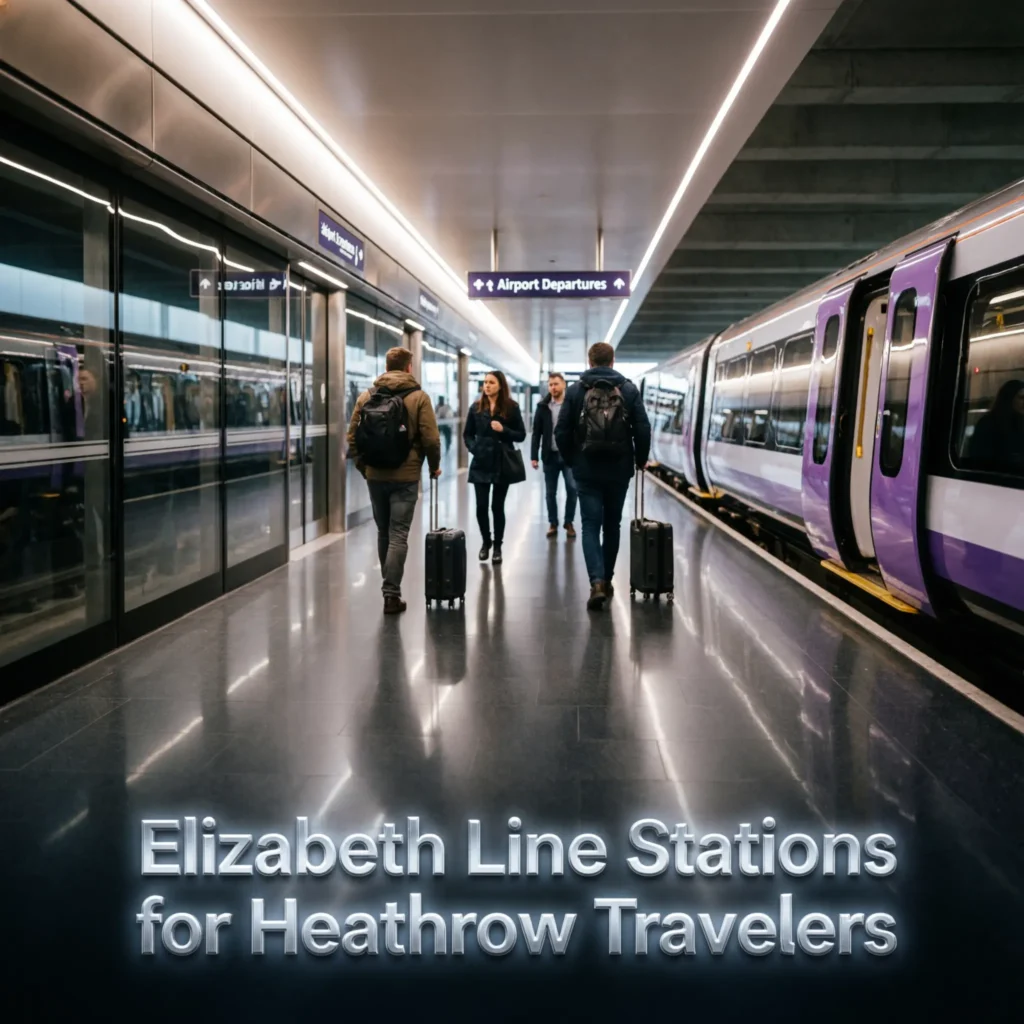
Elizabeth Line Stations for Heathrow Travelers
For airport travelers, choosing the right Elizabeth line station can make the journey much simpler. The line provides direct rail access from Heathrow toward central London and beyond, subject to the current service pattern.
- ✈️ Heathrow Terminal 2 & 3 is served.
- ✈️ Heathrow Terminal 4 is served.
- ✈️ Heathrow Terminal 5 is served.
- 🚆 Central London stations are directly connected.
- 🧳 Passengers can travel with luggage.
- 🚉 Paddington is a major interchange.
- 🛍️ Bond Street serves central shopping areas.
- 🎭 Tottenham Court Road serves the West End.
- 🚆 Farringdon connects with Thameslink.
- 🚉 Liverpool Street serves the City.
- 🏦 Canary Wharf serves east London.
- 📱 Check airport travel information.
- 🕒 Allow time for security after arriving.
- 🗺️ Confirm your terminal before departure.
- 🎫 Check the correct fare.
- ✈️ Allow extra travel time before a flight.
The Elizabeth line is useful for airport journeys because it provides a simple route between Heathrow and several central London locations. Travelers should still allow enough time for airport check-in and security.
Elizabeth Line Stations for Tourists
Visitors can use the Elizabeth line to reach many popular parts of London. It is particularly useful when a tourist’s accommodation or destination is close to one of the central stations.
- 🏙️ Bond Street is useful for shopping.
- 🎭 Tottenham Court Road serves the West End.
- 🏛️ Farringdon provides access to central attractions.
- 🏙️ Liverpool Street serves the City.
- 🌉 Canary Wharf offers modern architecture.
- 🏗️ Custom House serves the Royal Docks.
- 🚆 Paddington connects western London.
- ✈️ Heathrow connects international travelers.
- 📸 Central stations help sightseeing plans.
- 🗺️ Maps make route planning easier.
- 📱 Travel apps show connections.
- 🎫 Contactless payment can simplify travel.
- 🧳 Luggage space can be useful.
- 🚇 Interchanges connect with the Underground.
- 🚌 Local buses expand the network.
- ⏱️ Fast connections can save travel time.
Tourists should think about the nearest station to their hotel and attractions rather than choosing a station simply because it is famous. A short walk from an Elizabeth line station can sometimes make a big difference.
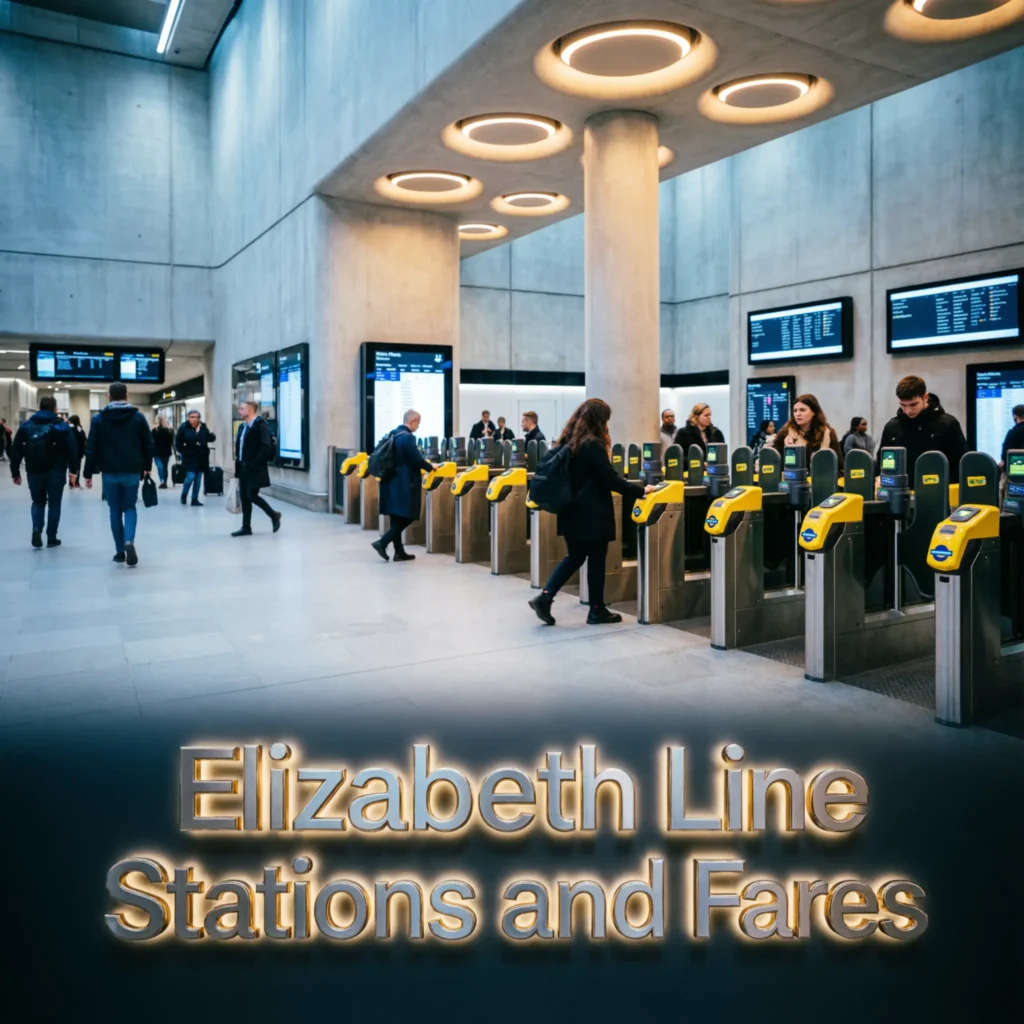
Elizabeth Line Stations and Fares
Elizabeth line fares depend on the journey, zones, payment method, and destination. The line is part of London’s wider transport system, but journeys beyond London can have different fare arrangements.
- 🎫 Fares depend on the journey.
- 💳 Contactless payment can be convenient.
- 💳 Oyster is accepted on applicable London journeys.
- 🗺️ Zones can affect London fares.
- ✈️ Heathrow journeys have specific fare arrangements.
- 🚆 Journeys beyond London can have different pricing.
- 📱 Check current fare information.
- 🚉 Station location can affect the fare.
- 🧳 Airport passengers should plan costs.
- 💼 Regular commuters may compare ticket options.
- 🕒 Peak and off-peak pricing can matter.
- 📚 Fare rules can change.
- 🔎 Check the latest official information.
- 💷 Keep enough payment balance when needed.
- 🧾 Keep tickets or payment records where appropriate.
- ✅ Confirm the fare before a longer journey.
Because fares can change, passengers should check current Transport for London or National Rail information before traveling. This is especially important for journeys that cross the London fare area.
Elizabeth Line Stations for 2026 Travel
The Elizabeth line remains an important part of London’s transport network in 2026. Its combination of modern trains, central London connections, airport access, and suburban branches makes it useful for commuters and visitors.
- 🟣 The line remains easy to identify on maps.
- 🚆 Modern trains serve the route.
- ✈️ Heathrow remains a major destination.
- 🏙️ Central London has key stations.
- 🌳 Reading provides a western connection.
- 🌆 Shenfield provides an eastern connection.
- 🌳 Abbey Wood serves southeast London.
- 🏦 Canary Wharf remains an important business stop.
- 🚆 Farringdon remains a major interchange.
- 🚉 Liverpool Street remains a key City station.
- 🛍️ Bond Street supports central shopping.
- 🎭 Tottenham Court Road serves entertainment areas.
- 📱 Digital journey planning is widely useful.
- ♿ Accessibility remains an important feature.
- 🗺️ Live travel updates can help passengers.
- ⏱️ Checking service changes before travel is sensible.
For 2026 journeys, passengers should still check live service information because engineering work, delays, station changes, and special events can affect normal travel patterns.
Common Questions About Elizabeth Line Stations
People often search for individual Elizabeth line stations because they want to know where the line stops, which branch they need, or where they can change trains.
- ❓ How many Elizabeth line stations are there? The network serves a large number of stations across its Reading, Heathrow, Shenfield, and Abbey Wood branches.
- 🚆 What are the main central stations? Paddington, Bond Street, Tottenham Court Road, Farringdon, Liverpool Street, and Whitechapel are key central stops.
- ✈️ Does the Elizabeth line go to Heathrow? Yes, it serves Heathrow Airport stations.
- 🌳 Does it go to Reading? Yes, the western branch reaches Reading.
- 🌆 Does it go to Shenfield? Yes, the eastern branch reaches Shenfield.
- 🌳 Does it go to Abbey Wood? Yes, the southeastern branch reaches Abbey Wood.
- 🚉 Is Farringdon an interchange? Yes, it connects with other major rail and Underground services.
- 🏦 Does it stop at Canary Wharf? Yes.
- 🛍️ Does it stop at Bond Street? Yes.
- 🎭 Does it stop at Tottenham Court Road? Yes.
- 🚉 Does it stop at Liverpool Street? Yes.
- 🏙️ Is Stratford on the Elizabeth line? Yes, Stratford is an important eastern interchange.
- ♿ Are Elizabeth line stations accessible? Many have step-free access, but check the individual station.
- 📱 Should I check live information? Yes, especially before airport or time-sensitive journeys.
- 🗺️ How do I choose the right train? Check whether the service is heading toward Reading, Heathrow, Shenfield, or Abbey Wood.
- 🎫 How much does it cost? The fare depends on your journey, zones, destination, and payment method.
The most important thing to remember is that the Elizabeth line has several branches. Always check the destination displayed on the train and the direction of travel before boarding.
Elizabeth Line Stations: 2026 Travel Tips
Knowing the station names is helpful, but a few simple planning habits can make Elizabeth line journeys even easier. This is particularly true for airport trips, busy commuting periods, and journeys involving several changes.
- 🗺️ Plan your route before leaving.
- 🚆 Check the train destination.
- 📱 Look at live service updates.
- ✈️ Allow extra time for airport trips.
- 🧳 Keep luggage secure.
- 🎫 Check your fare or payment method.
- 🚉 Confirm the station before getting off.
- 🔄 Check interchange directions.
- ♿ Check accessibility if needed.
- 🕒 Allow extra time during busy periods.
- 🚧 Watch for planned engineering work.
- 🚌 Check onward bus connections.
- 🚇 Consider Underground connections.
- 📸 Keep your phone charged for navigation.
- 🔎 Read station signs carefully.
- ✅ Check the latest information before traveling.
The Elizabeth line is designed to make cross-London travel easier, but good planning still matters. A quick check of the destination, station, and live service status can prevent many common travel mistakes.
Conclusion:
The Elizabeth line stations create a major rail network linking Reading, Heathrow, central London, Shenfield, and Abbey Wood. Key stations include Paddington, Bond Street, Tottenham Court Road, Farringdon, Liverpool Street, Whitechapel, Canary Wharf, Custom House, and Woolwich.
For 2026 travel, the best approach is to check your station, branch, destination, fare, and live service information before starting your journey. Whether you are commuting, sightseeing, or traveling through Heathrow, understanding the Elizabeth line stations can make getting around London much easier.

Samuel Reed is a motivational writer who creates meaningful lines about courage, determination, and achieving personal goals.