

A PICC line is a thin, flexible tube that gives healthcare professionals reliable access to a large vein. PICC stands for peripherally inserted central catheter. It usually enters through a vein in the upper arm and travels toward a large vein near the heart. A PICC line may be used when a person needs certain medicines, fluids, nutrition, or other intravenous treatment for an extended period.
This guide explains what a PICC line is, why it is used, how it works, common benefits and risks, basic care, possible complications, and frequently asked questions. It is written in simple language to help patients, families, and students understand the topic.
What Is a PICC Line?
A PICC line is a type of central venous catheter. Although it enters the body through the arm, its tip is positioned in a large central vein. This allows certain treatments to be delivered directly into the bloodstream.
- 💉 PICC means peripherally inserted central catheter.
- 🩸 It enters through a vein in the arm.
- 🧵 The catheter is long and flexible.
- 🫀 Its tip reaches a large central vein.
- 🥣 Some nutritional treatments may use it.
- 🏠 Some people may receive treatment at home.
- 📅 It can support longer treatment plans.
- 🔄 It can reduce repeated needle insertions.
- 🩺 Trained healthcare professionals place it.
- 📋 It requires specific care.
- ⚠️ Complications are possible.
- ⭐ The healthcare team decides whether it is suitable.
A PICC line is different from a short IV because the catheter travels farther through the vein and ends in a central vein.
Why Is a PICC Line Used?
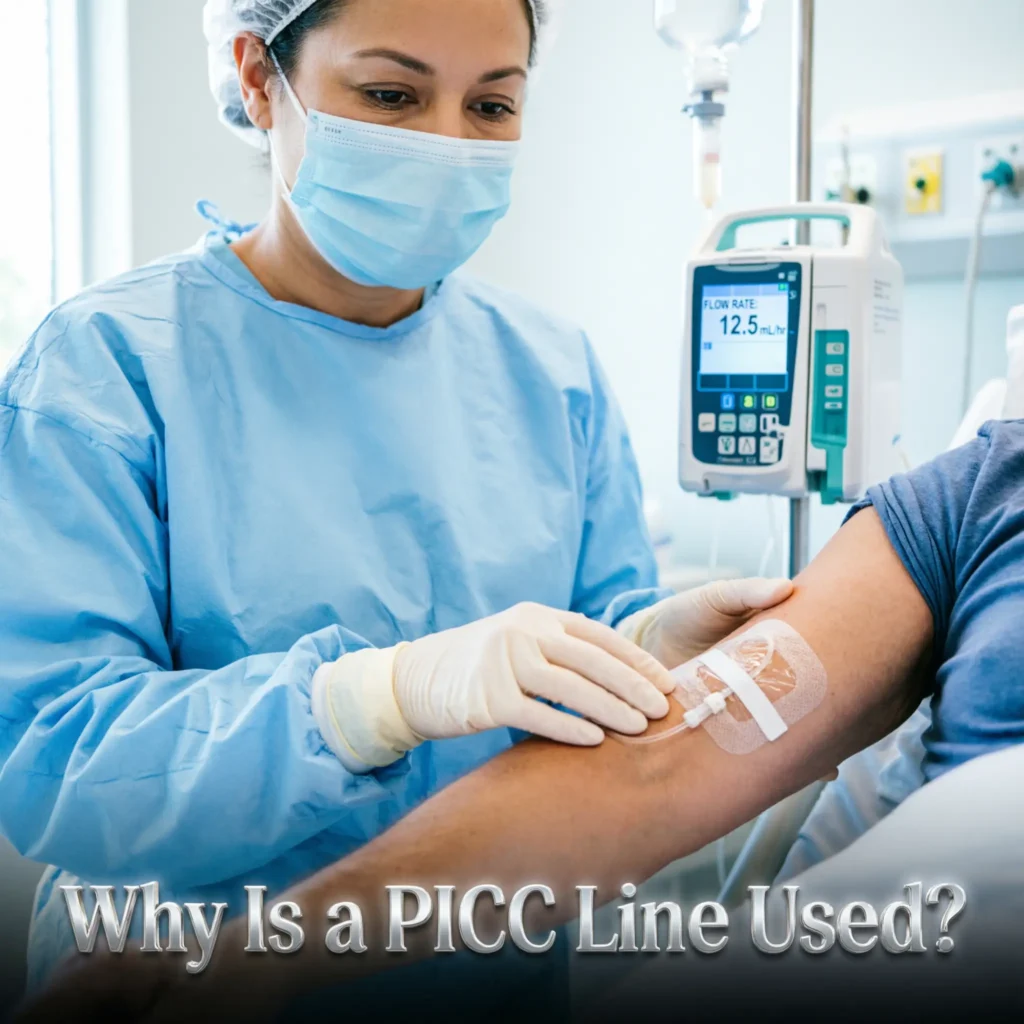
Doctors and healthcare teams may recommend a PICC line when someone needs reliable intravenous access for a longer treatment period.
- 💊 It can deliver certain medicines.
- 🥣 Certain types of IV nutrition may use central access.
- 🧪 Some treatments require reliable venous access.
- 🏥 It can support longer hospital treatment.
- 🏠 It may support selected outpatient treatment.
- 🔄 It can reduce repeated IV placement.
- 💉 It provides access to the bloodstream.
- 📅 Treatment duration can influence the decision.
- 🩺 A person’s health can affect the choice.
- 📋 The medicine being used matters.
- 🧑⚕️ A specialist may recommend the device.
- 🔎 The veins available can influence placement.
- ⚠️ It is not appropriate for every person.
The purpose of a PICC line is to provide suitable vascular access when ordinary short-term IV access may not be the best choice.
How Does a PICC Line Work?
A PICC line creates a pathway between the outside of the body and a large vein. Healthcare professionals can connect appropriate medical equipment to the external part of the catheter.
- 💉 The catheter enters through an arm vein.
- 🩸 It travels inside the vein.
- 🫀 The tip reaches a large central vein.
- 💊 Medication can travel through the catheter.
- 💧 Fluids can enter through the line.
- 🥣 Certain nutritional treatments can use the line.
- 🧼 Clean technique is important.
- 🩹 A dressing protects the insertion area.
- 🔎 The line is checked regularly.
- 📋 Care instructions depend on the catheter.
- 🚫 The line should not be handled unnecessarily.
- ⚠️ Problems need medical attention.
- 🏥 The healthcare team monitors its use.
- ⭐ The catheter is used only for approved treatments.
Where Is a PICC Line Inserted?
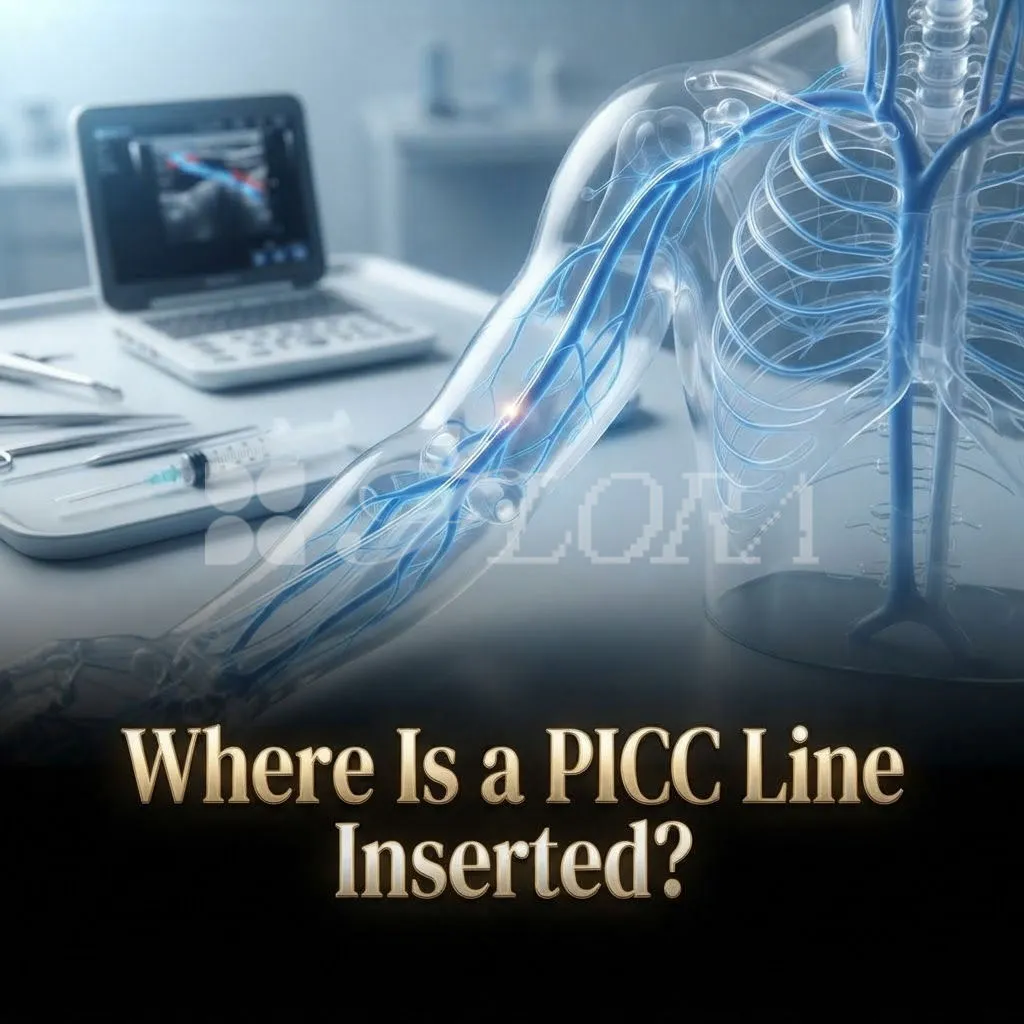
A PICC line normally enters through a suitable vein in the upper arm. The catheter then moves through the vein until the tip reaches the desired central location.
- 💪 The upper arm is a common entry area.
- 🩸 A suitable vein is selected.
- 🔎 Healthcare professionals assess the veins.
- 🧵 The catheter travels through the vein.
- 🫀 The tip reaches a central vein.
- 🏥 Placement happens in a healthcare setting.
- 🩺 Trained professionals perform the procedure.
- 📍 The position is checked.
- 🩹 A dressing covers the insertion area.
- ⭐ Proper placement is important for safe use.
The exact vein and placement approach depend on the person’s anatomy, treatment, and clinical situation.
PICC Line vs Regular IV
A PICC line and a regular IV both provide access to a vein, but they are designed for different situations.
- 💉 A regular IV is usually short.
- 🧵 A PICC is much longer.
- 🩸 A regular IV usually ends in a peripheral vein.
- 🫀 A PICC tip reaches a central vein.
- 📅 PICCs can support longer treatment.
- 🔄 Regular IVs may need to be replaced.
- 💉 PICCs can reduce repeated needle placement.
- 🏥 Both can be used in hospitals.
- 🏠 Some PICC treatment can occur outside hospital.
- 🧼 Both require infection prevention.
- ⚠️ Both have possible complications.
- 📋 The treatment determines the appropriate option.
- 🩺 Patient needs influence the decision.
- 🔎 Medical professionals assess vascular access.
- ⭐ Neither option is best for every patient.
Benefits of a PICC Line
When appropriate, a PICC line can make an extended treatment plan easier to manage.

- 💉 It can reduce repeated needle sticks.
- 🩸 It provides reliable venous access.
- 💊 It can deliver prescribed medicines.
- 💧 It can provide selected fluids.
- 🥣 It can support certain nutritional treatments.
- 📅 It can remain during an extended treatment period.
- 🏥 It can support hospital treatment.
- 🏠 It may support some home treatment.
- 🔄 It can make repeated treatments more convenient.
- 🩺 It may help when ordinary IV access is difficult.
- 🧵 Its tip sits in a large central vein.
- 📋 It can become part of a planned care routine.
- 🧑⚕️ Healthcare professionals can monitor it.
- ⚠️ Benefits must be balanced with possible risks.
- ⭐ The best choice depends on individual needs.
For suitable patients, the main advantage is having dependable access without repeatedly inserting a new short IV.
How Long Can a PICC Line Stay In?
There is no single time that applies to every PICC line.
- 📅 Treatment length affects how long it stays.
- 💊 The type of treatment matters.
- 🩺 A person’s health matters.
- 🧵 The catheter can remain while needed.
- 🔎 Healthcare professionals monitor it.
- 🧼 Proper care is important.
- ⚠️ Complications may require earlier removal.
- 🔄 Treatment plans can change.
- 🩺 Different patients have different needs.
- 🏠 Some people use PICCs during outpatient treatment.
- 💉 Certain medicines require reliable access.
- 📅 Treatment schedules can change.
- 🚨 Problems should be reported promptly.
- ⭐ Never decide on removal without medical guidance.
The length of time a PICC remains depends on the individual treatment plan and the condition of the line.
PICC Line Care
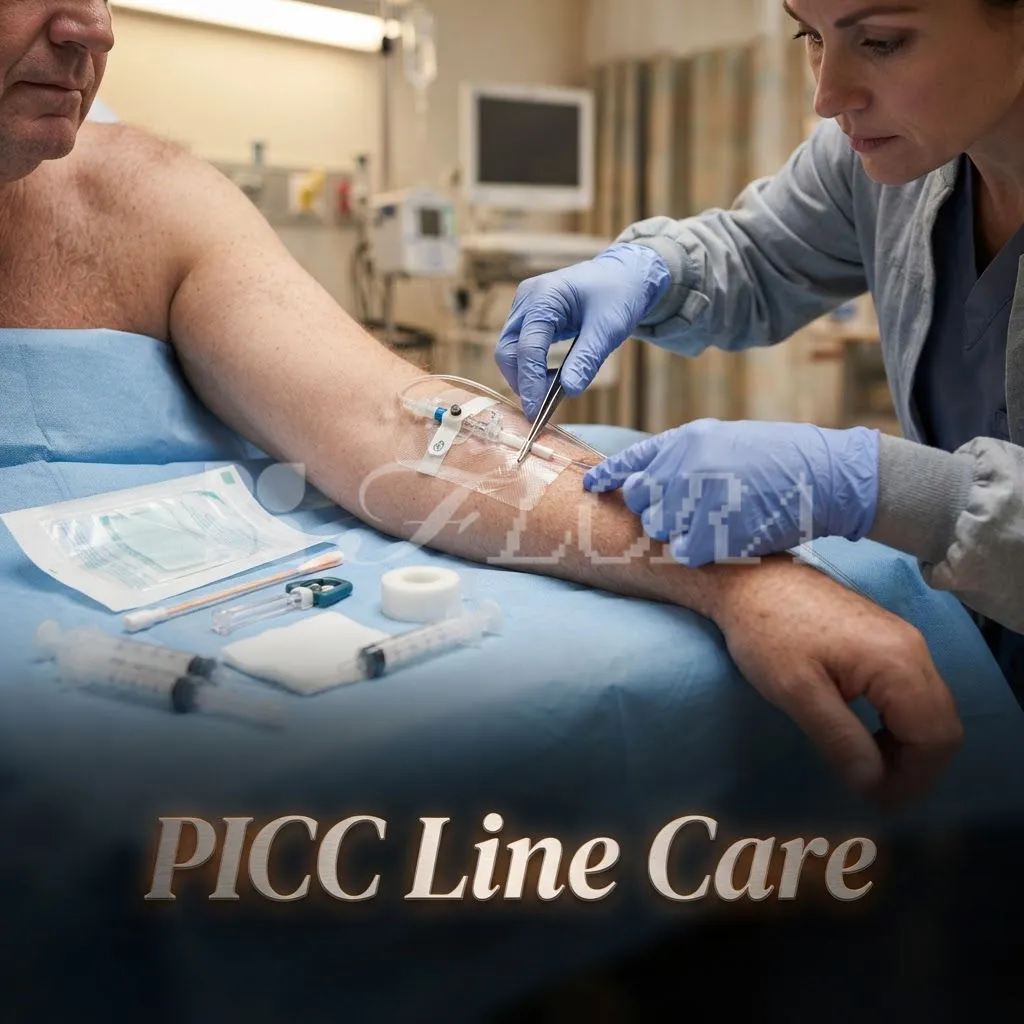
Good PICC line care helps reduce the chance of problems. Patients should follow the exact instructions given by their healthcare team.
- 🧼 Keep the area clean as instructed.
- 🩹 Follow dressing-care instructions.
- 💧 Follow advice about keeping the dressing dry.
- 🧑⚕️ Attend scheduled appointments.
- 📋 Keep your care instructions available.
- 🔎 Check the area when advised.
- 🔴 Look for unusual redness.
- 🟠 Watch for swelling.
- 😣 Notice new or worsening pain.
- 🌡️ Pay attention to fever.
- 🦠 Report possible infection signs.
- 🩸 Report unusual bleeding.
- 🚫 Do not unnecessarily manipulate the catheter.
- 📞 Contact your healthcare team if something changes.
- 🏥 Use professional advice for problems.
- ⭐ Follow the care plan designed for your PICC.
PICC care can vary according to the catheter, dressing, treatment, and healthcare provider, so personalized instructions are important.
Can You Shower With a PICC Line?
People with a PICC line may receive specific instructions about showering and protecting the catheter. The answer depends on the dressing and the healthcare team’s recommendations.
- 🚿 Showering may be possible in some situations.
- 🩹 The dressing needs appropriate protection.
- 💧 Water should not compromise the dressing.
- 🧑⚕️ Follow your healthcare team’s instructions.
- 📋 Different dressings have different requirements.
- 🧼 Keep the insertion area protected.
- 🚫 Do not assume every dressing is waterproof.
- 💦 Avoid activities that could damage the dressing.
- 🔎 Check the dressing as instructed.
- 🩹 A damaged dressing may need professional attention.
- 🏊 Swimming may have additional restrictions.
- 🛁 Bathing may require special precautions.
- 📞 Ask before changing your normal routine.
- ⚠️ Water exposure can create care concerns.
- 🏥 Follow facility-specific instructions.
- ⭐ Your healthcare team should give the final advice.
Do not rely on a general showering rule because PICC care requirements can differ between patients.
PICC Line Infection
Infection is an important possible complication of a PICC line. Healthcare teams use careful procedures to reduce the risk.
- 🦠 Germs can cause infection.
- 🔴 Redness around the site may be concerning.
- 🟠 Swelling may need assessment.
- 😣 Increasing pain can be a warning sign.
- 🌡️ Fever can be important.
- 🩹 Drainage may require medical attention.
- 🧼 Clean care helps reduce infection risk.
- 🧑⚕️ Follow professional care instructions.
- 📋 Use the recommended dressing routine.
- 🚨 Report concerning symptoms promptly.
- 🏥 Serious infections require medical treatment.
- 🩺 Healthcare professionals may examine the line.
- 💊 Treatment depends on the cause.
- 🔎 Do not assume symptoms are harmless.
- 📞 Contact the appropriate healthcare service when advised.
- ⭐ Early medical assessment can be important.
PICC Line Blood Clot
A blood clot, known medically as thrombosis, can occur in the vein containing a PICC line. The symptoms can vary.
- 🩸 A clot can form around the catheter.
- 💪 Arm swelling may occur.
- 😣 Arm discomfort may occur.
- 🔴 Skin changes can occur.
- 🧵 The catheter can affect blood flow.
- 🔎 Do not try to diagnose a clot yourself.
- 📋 Tell the healthcare team about new symptoms.
- 🚨 Sudden breathing problems require urgent medical attention.
- 💊 Treatment depends on medical findings.
- 🏥 Doctors may use tests to investigate.
- ⚠️ Risk differs between patients.
- 📅 Treatment duration can be relevant.
- 🩺 Medical history can affect risk.
- ⭐ Promptly report unusual symptoms.
PICC Line Complications
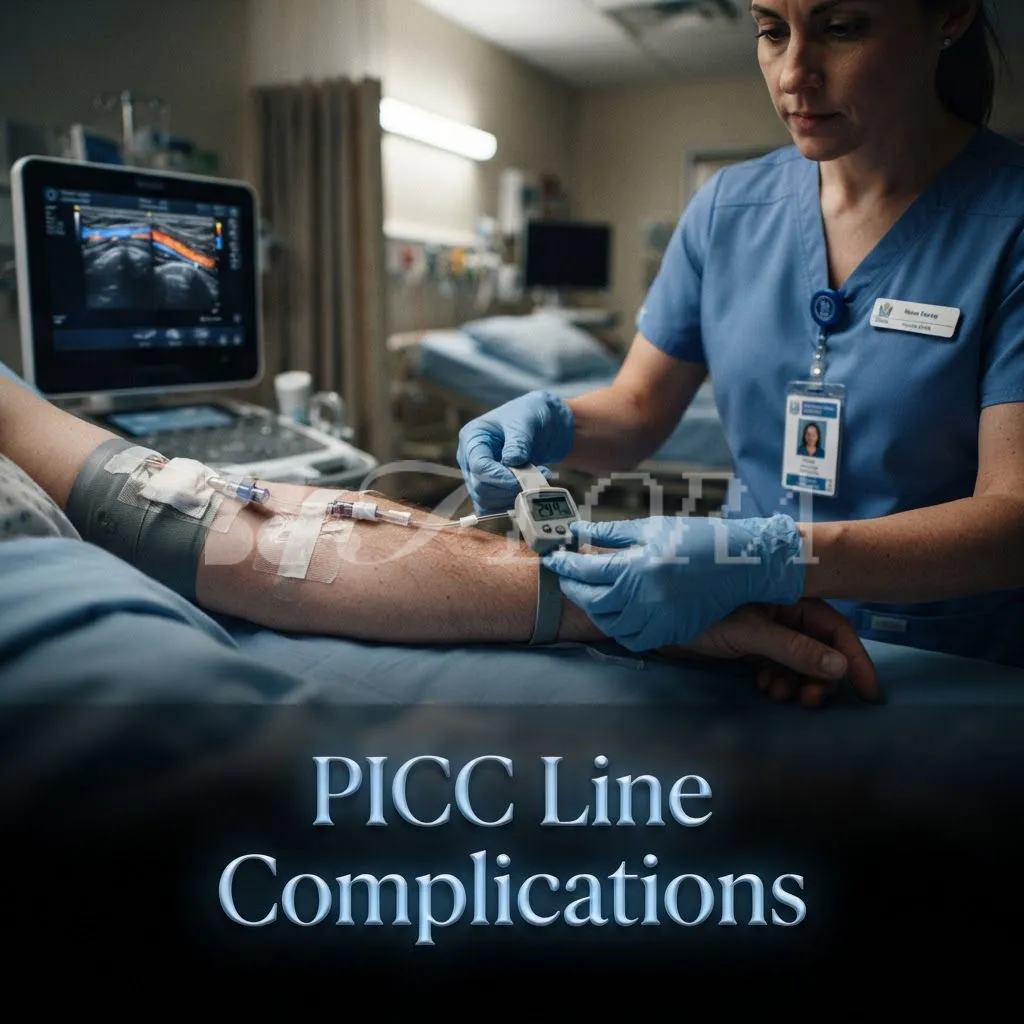
Besides infection and blood clots, a PICC line can have other problems. Prompt attention can help healthcare professionals decide what to do.
- 🚫 The line can become blocked.
- 🧵 The catheter can move.
- 💧 Fluid can leak.
- 🩸 Bleeding can occur.
- 🩹 Skin irritation can develop.
- 🔴 Redness can appear.
- 🟠 Swelling can develop.
- 😣 Pain can occur.
- 🦠 Infection can develop.
- 🩸 Thrombosis can occur.
- 📋 The dressing can become damaged.
- 🔎 The insertion site may need examination.
- 🏥 Treatment depends on the problem.
- ⭐ Follow the instructions given by the medical team.
PICC Line Removal
- 📅 Treatment completion may lead to removal.
- 💊 A change in treatment may also matter.
- 🧵 The catheter is removed from the vein.
- 🏥 Removal may take place in a healthcare setting.
- 📋 Clinical procedures are followed.
- 🩹 The site may be covered afterward.
- 🔎 The area can be checked after removal.
- 🩸 Bleeding may need monitoring.
- 📞 Follow-up instructions may be provided.
- ⚠️ Patients should not remove the line themselves.
- 🚫 Do not pull or manipulate the catheter.
- 🧑⚕️ Professional guidance is important.
- 🏠 Aftercare depends on the situation.
- 🚨 Report unusual symptoms after removal.
- ⭐ Follow the discharge instructions carefully.
PICC Line vs Port
A PICC line and an implanted port are both forms of central venous access, but they have different designs.
- 💉 A PICC enters through the arm.
- 🧵 A PICC has an external catheter.
- 🔘 A port sits beneath the skin.
- 🏥 Both can provide central venous access.
- 💊 Both can deliver certain medicines.
- 🩺 Treatment needs influence the choice.
- 🔎 Vein access can influence the decision.
- 📋 Medical history matters.
- 🏠 Selected patients can receive outpatient treatment.
- 🧼 Both require infection-prevention measures.
- ⚠️ Both have potential complications.
- 🔄 A port is not continuously external.
- 🩹 A PICC requires care around its external portion.
- 🧑⚕️ Healthcare professionals select suitable access.
- ⭐ Neither device is automatically right for everyone.
The appropriate vascular-access device depends on treatment duration, medication, patient factors, and clinical judgment.
PICC Line in 2026
In 2026, PICC lines remain an important option for selected patients who need longer-term intravenous treatment. Healthcare teams continue to focus on safe placement, infection prevention, appropriate device selection, and careful monitoring.
- 📅 PICCs remain part of modern medical care.
- 🏥 Hospitals use specialist vascular-access services.
- 🩺 Ultrasound can help with vein assessment.
- 🔎 Placement can be carefully checked.
- 🦠 Infection prevention remains important.
- 💊 Medication type affects access decisions.
- 📅 Treatment duration matters.
- 🏠 Some patients receive treatment outside hospitals.
- 🧑⚕️ Specialist teams can support line management.
- 🔄 Treatment changes can affect device choice.
- ⚠️ Complications still require prompt attention.
- 📱 Digital healthcare records can support care coordination.
- 📚 Patient education remains important.
- ⭐ Current clinical guidance should always guide care.
Modern PICC care combines appropriate device selection with careful monitoring and patient education.
Frequently Asked Questions About PICC Lines
- ❓ What does PICC stand for? PICC stands for peripherally inserted central catheter.
- 💉 What is a PICC line used for? It provides intravenous access for selected medicines, fluids, nutrition, and other treatments.
- 🩸 Where is a PICC line placed? It usually enters through a vein in the upper arm and travels toward a large central vein.
- 📅 How long can a PICC stay in? It can remain for an extended treatment period when medically appropriate.
- 🏠 Can you go home with a PICC line? Some patients can receive treatment at home under a suitable healthcare plan.
- 🦠 Can a PICC line become infected? Yes. Infection is a known possible complication.
- 🩸 Can a PICC line cause a blood clot? Yes. Thrombosis is another possible complication.
- 🚨 What are warning signs of a PICC problem? Fever, increasing redness, swelling, pain, drainage, bleeding, or other significant changes should be reported.
- 🚿 Can you shower with a PICC line? It depends on the dressing and instructions provided by the healthcare team.
- 🏊 Can you swim with a PICC line? Swimming may be restricted because of dressing and infection concerns. Ask the healthcare team first.
- 💊 Can medicine be given through a PICC? Yes, certain prescribed medicines can be administered through it.
Conclusion:
A PICC line is a flexible catheter that provides access to a large vein for certain medical treatments. It can be useful when a person needs intravenous medicines, fluids, nutrition, or other treatment for an extended period.
Its main benefits include reliable access and fewer repeated needle insertions. However, a PICC line can also have complications, including infection, blood clots, blockage, catheter movement, and skin problems. Proper care and prompt communication with the healthcare team are important.
Because every PICC line and treatment plan is different, patients should follow the instructions given by their own healthcare professionals. This article is for general education and should not replace personalized medical advice.

Andrew Collins creates inspiring content centered around success, motivation, leadership, and positive thinking.